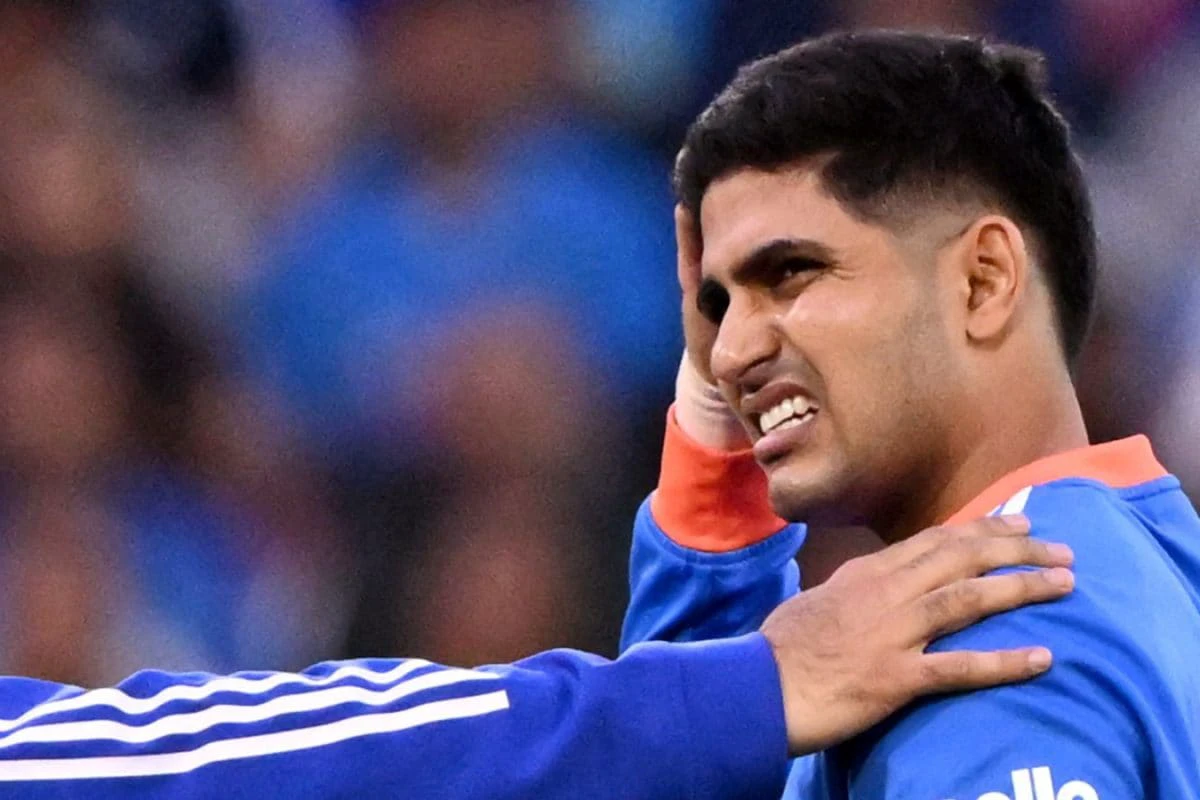
Before we begin, it is worth mentioning that Shubman Gill is one of the best all-format players available to India at the moment.
He’s arguably the best ODI batter in the team and the most promising heir to Virat Kohli and Rohit Sharma’s legacies in the format.
In Tests, he was probably not the most logically deserving captain, but went above and beyond to vindicate Ajit Agarkar and Gautam Gambhir’s decision, while proving several doubters wrong.
It won’t be a surprise if he plays a huge role in turning India’s bandwagon in the longest format, while simultaneously pushing the ODI team to newer heights with his batting and leadership.
All of that is true. And so is the fact that his continued inclusion in the T20I squad wasn’t in the team’s best interests for the 2026 T20 World Cup. Here’s why:
Shubman Gill wasn’t justifying his place
We have talked before about why removing Sanju Samson from the opening spot and replacing him with Gill just before the 2025 Asia Cup might not be justified for the former, but was still the kind of gamble that selectors are paid to take. They are allowed to believe that Gill is a better option than Samson despite having worse stats, because if they don’t look beyond the numbers, no one will.
The issue was with Gill being the vice-captain, which made him almost undroppable. Now, the selectors have taken a step back and admirably decided to remove Gill from the team, reinstate Axar Patel as the vice-captain, and bring Samson back as the opener.
Gill can’t feel hard done by this call. Unfortunately, he has never been able to justify his spot as an opener.
Now, overall, Gill has opened for India 36 times in T20Is, scoring 869 runs at a strike-rate of 138.59 with one century and three fifties. Samson has had half of those chances and scored 559 runs at 178.02 with three centuries and one fifty.
Gill was given the vice-captaincy because the selectors trusted his pre-2025 stats, but even then, he had only two innings where he scored more than 20 runs at a quicker pace than Samson’s overall strike-rate. He did try hard, batting aggressively and taking risks to fit into India’s attacking style, but it just didn’t work out for him over an extended period of chances, which makes Samson, simply, the better choice.
Better team balance
India had to make a few compromises to include Gill, which wasn’t the 26-year-old’s fault. By dropping Sanju Samson, India needed a wicketkeeping replacement – they brought in Jitesh Sharma, who is a middle-order batter, and needed space in that spot, which led to the likes of Rinku Singh and Axar Patel being dropped.
Now, with Samson back and Ishan Kishan as the reserve opener and ‘keeper, India’s tactics are much clearer. Now, even if Samson’s form derails and he has to be replaced, India would be opening the innings with a wicketkeeper, which would have no impact on the middle and lower-middle orders.
India can now pick Rinku, Axar and Shivam Dube every game and replace one with Kuldeep Yadav if needed for the conditions, giving all of them stability and security. Jitesh didn’t do much wrong – in fact, he was a better ‘keeper than Samson – but his weakness against specific plans like short-balls did hurt his chances.
The combination of the aforementioned three batting around Hardik Pandya makes India a stronger side.
Good for Gill
Gill would be hurting now, but perhaps in a few years he’d realise that the move was beneficial for him. The perils of being an all-format superstar are that you hardly get any breaks.
Unlike Jasprit Bumrah, who’s rested wherever possible because he carries no leadership responsibilities, Gill has had to play every match where he’s not injured. It was never sustainable to juggle such shifting tactics, the pressure of leading the team in two formats, and then also playing and captaining in the IPL.
Being away from the T20I team for the time being would help him get time to train, rest, and improve his overall mental health to improve focus on ODIs and Tests. Kohli and Rohit are the prime examples of what some time away from competitive cricket can do to a player’s quality.
India and Indians are obsessed with all-format players. But in today’s time of high-intensity year-round cricket, it could also be counter-productive – this break might prove to be a blessing in disguise for Gill.