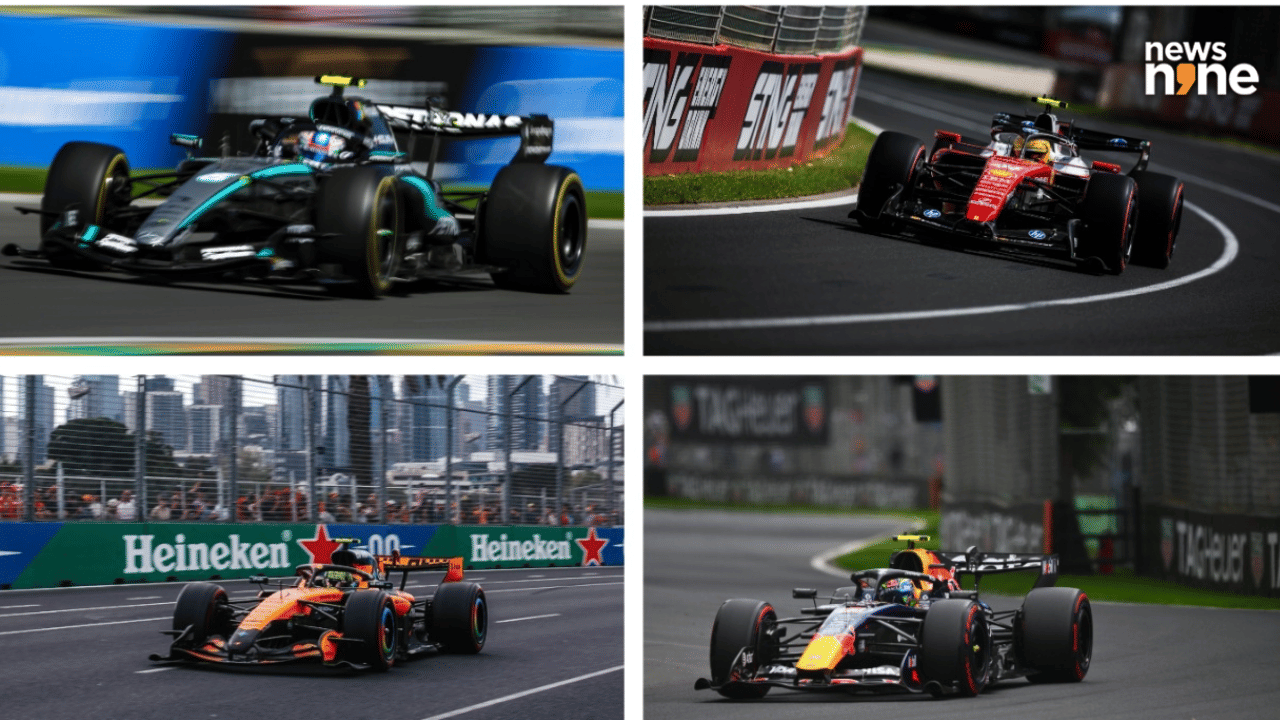
New Delhi: Formula One is hitting its biggest reset button in years, with cars now becoming smaller, lighter, and more heavily reliant on an electric powertrain. The new regulatory changes will require teams and drivers to adapt more quickly to new engineering solutions, energy strategies, and driving styles.
New teams like Cadillac and Audi are entering the season as well, so right off the line, there’s a return to 22 cars and 11 teams coming on the circuit. With the season starting with the Australian Grand Prix, there are quite a few technical ideas and tactics that might actually play a role in reshaping performance.
New hybrid powertrain unit
The biggest change this season is the redesigned power unit. Even though the 1.6-litre V6 turbo hybrid architecture remains, the balance between combustion and electric has been altered dramatically. The new engines now get a 50-50 split of powertrain from internal combustion and electrical energy, and massively increase the role of battery power in overall performance.
A major change is the removal of the MGU-H, the system that recovered heat energy from the turbocharger. Eliminating this complex and expensive component is expected to ease the engine design and reduce development cost while still bringing out high performance. The cars now come on 100 per cent sustainable fuel as well, which should make it quite fun to watch.
Compression ratio
One of the major talking points of the new engine is also the compression ratio, which measures how tightly the engine compresses the air/fuel mixture before ignition. The regulation bars this ratio to 16:1, with tests originally performed at ambient temperature. Rival teams have suggested that Mercedes might have made components that act differently once the engine has heated up, which potentially makes for a higher ratio under real running conditions.
FIIA responded to the concerns and confirmed that additional checks at operating temperature will be brought from June 1st, with the first race coming under this law being the Monaco Grand Prix.
Goodbye DRS, Hello Overtake mode
The Drag Reduction System (DRS), used in F1 for the last 15 years, has been removed as well. Now the cars get active aerodynamics and stronger hybrid deployment to aid overtaking. These systems make for two modes, a low-drag setup for straights to improve top speed, and a high-downforce configuration for corners to increase grip.
🚨| JUST IN: Ferrari raise the bar with a Paradigm Shifting active rear wing:
The upper flap pivots around a central hinge, reaches horizontal, then keeps rotating to flip 180°. That means the HP-marked front section ends up facing down, while the IBM rear section faces up,… pic.twitter.com/I10IKWdk5S
— Ferrari Focus (@Scuderiascoop) February 19, 2026
Some teams have already experimented with eye-catching solutions. Ferrari, for instance, has brought a wing concept that rotates on straights in order to reduce drag and increase speed. Drivers also get access to electrical boost modes, allowing temporary deployment of extra power for overtaking or defensive moves.
Sustainability and cost control
Apart from performance, the 2026 rules also state to ensure the long-term sustainability of the sport. The regulations bring stricter cost controls and simplified engine components to make F1 more accessible for manufacturers and suppliers. The shift to sustainable fuels and stronger hybrid components also lets F1 technology remain relevant with the road-car industry, which FIA feels is crucial for the motorsport’s future.
Most importantly, with the cars performing with synthetic fuel at a much higher RPM, temperatures and conditions, it does make for a good testing ground for road-going cars. The technology for performing with synthetic fuel could go down from engine makers like Honda, For-Red Bull, Ferrari, Mercedes, Audi and the lot.
Smaller, lighter, agile cars, narrower tyres
FP3 but make it trackside! 😮💨
Up next: Qualifying 🔜#F1 #AusGP pic.twitter.com/g0hDpSXF0t
— Formula 1 (@F1) March 7, 2026
A big target for the new regulations is to make the cars quite small, reversing the constantly increasing F1 car size. The 2026 machines are about 30 kg lighter, narrower and shorter than the present generation, improving agility and responsiveness on track. Car width has been reduced to 1,900 mm, while the max wheelbase goes down to 3,400 mm.
Tyres are still 18 inches, but they are narrower than before, helping improve aerodynamic drag and efficiency. The overall design changes aim to reduce drag while retaining the same competitive racing performance.