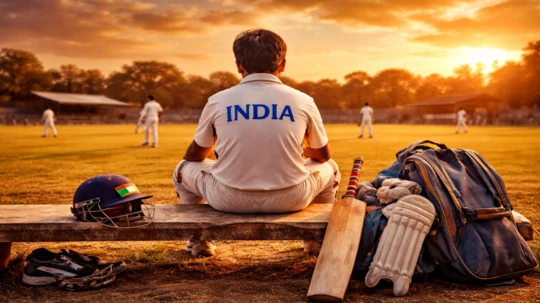
Every Indian child who picks up a bat in a gully carries the same dream, which is to wear the India jersey. What rarely gets spoken about, however, is the true cost of that dream.
Not just in rupees, but in years, relationships, mental health, and silent sacrifices. Even at the lower end, families are spending ₹36,000-₹1,20,000 annually just to stay in the system. Because here’s the blunt truth: Talent is just the entry ticket. Money and emotional endurance decide who stays in the race. Talent alone is not good enough in a brutally honest system that doesn’t hesitate to show the mirror.
In the glitz and glamour of the Indian Premier League (IPL), which just entered its 19th edition, the opportunities to make a name for a young cricketer might have opened up a lot more than what it was 20 years ago, but the percentage of cricketers, who actually go on to play franchise cricket is remarkably less than cracking any competitive exam in any part of the world. The great Sachin Tendulkar and Vinod Kambli started their cricketing journey in the Maidans of Mumbai, where cricket finds its true soul. Tendulkar went on to become one of the greatest cricketers to have walked the planet, while Kambli’s career, which had flickers of brilliance, never really took off. Their journeys ran like parallel railway tracks, close enough to mirror each other, yet destined never to converge.
Maninder Singh, touted to be the next big spinner on the horizon for India, didn’t reach his true potential and saw his career dwindle away quicker than he arrived at the scene. He had no one to confide in, no shoulder to lean on-so, in the silence, he slowly turned to the bottle. And then there was , who could have had the world at his feet, but life had some other ideas. This is just the tip of the iceberg. And like him, there are countless others who carry, in silence, the quiet ache of dreams that never were, and those that slipped away because the rub of the green didn’t go their way. You might reach the top, but it is a slippery slope.
The Financial Cost: A Dream That Starts at ₹5 Lakhs And Never Really Ends
Cricket in India is no longer a “cheap sport.” At a grassroots level, the numbers are sobering. The average coaching fees at an elementary level can range from ₹1,000 to ₹15,000 per month; for mid-level academies, it can be between ₹20,000 and ₹50,000 annually; and for premium academies with boarding, it can range from ₹1 lakh to ₹5 lakh per year. Even at the lower end, families are spending ₹36,000-₹1,20,000 annually just to stay in the system. In addition, there may be admission fees and hostel charges if needed. A serious cricketer training in a good setup easily costs ₹2-4 lakh per year.
This is without the equipment gears, which will have recurring costs, depending on the wear and tear. A basic cricket kit isn’t basic anymore. Cricket is the only sport where a cricketer is pretty much forced to do what he is not good at. That would mean bowling, even if he is a batter or vice versa. Bat, pads, gloves, helmet, and spikes could easily cost up to ₹15,000-₹50,000 annually, while high-end bats alone could cost more than ₹10,000. Along with it come the costs of travel to play matches across the country and club memberships, which can range from ₹15,000 to ₹50,000 annually.
Sports nutrition is often a part that goes unnoticed. The cost of good nutrition, a gym membership to strengthen muscles, physiotherapy and injury management, and diet and supplements – all of it comes at a cost that can go into lakhs.
Annual Financial Cost Breakdown (Aspiring Indian Cricketer)
| Expense Category | Entry Level (₹) | Competitive Level (₹) | Elite Pathway (₹) |
| Coaching Fees | 36,000 – 1,20,000 | 1,20,000 – 3,00,000 | 3,00,000 – 5,00,000 |
| Academy Admission/Extras | 5,000 – 15,000 | 15,000 – 30,000 | 30,000 – 50,000 |
| Hostel/Accommodation | – | 1,00,000 – 2,40,000 | 2,00,000 – 4,00,000 |
| Equipment & Gear | 15,000 – 30,000 | 30,000 – 50,000 | 50,000 – 1,00,000 |
| Matches & Tournament Fees | 10,000 – 25,000 | 25,000 – 75,000 | 75,000 – 1,50,000 |
| Travel & Exposure Tours | 10,000 – 30,000 | 50,000 – 1,00,000 | 1,00,000 – 2,00,000 |
| Fitness & Gym | 10,000 – 25,000 | 25,000 – 50,000 | 50,000 – 80,000 |
| Physiotherapy & Recovery | – | 20,000 – 50,000 | 50,000 – 1,00,000 |
| Nutrition & Supplements | 30,000 – 60,000 | 60,000 – 1,20,000 | 1,20,000 – 2,00,000 |
Long-Term Investment (8-10 Year Journey)
| Stage of Career | Duration | Avg Annual Spend (₹) | Total Investment (₹) |
| Early Training (U-12 to U-15) | 3-4 years | 1.5 lakh | 4.5 – 6 lakh |
| Competitive Growth (U-16 to U-19) | 3-4 years | 4 lakh | 12 – 16 lakh |
| High Performance (U-19 to Domestic) | 2-3 years | 7 lakh | 14 – 21 lakh |
Total Estimated Investment: ₹20 lakh – ₹50 lakh+ over a decade with no guarantee of professional return.
The Emotional Cost: Where Most Dreams Actually Break
Money is just the visible cost. The real battle is sometimes internal. demands discipline, compromise, live in isolation without a social life. An aspiring cricketer has to devote 5 to 8 hours every day to the sport, which means missing school, social gatherings, and sometimes forgetting to live in the moment. It becomes so ingrained in a cricketer’s routine that by the time the realisation of failure sets in, many have already missed the bus.
Unlike exams, cricket gives you fewer chances, and a bad season could erase years of hard work. Even legends fail more than they succeed. The great Tendulkar, widely regarded as the “God of Cricket” played close to 700 matches for India, and has scored a century of centuries. However, simple math, will suggest that he failed more often than not. If we take century as the metric of success or excellence, his rate of success stands at little over 15 percent, which suggests that even greatness came with its fair share of failure. For every one player who makes it, thousands disappear without recognition. India’s talent pool is so deep that even structured academies struggle to push players to the next level without exceptional performance and opportunity. In case one happens to survive all of that, then comes the financial guilt, which is perhaps the underreported burden.
Emotional & Psychological Cost Breakdown
| Emotional Factor | What It Involves | Impact Level |
| Loss of Childhood | Missing school life, social events | High |
| Constant Failure | Frequent low scores, rejections | Very High |
| Selection Pressure | Limited spots, intense competition | Extreme |
| Financial Guilt | Awareness of family’s heavy spending | Very High |
| Loneliness | Long hours of solo training | High |
| Injury & Comebacks | Physical pain + mental setbacks | High |
| Academic Sacrifice | Limited fallback career options | High |
| Identity Crisis | “What if it doesn’t work?” | Extreme |
Parents often spend beyond their means, which translates to anxiety, fear of failure, and playing safe instead of playing free – issues that are often brushed under the carpet. By the time a young aspiring cricketer gets to know that there is little chance to make it big, a life full of uncertainty awaits him, without a backup plan.
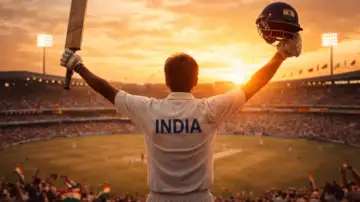
Statistically, the probability of success is microscopic, yet the dream of becoming an Indian cricketer lives on. For some, it is a way out of poverty, and for others, it is a shot at immortality. To play for India, a child has to invest their childhood, family savings, mental health, and time. And there is no bigger investment in this world than time. Wasted money can be recouped, but there is no science or technology that can bring back lost time. They invest in a dream that statistically won’t come true.