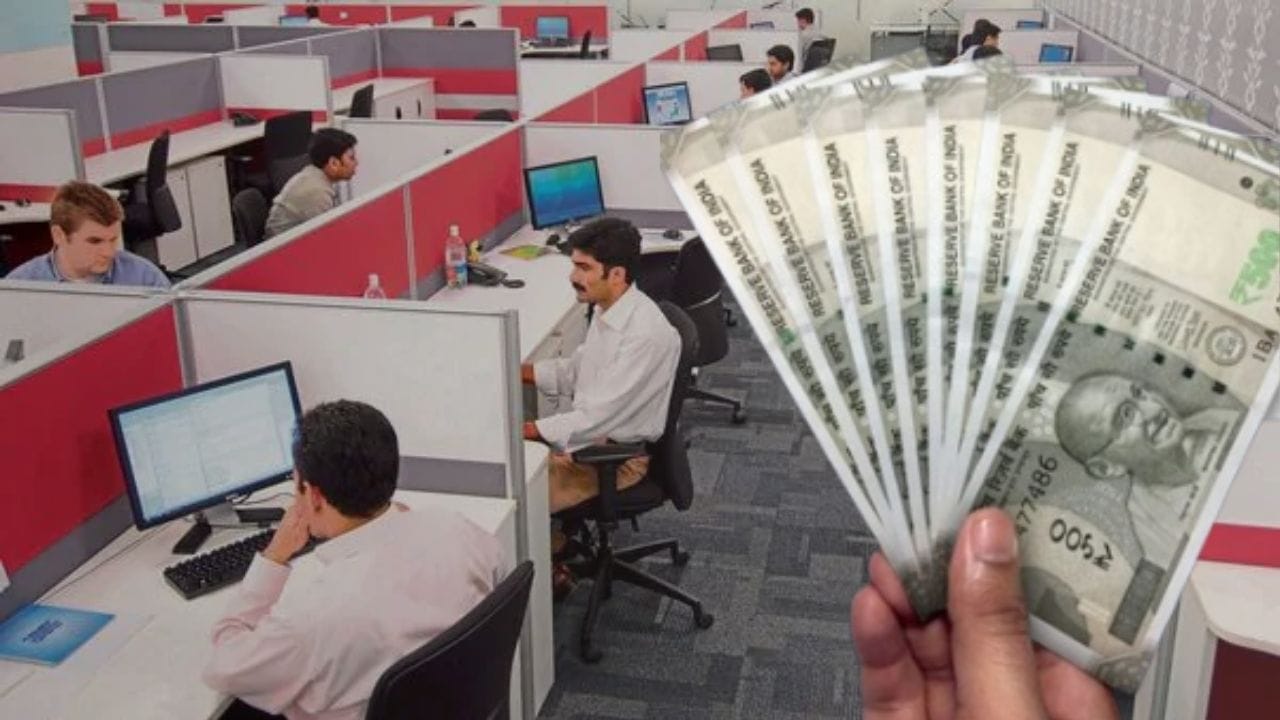
Your take-home salary may decrease?
New labor code: The date of 21st November became witness to a big change for the employed people in India. After a long wait, labor reforms have been carried out in the country. With the implementation of four new labor codes, there has been a historic change in the social security structure of the country. ‘Code on Social Security, 2020’ has replaced old laws like Gratuity Act and ESI Act. Its scope is now so wide that even gig workers and migrant laborers have been brought under its security cover. Also, the eligibility for gratuity for fixed-term employees has been reduced from five years to just one year. But, amidst this big change, there is a problem which is giving sleepless nights to both employers and employees.
New codes came, but suspense on PF
expected that new codes With this the old EPF Act of 1952 will be abolished, but this did not happen. The Social Security Code was to incorporate it within itself, but no official notification was issued to repeal the old law.
That is, the new definition of salary is applicable for gratuity and ESI, while the calculation of PF (Provident Fund) is still going on according to the old law. This has become a system where the salary of the same employee is being calculated differently for different benefits.
Is your salary slip about to change?
The root of this entire confusion is the rule of ‘Code on Wages, 2019’, which completely changes the salary structure. According to the new rule, Basic Pay + Dearness Allowance (DA) + Retaining Allowance of any employee should be at least 50% of the total salary. If it is less than 50%, then the remaining allowances will have to be added to bring it to 50%.
The problem is that PF is still governed by Section 2(b) of the old Act, which has a very limited definition of ‘Basic Wages’. It does not include things like HRA, bonus and commission. Now companies are in a dilemma, for gratuity and ESI they have to follow the 50% rule but for PF the old rule is still in effect.
Double challenge before companies
This change can also have a direct impact on your income tax. Employees living in the old tax system save tax through allowances like HRA and LTA. If the company mixes these allowances with the basic salary to meet the 50% rule, then the tax of the employees may increase and the take-home salary may decrease.
Also read- 8th Pay Commission: Big news for 1 crore families, government cleared the picture on pension revision, this is the update on salary.
To deal with this problem, many companies are adopting a middle path. They are maintaining the allowances in the salary slip so as to save tax, but for the calculation of PF, they are internally adding these allowances and considering them as ‘notional’ salary. This means that the payroll team will now have to maintain two types of accounts, one for tax and the other for PF compliance.
Also read- How much pension will I get from EPFO, this is the complete calculation and formula.