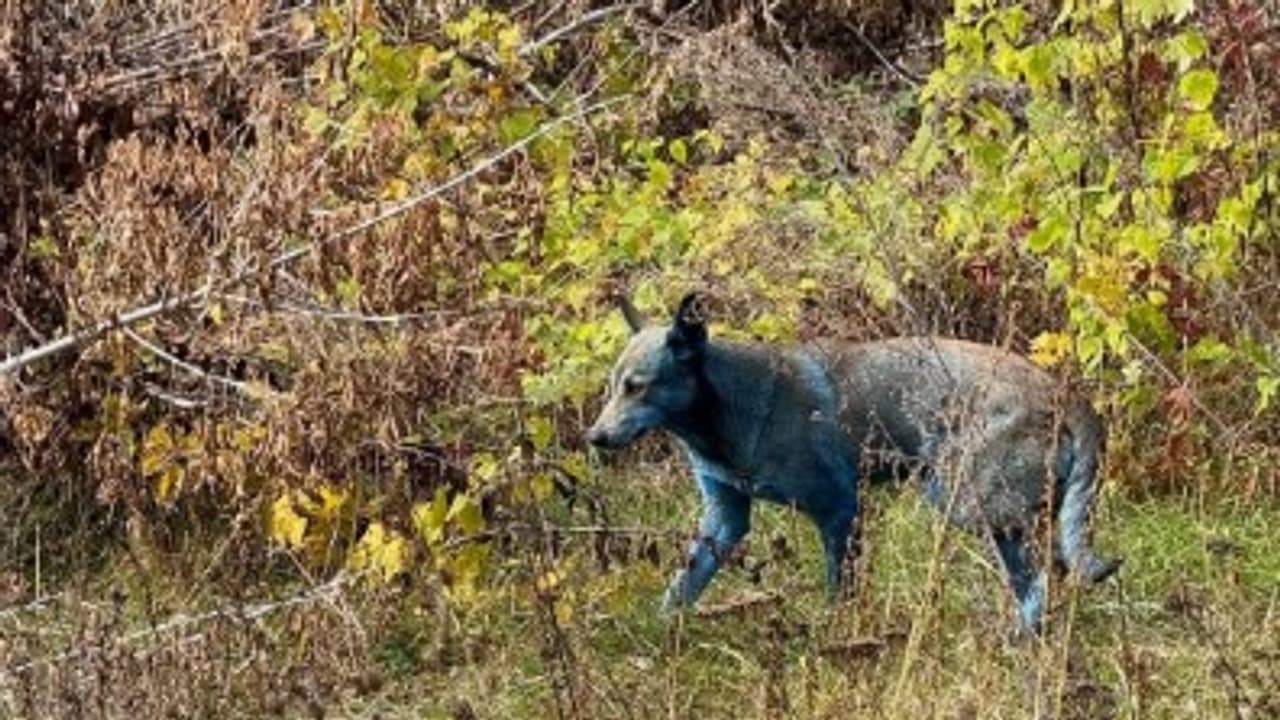
Scientists have solved the mystery of Chernobyl’s blue dog: the colour came from a tipped-over porta-potty, not radiation. The harmless incident also highlights ongoing research into the zone’s stray dogs, which have developed unique genetic traits.
Three stray dogs living inside the Chernobyl Exclusion Zone recently baffled scientists and social media users alike when they suddenly appeared with bright blue fur. The Dogs of Chernobyl program, which has cared for around 700 animals in the zone since 2017, said the animals had looked completely normal just a week earlier.
The images caused a wave of online theories many assuming that radiation had changed the dogs’ color. Others suggested they may have come into contact with non-toxic industrial chemicals. Despite the odd colour, volunteers noted the dogs remained “very active and healthy.”
The Surprisingly Simple Cause
Timothy A. Mousseau from the Dogs of Chornobyl Program has now offered the most likely explanation and it has nothing to do with radiation. According to Mousseau, the dogs had rolled in a tipped-over porta-potty, coating their fur in blue chemical residue.
“Anyone who owns a dog knows they’ll roll in anything — including feces,” he wrote. The blue tint was simply external contamination, not a sign of internal exposure, and could be washed off.
Radiation-Adapted Dogs Still Mystify Scientists
While the blue colour turned out to be harmless, the dogs themselves remain a scientific fascination. Strays living in the Chernobyl Exclusion Zone have survived nearly four decades of exposure to radiation, pollution, and heavy metals conditions that would normally devastate most wildlife.
Blood samples taken from 116 dogs by researchers between 2018 and 2019 revealed that these animals form two genetically distinct populations, completely unlike dogs in surrounding regions. Researchers discovered nearly 400 unusual genomic markers, along with 52 genes likely shaped by chronic exposure to contamination.
These adaptations appear to help the animals tolerate the toxic environment a resilience some experts describe as a kind of “radiation superpower.” Their survival offers a rare opportunity to study how wildlife evolves under extreme environmental pressure.