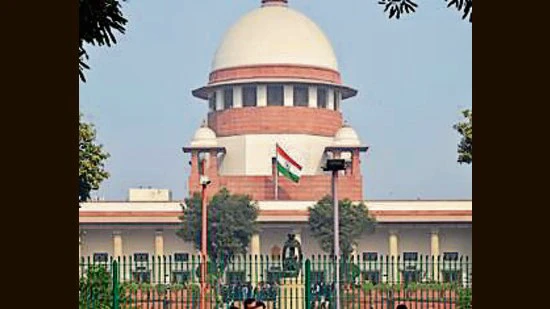
The Election Commission of India (ECI) has filed detailed affidavits in the Supreme Court defending the special intensive revision (SIR) of voter lists in West Bengal and Tamil Nadu, and insisting that the exercise is transparent and constitutionally mandated.
Rejecting claims that the exercise risks disenfranchising lakhs of genuine voters, ECI called the allegations of mass deletion of voters in West Bengal and Tamil Nadu as “exaggerated” and politically engineered.
In its response to a batch of petitions filed by the DMK, CPI(M), West Bengal Congress and Trinamool Congress leaders, ECI told the Court that claims of potential voter exclusion running into lakhs were not just factually incorrect but “highly exaggerated” and “politically motivated”.
The petitions are scheduled to be heard by a bench comprising Chief Justice of India Surya Kant and Justice Joymalya Bagchi later this week.
In its affidavit submitted in the plea filed by TMC MP Dola Sen and others, the Commission argued that the portrayal of SIR as a mass-purge exercise was a “manufactured narrative amplified for vested political interests”. ECI maintained that the revision is a constitutionally sanctioned process intended to purify the electoral rolls and prevent ineligible persons from voting, who was a responsibility that, it said, flows directly from Articles 324 and 326 of the Constitution.
“A harmonious reading of the constitutional provisions and the Representation of the People Act makes it clear that the Commission is vested with the power, and duty, to verify voter eligibility including citizenship,” stated the affidavit, adding that free and fair elections cannot be secured without accurate and credible electoral rolls.
The political parties, however, have argued that the SIR is being implemented in a manner that disproportionately targets vulnerable communities and opposition voter bases. They have pointed to what they claim are abrupt classification of electors into categories requiring documentary proof and the alleged risk of deleting genuine voters who are temporarily absent, migrant, or unable to immediately produce documents. In West Bengal, some petitioners allege that deletion could affect up to 30% of voters.
ECI rejected the claim outright, citing internal progress numbers. It told the Court that 99.77% of existing electors in the state had already been provided pre-filled enumeration forms, and that 70.14% of these had been returned — a response level that, according to the Commission, “demonstrates that the claims of widespread exclusion are speculative and unfounded”.
The poll panel also detailed process safeguards, including mandatory multiple household visits by Booth Level Officers (BLOs), restrictions on demanding documents during verification, and provisions allowing family members to submit forms or for electors to complete the process online. It said that special instructions had been issued to ensure support for elderly, disabled and vulnerable voters.
The petitions before the Supreme Court challenge not just the administrative conduct of SIR but also question whether a process of this scale could be justified months before a general election. Political parties have demanded transparency, public audit timelines and independent oversight to prevent disenfranchisement.
In two parallel affidavits concerning Tamil Nadu, the Commission reiterated that the nationwide revision is being undertaken after more than 20 years – the last exercise was in 2002, and is being rolled out in two phases, beginning June 24 in Bihar and expanding to 12 states through an October 27 order.
Arguing that judicial interference at this stage would stall a constitutionally mandated exercise, the ECI said the Court “would be loath to countenance speculative and exaggerated assertions” aimed at undermining the process. It also accused some political actors of protesting while refusing cooperation on the ground.