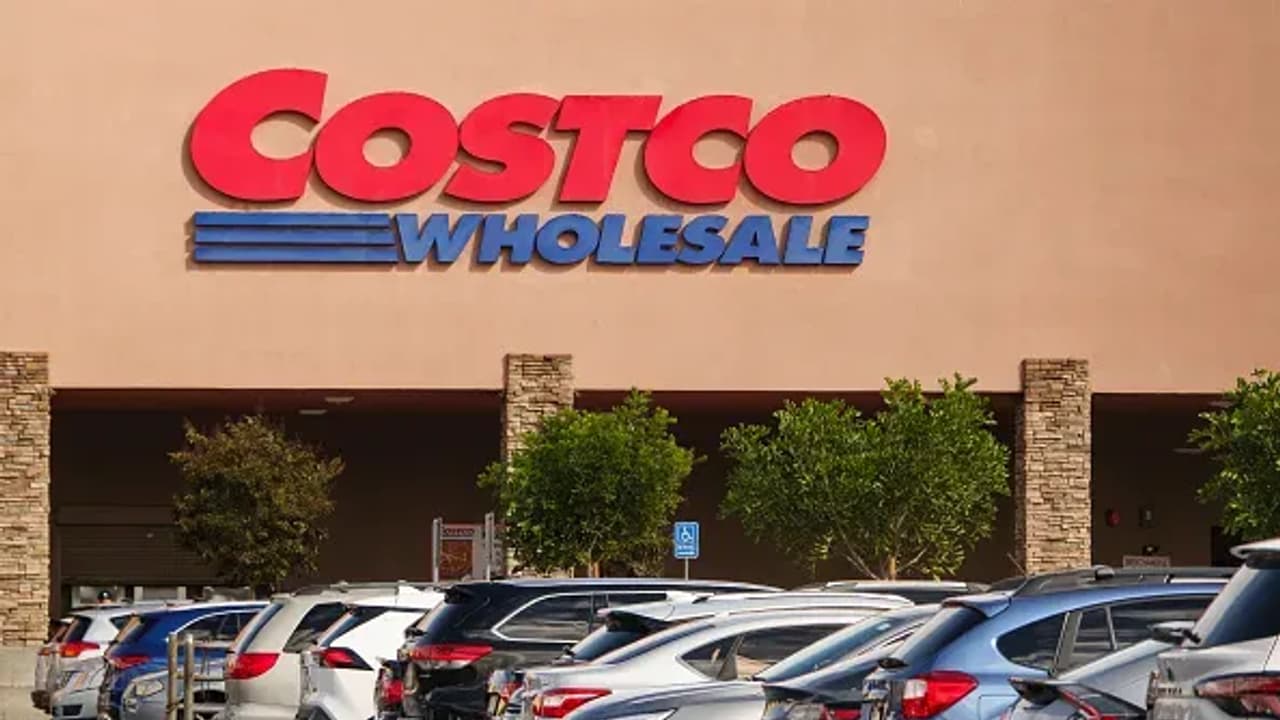
Nearly 11 months into Trump’s presidency, Costco filed a lawsuit on Friday, and the membership-only retail chain has asked for a full refund for the tariffs it has paid this year.
- Costco has tried to absorb the costs resulting from the tariffs, and several other retailers, including Walmart, have turned to hiking product prices to offset them.
- CFO Gary Millerchip noted that Costco was also changing its item assortment where appropriate, leaning into its private-label brand Kirkland Signature and increasing domestically sourced goods.
- The suit read that Costco ordered the United States to refund the duties collected under the International Emergency Economic Powers Act on the entries of goods this year, with interest as provided by law.
With Costco becoming the first of the largest retailers in the United States to file a lawsuit against the Trump administration over the tariffs implemented this year, the focus has now shifted to whether other large companies will join suit and whether their strategies to fend off the higher costs have paid off.
While Costco has tried to absorb the costs of the tariffs and not raised prices, several other retailers, including Walmart, have raised prices to offset those costs.
But the see-saw nature of U.S. President Donald Trump’s stance on tariffs throughout the year has led companies to focus on their supply strategies and financial expectations of a hit to their profitability as the quarters passed.
Costco’s Lawsuit
Nearly 11 months into Trump’s presidency, Costco filed a lawsuit on Friday, asking for a full refund of the tariffs it has paid this year. The suit read that Costco ordered the United States to refund the International Emergency Economic Powers Act’s (IEEPA) duties collected on the entries of goods this year, with interest as provided by law.
The U.S. Supreme Court has also questioned the Trump administration regarding the implementation of the widespread tariffs imposed on global trading partners during the year.
Costco told the court that it had to file this separate lawsuit because even if the Supreme Court eventually rules that these IEEPA tariffs were illegal, importers like Costco aren’t automatically entitled to get their money back.
“This Court and the Federal Circuit have cautioned that an importer may lack the legal right to recover refunds of duties for entries that have liquidated, even where the underlying legality of a tariff is later found to be unlawful,” the lawsuit read.
Costco’s Tariff Mitigation Efforts So Far
While Costco has not given an estimate of the impact on profits, the company has been stepping up efforts throughout the year to mitigate the effects of tariffs and offset these costs.
In September, during a post-earnings call, CFO Gary Millerchip said the company was working closely with suppliers to mitigate the impact of tariffs, including moving production to countries where it makes sense and consolidating global buying to lower the cost of goods across all its markets.
Millerchip noted that the company was also changing its item assortment where appropriate, leaning into offering more of its private-label brand, Kirkland Signature, and increasing domestically sourced goods.
He said that, in part, Costco has absorbed costs and charged them back to offset them, protecting the members who buy from the retailer.
“There are examples there where we’ve been able to save 30% to 40% on the cost of items by consolidating to a smaller number of buyers — a small number of suppliers and bringing the cost down because of the volume that we can consolidate there,” Millerchip added.
How Did Stocktwits Users React To Costco’s Lawsuit?
Retail sentiment on Costco remained unchanged in the ‘bullish’ territory, with message volumes at ‘low’ levels, according to data from Stocktwits. The retail user message count on the stock jumped 1200% in the last 24 hours on Stocktwits.
A user on Stocktwits called Costco’s decision to file a lawsuit “impressive.”
Shares of Costco have declined by more than 7% over the last 12 months.
What Have Other Big Retailers Done So Far?
In May, Walmart announced it would raise prices later that month to offset the impact. Finance chief John David Rainey then said that the tariffs were still too high.
However, during the company’s third-quarter earnings call in November, incoming CEO John Furner said the impact of tariffs had been lower than expected early in the year. “There has been some relief on some key food categories, which certainly is helping,” he said.
In August, Target’s then-CEO Brian Cornell said the tariffs would pressure the company’s earnings and losses. “As one of the largest importers in the country, the prospect of higher tariffs meant we were facing some major financial and operational hurdles as we entered the year,” Cornell added.
Cornell said that Target has maintained focus on value by limiting the impact on pricing. “And while we expect this year’s profit and loss will reflect some short-term pressure from tariffs, we expect to end the year in a healthy position and move beyond this period of uncertainty in 2026,” he said.
Most of these retailers, including Walmart, Target, and Amazon, had also pulled forward inventory in the first quarter to push off an uneventful situation of higher tariffs to the end of the year.
Apparel Retailers And Their Tariff Estimation
Last week, Abercrombie and Fitch said that the assumed tariffs included in the operating margin carry a cost impact of around $90 million for 2025, or 170 basis points of sales.
In May, the company noted that, net of expected mitigation efforts, the assumed tariffs would carry a cost impact of around $50 million in 2025, which would affect the full-year operating margin outlook by 100 basis points.
American Eagle Outfitters in September said it expects third-quarter operating income to be in the range of $95 million to $100 million, including approximately $20 million of incremental tariff costs.
For the fourth quarter, the company forecast operating profit of $125 million to $130 million. “This includes approximately $40 million to $50 million of tariff impact in the fourth quarter,” American Eagle said.
In November, Ralph Lauren said that, following its strategic inventory pull forward, it expects tariff headwinds to ramp up in the third quarter and become more pronounced in the fourth quarter. “As a result, we still expect a notable year-over-year gross margin decline in Q4 due to the combination of reciprocal tariffs,” Ralph Lauren said.
Macy’s in September forecast its full-year guidance to incorporate a 40 to 60 basis-point tariff impact on gross margin, reflecting the incremental tariffs announced since May.
For updates and corrections, email newsroom[at]stocktwits[dot]com.<