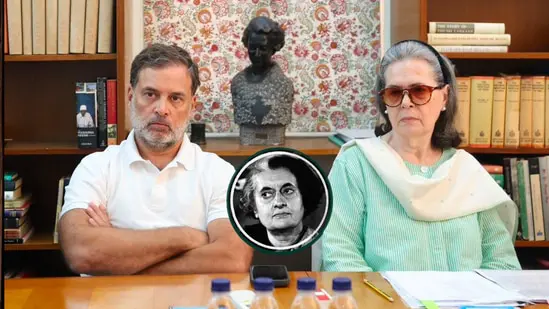
Three generations of the Gandhi family have now, in different ways, found themselves entangled with Sonam Wangchuk’s politics of the fast, even as Narendra Modi’s government remains indifferent at best to the protest at Jantar Mantar.
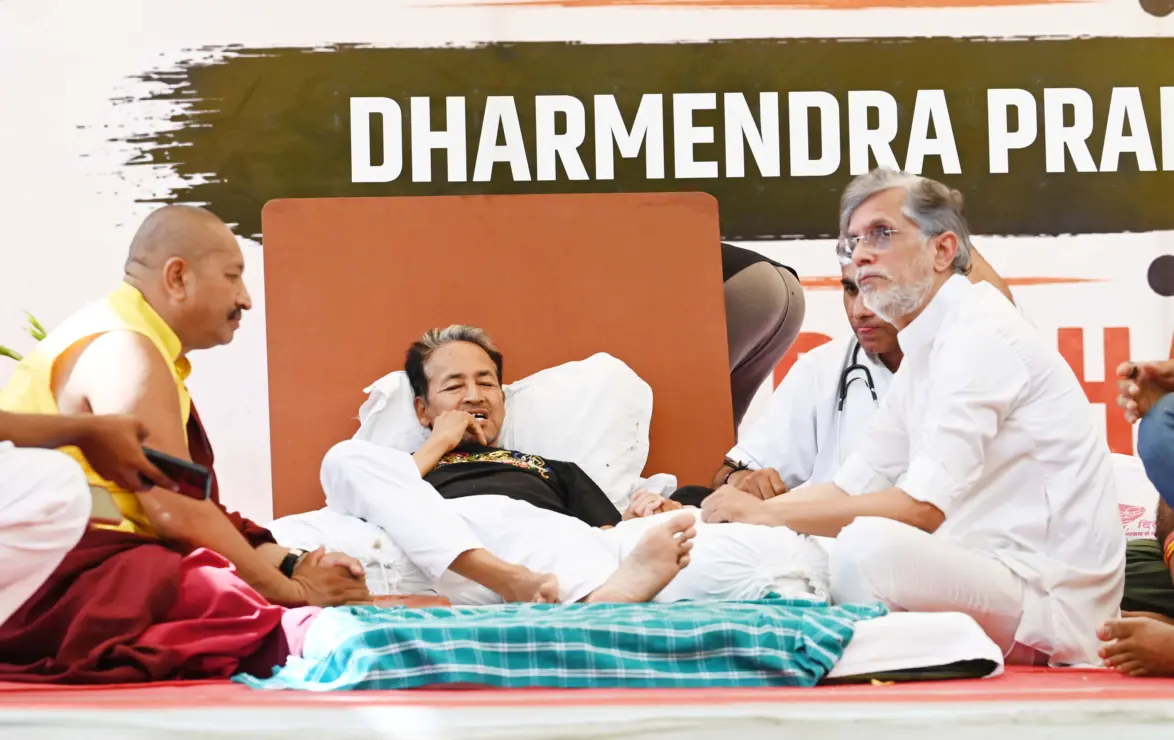
As Wangchuk’s hunger strike entered its 20th day in Delhi on Friday, the Congress’s response to the activist and the Cockroach Janta Party’s (CJP) protest has moved on three tracks – one rooted in family memory, one of caution as main Opposition, and a third keeping some measured distance for a parallel track.
Indira’s history
The memory being invoked belongs to 1984, a year that’s seminal for many reasons. Sonam Wangchuk’s father, Sonam Wangyal, undertook a five-day hunger strike that year demanding Scheduled Tribe (ST) status for Ladakh’s communities. An ex-MLA from Leh for the Congress, and later minister in the Jammu and Kashmir government too, Sonam Wangyal was important enough for the prime minister to react.
Indira Gandhi was the prime minister; she flew into Leh and persuaded him to end the fast, committing to grant ST status and the benefits that come with that.
She was in the middle of many fires at the time, and was assassinated later that year over the military’s actions during Operation Bluestar at the Sikh shrine of Golden Temple in Amritsar, Punjab. Her promise to Ladakh materialised by 1989. Sonam Wangyal himself had a complicated relationship with the party by then, as he was expelled from the Congress in 1987 over “anti-party activities”. He died in 1998.
Sonia’s intervention
It was this 42-year-old episode involving her mother-in-law that Sonia Gandhi, chairperson of the Congress Parliamentary Party, is reported to have invoked this week to push her party towards publicly backing Wangchuk’s current fast.
The intervention marked a turning point after weeks of conspicuous Congress silence on the CJP protest, even as AAP’s Arvind Kejriwal, Samajwadi Party’s Dimple Yadav, and Trinamool Congress chief Mamata Banerjee had already backed him. Congress MPs did so in individual capacities.
Party insiders were reported to be concerned over support for a satirical outfit that could confuse the anti-government voice that the Congress intends to lead as the main Opposition party.
But a shift became visible on Thursday, when general secretary (organisation) KC Venugopal broke the party’s silence, expressed solidarity with Wangchuk, and said the demand for the resignation of Union education minister Dharmendra Pradhan, over alleged irregularities in the NEET-UG examination, was already being made by the Congress too.
That was also the day CJP’s Saurav Das posted on X about the Indira Gandhi intervention of 1984, citing it as responsible conduct – apparently as opposed to how the NDA regime has launched an attack, with Pradhan himself calling the protesters “B-team of terrorists”.
Sonia Gandhi chaired a of the Congress MPs the same day, attended also by her son and Leader of Opposition Rahul Gandhi, and party chief Mallikarjun Kharge plus all other MPs.
Friday saw the first in-person Congress presence at the protest site, with Rajya Sabha MP Pawan Khera meeting Wangchuk and other CJP members on the 20th day of his fast.
Congress leader Jairam Ramesh separately noted the party had been demanding Pradhan’s resignation for nearly two months.
That demand is at the heart of what Rahul Gandhi has been doing on the issue.
Rahul’s parallel track
Rahul has not visited Jantar Mantar, choosing instead to press the same demand – Pradhan’s resignation over the NEET-UG paper leak and other issues – through the party’s separate ‘Chhatron Ki Goonj’ student outreach campaign, which moved to Dehradun on the same Friday after Khera visited the protest site in Delhi. He has also met students affected by the CBSE’s paper-checking scandal separately.
The absence has not gone unnoticed. Wangchuk himself reportedly took a swipe at it, calling it “great pettiness” if Opposition leaders did not back him.
CJP leaders have insisted the platform, formed and named after some remarks by the Chief Justice of India, will not align with “existing political parties”.
Online history now going viral shows they had made unflattering remarks about Rahul Gandhi in the past, including founder Abhijeet Dipke calling his ‘Bharat Jodo Yatra’ “just a travel vlog”.
Dipke has in recent interviews said “opinions change over time”.
He also pushed back on the “where is Rahul” narrative altogether in a post on X, arguing that the Opposition’s presence at the site was not the real test. The questions that mattered, he said, were why Prime Minister Modi continued to refuse dialogue and why the education minister had still not been held accountable. “Ask the questions that actually matter,” he said in his post.
Complicated relationships
The Congress’s calculated engagement with Wangchuk comes against the backdrop of his dramatic falling-out with the Modi government. In August 2019, when the Centre abrogated Article 370 and created Ladakh as a separate Union Territory by taking away special status and statehood from J&K, Wangchuk was among the most vocal supporters of the move, thanking Prime Minister Narendra Modi on X. He even met Pradhan in 2023, and there was mutual praise.
That goodwill collapsed as Ladakh’s UT status left it, unlike the UT of Jammu and Kashmir, without an elected legislature.
Wangchuk led an agitation but was jailed for six months until March this year after there was violence last year, and he was accused of igniting “Nepal- and Bangladesh-inspired Gen-Z protests”. His wife then cited his Gitanjali Angmo praise for PM Modi at an event in Pakistan in 2025 as proof that he could not be “anti-national”.
Some of Ladakh’s demands for internal democracy have since been accepted in principle by the Centre.
Rahul has provided issue-based support to these causes.
As for Wangchuk’s latest issue against paper leaks, there is no word yet on whether the Congress will join the CJP’s march to Parliament planned for July 20, coinciding with the start of the Monsoon Session.
PM Modi, meanwhile, was in the northern states on Friday, where he promised to develop Punjab and sought votes for the BJP on the development plank.