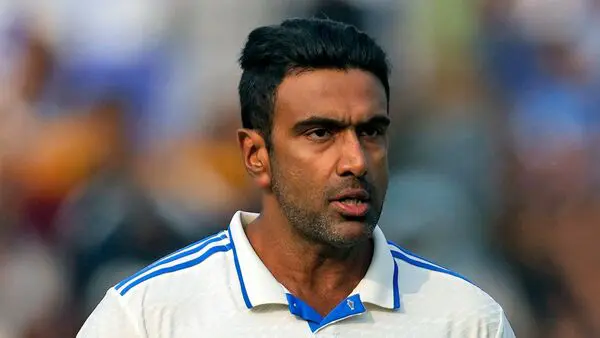
Former India all-rounder Ravichandran Ashwin has said the changes to the fixture formats of the 2027 ODI World Cup and the 2028 T20 World Cup make sense, but believes that smaller and emerging nations need more exposure, which will help develop the sport globally.
“The ICC’s changes to the fixture format for the 2027 ODI World Cup and 2028 T20 World Cup make sense from a competitiveness standpoint,” the former Chennai Super Kings star wrote on “X”.
Ashwin seeks stronger pathway for emerging nations
He suggested that smaller nations like the Netherlands and the USA get more exposure by playing as the third team in a bilateral series, not just in qualification tournaments.
“But if the final goal is to grow the game, there needs to be a stronger pathway for emerging nations. Teams like the Netherlands, Scotland, Nepal, USA and Ireland need more meaningful matches (FOR EXAMPLE: getting added as the third team into every bilateral series), not just qualification tournaments,” he explained.
“Let’s not forget, that collective growth will make this sport a spectacle at the Olympics,” Ashwin added.
While the 2027 ODI World Cup, set to take place in South Africa, Namibia and Zimbabwe, will have 14 teams as planned, the tournament format will be a bit different.
Three teams will compete in a Super Series round before the group stage and the Super 7 stage. The top team from the Super Series will qualify for the group stage, whereas the other two teams are eliminated. After a single round-robin stage, the top three teams from each group, along with the next best-placed team from both groups, will advance to the Super 7.
The Super 7 stage is a single-group round, with the top four teams advancing to the semi-finals, and the winners of the semi-finals meeting in the final.
The 2028 T20 World Cup has also undergone a format change. The ICC has introduced Super 10 instead of Super 8 after the Group stage.
Five groups of four teams will be created, with the top two from each group entering the Super 10.
Unlike previously where the top two teams from each group qualify for the semi-finals, only the one that tops the table in each group enters the last four.
Teams placed second in groups play in the eliminator against the teams placed third in the opposite group, adding another layer to the competition.
The winners of the Eliminator games will then take on the group winners in the semi-finals, with the semi-final winners facing off in the final.