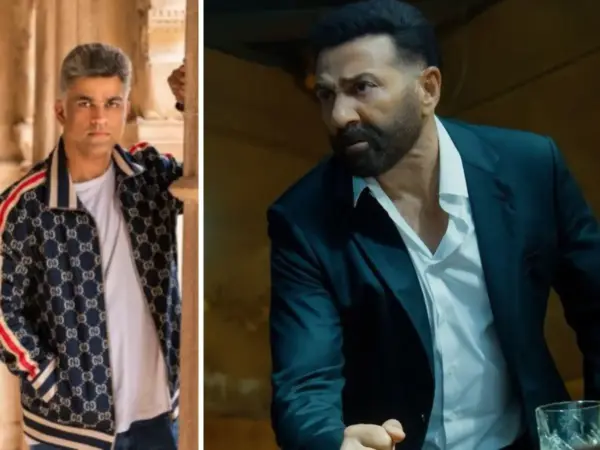
For Siddharth P Malhotra, the release of the courtroom drama Ikka on July 10 is not just another premiere-it is the culmination of a ten-year obsession.
Designed as the very first film he ever wanted to make, the project came close to production multiple times, only to fall through at the last minute.
The Netflix film features Sunny Deol, Akshaye Khanna, Tillotama Shome, Akanksha Ranjan and Dia Mirza in key roles.
In a chat with WION recently, Malhotra said, “Imagine the destiny of this film that I’ve been at it trying to get this film made. And every time, it’s reached right at the end point. And for some reason or the other, it fell through. So, I’ve just been persistently at it.”
For Malhotra, the long wait was worth it, believing it was “God’s plan” for the stars to align when they did.
Two Schools of Cinema Clash: Sunny Deol vs. Tillotama Shome
On paper, pairing action icon Sunny Deol with indie powerhouse Tillotama Shome as courtroom adversaries seems unthinkable. But for Malhotra, Deol was always the only choice to play the central character, Arjun Mehra.
Malhotra recalled, “There was nobody else to play Arjun Mehra. And I’m a huge Sunny Deol fan. When we did acting classes, the first speech that we were given was the Sunny Deol speech from Damini.”
When Netflix greenlit the film, Shome became the ‘unanimous choice’ to play his legal opponent, creating an electric contrast of styles.
The director explained, “We thought, let’s get two different schools of cinema to clash together as well. And that will give us something very interesting. Because there are layers, there are silences, there are moments where Tilly just looks. And when you have brilliant actors, the scenes elevate.”
Bringing Akshaye Khanna onboard
While Deol and Shome locked horns, Malhotra needed a powerful antagonist. Though he doubted whether Akshaye Khanna would agree to the role, he urged Netflix to reach out anyway.
Malhotra shared, “We went to Akshaye, we narrated it to him. He read it in two days. He said, ‘damn good script’ and came onboard.”
Directing a powerhouse trio like Deol, Khanna, and Shome in a talky courtroom drama presented its own cinematic challenges. To prevent the scenes from static monotony, Malhotra and his editor, Shweta, focused heavily on pacing and movement.
Malhotra detailed, “When you have Sunny Deol, Akshaye Khanna, and you’ve cast them, then there is a certain fandom that you have to cater to. Also, because the courtroom is heavy on dialogues and monologues, I had to ensure that there was energy in the scene. Either the camera was moving or the actors were moving so that it does not look boring. It’s got to move at a certain pace.”
How OTT is empowering a ‘third-generation Nepo kid’
As the grandson of legendary actors Prem Nath and Bina Rai, and the grand-nephew of Raj Kapoor, Malhotra jokingly refers to himself as a “third-generation nepo kid.” Yet, his filmography (We Are Family, Hichki, Maharaj) shows a director constantly pivoting across genres. He credits OTT platforms for giving creators the creative freedom to take risks that traditional theatrical releases might shy away from.
Malhotra asserted: “A film like Maharaj would never have been released considering all the things, if Monica Shergill of Netflix, along with Aditya Chopra, had not empowered me. OTT is empowering creators.”
The decline of Indian television: ‘A ruthless numbers game’
Despite his cinematic success, Malhotra’s roots remain firmly planted in television, having produced iconic shows like Sanjivani, Dil Mil gaye and Kaafir. However, he feels modern TV has lost its golden-era charm-the era when his father, Prem Krishen, produced masterpieces like Katha Sagar.
Malhotra laments that the medium has devolved into a repetitive loop of “formula” writing designed to torture protagonists.
Malhotra explained, “Now, the formula that works on TV is to find reasons to make the protagonist get tortured. It is repetitive in nature. The TRP game has changed completely. When we did Sanjivani, we’ve seen TRPs of 27, 28. Today, a high TRP on television is when you hit a 2.”
His last TV venture, Pashmina-a 150-episode series shot entirely outdoors in Kashmir-was completed on his own terms despite budget cuts. But Malhotra admits the environment has become hostile to creative vision.
“For creators on television, it becomes more and more challenging. Here, what happens, you work for six months on a show, and in one month or one week, you’re asked to get cut, because now it’s a ruthless number game. So, hats off to everyone who is surviving that game today, ” Malhotra concluded.