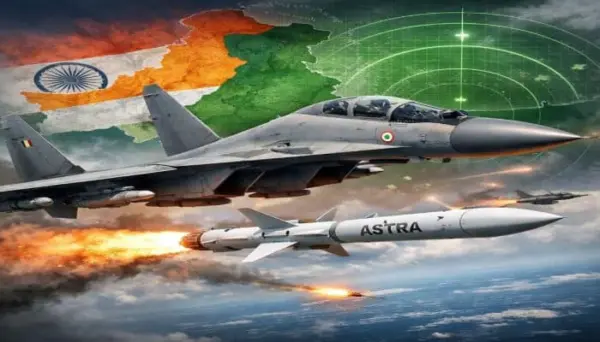
New Delhi: Indias indigenous Astra Mk1 air-to-air missile is set to get its first foreign customer. Indonesia is preparing to acquire the advanced weapon system.
The deal comes as an important milestone for Indias defence exports and brings attention to the technology behind the missile and its role in modern air warfare.
It is a Beyond Visual Range Air-to-Air Missile (BVRAAM), a category of weapons built to destroy enemy fighter aircraft from distances where pilots cannot see each other with their necked eyes.
In simple terms, a fighter jet carrying a BVRAAM does not need to come close to an enemy aircraft to launch an attack.The missile uses radar, sensors and guidance systems to locate and strike targets far away.
What is a BVRAAM and how does it work?
Beyond Visual Range means the missile can engage targets beyond the distance at which a pilot can visually identify another aircraft.
During a typical air combat situation, two fighter jets could be dozens of kilometres apart that make direct visual contact impossible. The aircrafts radar first detects and tracks the enemy plane. Once the target is locked, the pilot launches the missile.
In the initial stage, the missile receives guidance from the aircrafts computer system. As it gets closer to the target, its Active Radar Seeker takes over and allows it to track and hit the enemy aircraft even during complex combat conditions.This allows fighter pilots to attack from a safer distance and alters the course of aerial warfare.
What makes Astra Mk1 unique?
Manufactured by the Defence Research and Development Organisation (DRDO), it is Indias first homegrown BVRAAM.
The missile can cover an approximate range of 110 kilometres based on the launch conditions and can reach speeds greater than Mach 4, which is over four times the speed of sound.Astra Mk1 is equipped with an Active Radar Seeker that helps it track targets during the final stage of flight. The system is built to operate in conditions where electronic warfare and jamming attempts are used.
The missile can engage fast-moving fighter aircraft and is built for operations during day and night as well as in different weather conditions.
Which aircraft can use Astra Mk1?
Astra Mk1 has been fitted onto two frontline fighter aircraft used by the Indian Air Force the Su-30MKI and the LCA Tejas. The missile is also being considered for newer platforms such as the Tejas Mk1A, Tejas Mk2 and the Advanced Medium Combat Aircraft (AMCA) as they enter service.
Its use on other fighter jets would depend on future operational needs and integration plans.
How does Astra Mk1 compare with global missiles?
Only a limited number of countries have developed advanced BVRAAM technology. The United States operates the AIM-120 AMRAAM, Europe has the Meteor, Russia uses the R-77 and China has developed the PL-15.
With Astra Mk1, India has joined this group of countries that can design and produce modern air-to-air missiles independently and offer such systems to foreign buyers.
Why is Indonesia interested in Astra Mk1?Indonesia has thousands of kilometres of maritime boundaries and needs strong air defence capabilities to protect its large island territory.
The addition of Astra Mk1 would give the Indonesian Air Force a missile capable of engaging enemy aircraft from long distances. It would improve its ability to detect, track and respond to aerial threats during modern air operations. Indonesias decision to acquire Astra Mk1 is also part of its efforts to modernise defence systems and strengthen fighter aircraft capabilities.
Why is the deal important for India?Indonesia becoming the first foreign buyer of Astra Mk1 would be a major milestone for Indias defence manufacturing sector.The deal would show that the countrys defence industry is moving beyond domestic requirements and entering the international market for advanced military technology.
The Astra Mk1 deal would add to Indias defence export ambitions. It would showcase the countrys ability to design, develop and supply advanced missile technology beyond its own armed forces.