The United States and Iran are nearing a potential agreement aimed at concluding the ongoing conflict in the Middle East, according to a regional official familiar with the mediation efforts led by Pakistan.
This development comes as the U.S. considers launching a new round of military strikes against Iran.
The official, who requested anonymity to discuss sensitive negotiations, indicated that the parties involved have made considerable progress in their discussions, although he warned that unresolved disputes could jeopardize the negotiations.
Details of the Proposed Agreement
The anticipated agreement would entail an official declaration signaling the end of hostilities, followed by a two-month negotiation period concerning Iran’s nuclear program. Furthermore, it includes provisions for reopening the Strait of Hormuz and lifting the U.S. blockade on Iranian ports, although specific details remain undisclosed.
Timeline for Final Decision
Two regional officials and a diplomat expressed optimism that a conclusive decision regarding the draft prepared by Pakistan could be reached within 48 hours as both nations assess the proposal. They spoke on the condition of anonymity due to their lack of authorization to engage with the media.
Iran’s Position in the Negotiations
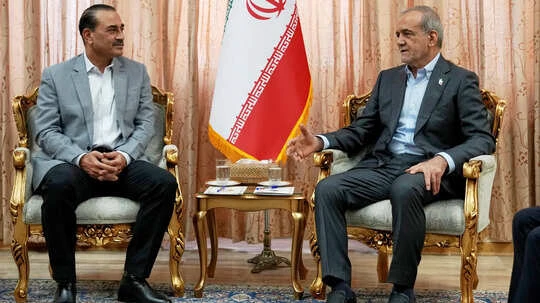
Iran has indicated a reduction in differences in its negotiations with the U.S., especially after recent talks held in Tehran by Pakistan’s army chief. U.S. Secretary of State Marco Rubio noted progress in the discussions, suggesting that announcements may come soon.
The White House has yet to comment on the ongoing negotiations, while President Donald Trump remained out of public view during the weekend, limiting his social media presence.
Concerns Over Military Action
Trump has been considering a military strike against Iran due to what a source described as a potential 60-day ceasefire extension. Regional stakeholders exhibit varying opinions regarding this extension, and the discussions are ongoing.
Despite the progress, both Iran and the U.S. have reiterated their core positions, warning of the consequences of renewed attacks and the potential disruption of the ceasefire. Rubio emphasized the U.S. stance that Iran must not acquire nuclear weapons and must surrender its enriched uranium.
Iran’s Framework for Future Talks
According to Iranian state television, Foreign Ministry spokesperson Esmail Baghaei described the draft as a ‘framework agreement,’ asserting that it aims to address essential issues for concluding the war and other critical matters. He noted that discussions about the details would take place over a timeframe of 30 to 60 days.
Baghaei emphasized that nuclear issues are not part of the current negotiations, indicating that Tehran’s priority is to conclude the war before engaging in discussions regarding its nuclear program.
Impact of Regional Dynamics
Baghaei highlighted that the Iranian-backed Hezbollah’s leadership received communication from Iranian Foreign Minister Abbas Araghchi, affirming Tehran’s commitment to its allies. The fragile ceasefire brokered by the U.S. in the Israel-Hezbollah conflict remains a concern, as the conflict escalated shortly after the initiation of the war with Iran.
Iran’s parliament speaker, Mohammad Bagher Qalibaf, who previously engaged in direct negotiations with the U.S., warned that a resumption of attacks by Trump would lead to consequences more severe than those experienced at the conflict’s outset.
Historical Context of the Conflict
The conflict originated following U.S. and Israeli strikes on February 28, which disrupted nuclear discussions with Iran. In retaliation, Iran closed the Strait of Hormuz, a vital route for oil and gas, causing significant global economic repercussions.
In response, the U.S. imposed a blockade on Iranian ports, with the U.S. Central Command reporting that American forces have turned away over 100 commercial vessels since the blockade commenced on April 13.