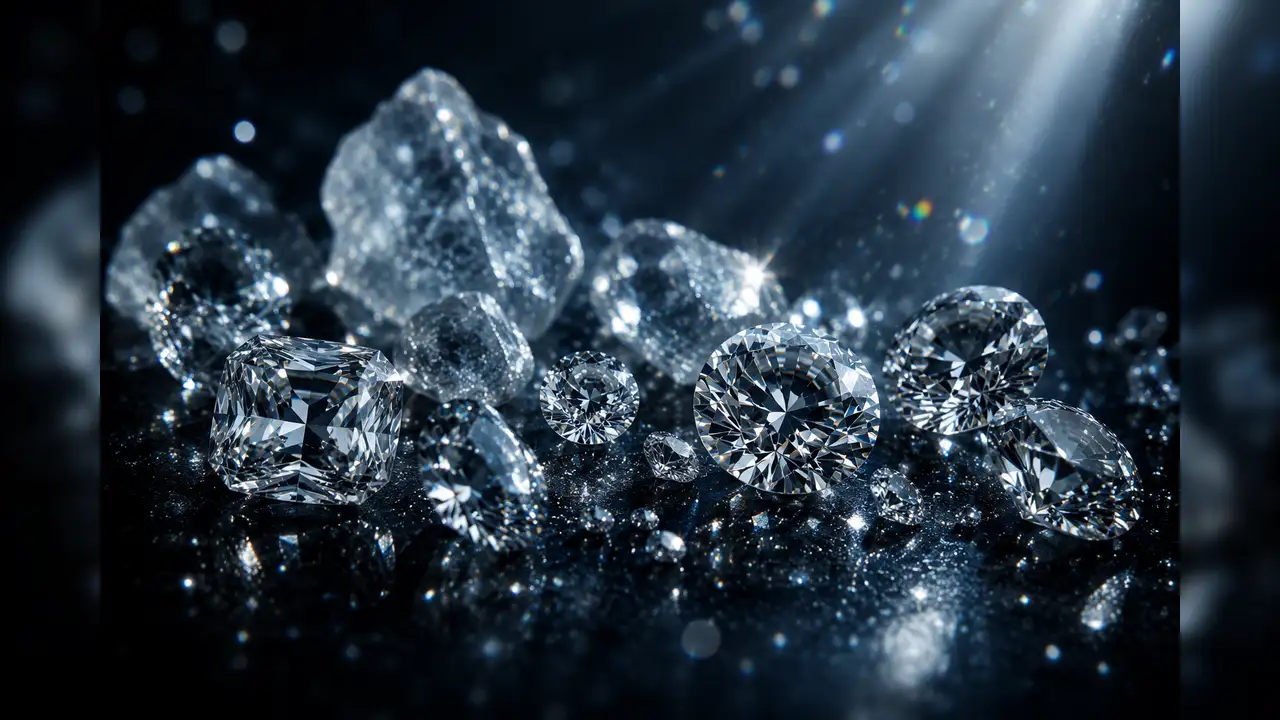
As the diamond industry faces slowing demand, the spike in demand for lab grown diamonds and employment concerns, Times Now Digital speaks to Country Head-Category Marketing at De Beers India, Toranj Mehta on the crucial questions that consumers seek answers to.
Q. Given the spike in lab-grown diamonds’ demand and market share, how can the natural diamonds market remain relevant?
A .Natural diamonds remain highly relevant by anchoring themselves in both steady market growth and evolving consumer narratives. In India, the share of global natural diamond demand value has grown consistently, rising from 8% in 2021 to 12% in 2024, with demand value projected to hit INR 1,520 billion by 2030. This resilience is mirrored emotionally as we connect natural diamonds with modern, everyday rituals that go beyond traditional bridal wear. Today’s consumers are celebrating milestones like a second piercing, commemorating a bond with a best friend, or marking personal intentions and self-manifestation. We have aligned our campaigns with these contemporary moments through initiatives like “Love from Dad” to celebrate parental support, “Love from Bestie” for lifelong friendship, and “Love from Universe” for self-love, ensuring that the authentic rarity of natural diamonds continues to signify life’s most genuine connections.
Q. How can the common or average consumer know the difference between a natural and a lab-grown diamond… minus equipment?
A. Natural diamonds hold immense emotional and financial value, consumer safety is paramount. To protect buyers from synthetic lookalike products, India recently introduced the BIS guidelines under IS 19469: 2025 (aligned with international ISO 18323: 2015 standards). Developed in collaboration with the government, GJEPC, and major retailers, this unified framework ensures transparent, standardised disclosure across the country, clearly separating rare natural diamonds from mass-produced factory synthetics. On the ground, this regulatory safety net is backed by De Beers’ advanced verification instruments, which provide rapid, independently tested results with a zero-percent false-positive rate, ensuring absolute authenticity for every purchase. A natural diamond is a finite treasure that holds its worth over time, whereas a synthetic is a transactional product that can be produced in limitless quantities.
Q. The diamond sector is seeing weak demand, significant losses, how do you think the sector can recover?
A. The diamond midstream has navigated temporary pressures from geopolitics, post-pandemic delays, and synthetic supply, but the sector is resilient and actively correcting. Through strict supply discipline, flexible logistics, and strategic marketing, the groundwork for a robust recovery is already being laid. As trade tensions stabilize and pipeline balance is restored, a major growth opportunity awaits retailers who are currently operating with historically low inventories. Most importantly, the markets are diverging. Lab-grown are increasingly recognized as mass-produced, allowing natural diamonds to stand alone in their enduring rarity, uniqueness, and value. We have made our biggest-ever marketing investment over the last two years and are opening our multiple stores of Forevermark diamond jewellery pan India. By focusing on the “India Diamond Story” from its origin 2,500 years ago to a domestic market that is set to almost double by 2030 we are ensuring that the sector recovers by becoming more consumer-centric and narrative-driven than ever before.