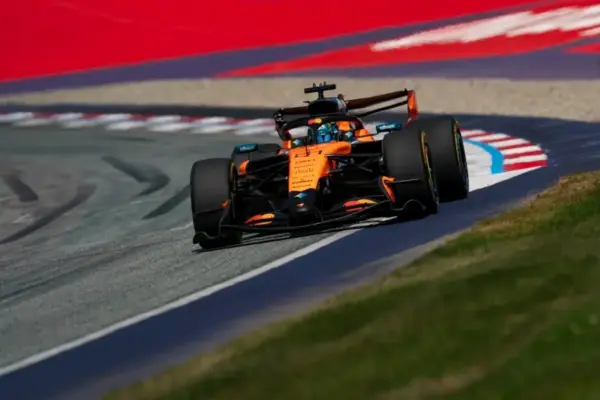
McLaren’s hunt for Formula 1 supremacy has hit a glaring roadblock: they’re bleeding lap time to Mercedes in the most critical corners, and their own boss says it’s mostly their fault.
In a season dominated by Mercedes, who have snatched seven out of eight Grand Prix victories so far in 2026, McLaren continues to chase shadows. The team, still powered by Mercedes engines, trails the reigning constructors’ champions by a stubborn deficit that refuses to budge, even as the races tick by. Team principal Andrea Stella has finally put numbers to the pain-revealing that a staggering 70% of McLaren’s performance gap comes from how their car handles in corners, not just raw horsepower.
The implications are nothing short of seismic for McLaren’s campaign. While many have pointed to the power unit as the main culprit, Stella’s frank diagnosis has shifted the spotlight to the MCL40’s chassis and aerodynamic shortcomings. In a sport where a tenth of a second can define a season, McLaren is losing up to four tenths per lap-three-quarters of it while navigating the turns. To make matters worse, the team’s struggles are not confined to the corners; a significant chunk of time is also being lost on the straights, thanks to excessive drag and possible inefficiencies in power deployment.
Stella did not mince words when breaking down the situation: “When it comes to our gap to Mercedes, it’s always been between three and four tenths; it comes in the corners predominantly, probably 70% in the corners and 30% on the straights,” he told assembled media. The numbers are damning. “In the corners, it is very clear why that is the case. It is a fact that their car generates more downforce than our car, and this is something that we are working on, and we have good projects [in the works].”
The straight-line deficit, though smaller, is not to be underestimated. “The 30% happening on the straights might have to do with some additional aerodynamic drag that we have on our car, but we are also looking at the way we exploit the power unit, because the speed deficit is quite significant,” Stella admitted. The problem is so complex that even with GPS overlays, untangling whether the drag or power delivery is to blame is a herculean task. “It is difficult when you reverse engineer to see the outcome of a few kph in difference, but it could be multiple sources, and it is a typical problem as to how much you can effectively distinguish the drag from the power unit work,” he explained.
Stella acknowledged progress in collaboration with Mercedes High Performance Powertrains (HPP), especially regarding deployment and ride style. But he made clear that, whatever the differences in hardware, much of the issue is in McLaren’s hands. “It is fair to concede that Mercedes has less drag than us; we have different gear ratios, which may have an effect; there may be other sources, but the only thing I know is which is under our control is that we need to minimise the drag on the MCL40,” he declared. The mandate is now explicit: “This is what we are concentrating on, while we keep a very tight collaboration with HPP.”
The stakes for McLaren could not be higher. With Mercedes setting the pace and the rest of the field nipping at their heels, every lost tenth is a missed opportunity in a championship fight where margins are razor-thin. The team’s technical department is now under maximum pressure to deliver aerodynamic upgrades and optimize their gearbox and drag profile-before the season slips irretrievably away.
McLaren’s path forward is clear but daunting. Will their engineering team find the solutions needed to claw back the lost time, or will the MCL40’s flaws continue to shackle their ambitions? The next few races will tell the tale, as the relentless Formula 1 calendar leaves no time for rest-or excuses. One thing is certain: with Stella’s blunt assessment ringing in their ears, McLaren has nowhere to hide. All eyes are now on Woking to see if they can transform harsh truths into hard-won progress.