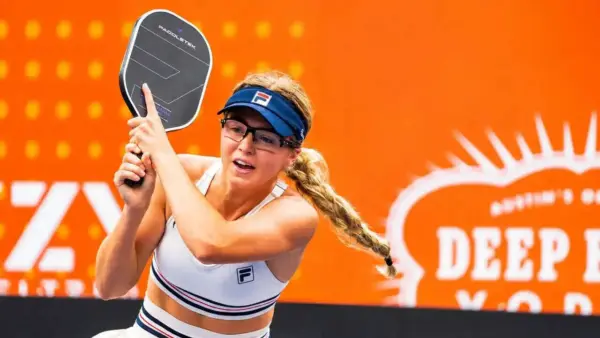
Terms like serve, return, drop, and rally are fundamental to pickleball, yet they only scratch the surface of the game at a professional level.
The sport has evolved significantly, showcasing a more intricate and strategic approach. Over time, players have refined their skills, enhancing the game’s complexity and appeal. Matches are characterized by precision and creativity, reflecting individual styles and strategies. Players such as Anna Leigh Waters exemplify this evolution, seamlessly transitioning between different areas of the court to execute a variety of shots, demonstrating an impressive level of instinctive movement.
Drive and Drop: A New Strategy
Drive and Drop
The modern pickleball game is epitomized by the combination of a third-shot drive followed by a fifth-shot drop. Instead of solely relying on the traditional third-shot drop, players now often drive the third shot to elicit a defensive response, then follow up with a soft drop into the kitchen. This strategy is not about finishing the point immediately but rather about setting up a more advantageous fifth shot. This approach has become a defining feature of contemporary pickleball, a sport that originated in 1965. Players like Ben Johns have shown how a well-placed drive can lead to a predictable return, allowing for a controlled drop shot afterward. Waters emphasizes that each third shot should create an attacking opportunity rather than stand alone, a principle that has become crucial in the sport’s tactical development.
Mastering the Kitchen: Dinks and Attacks
Combining Crosscourt Dinks and Down-the-Line Smash
Effective baseline coverage is essential for gaining an attacking advantage, but mastering the kitchen area is equally critical, as this is where matches are often decided. Dinking skills are paramount, allowing players to win points by accelerating the pace of the rally unexpectedly. This was evident during MLP New York when 13-year-old Kelly Goodnow stunned Tyson McGuffin with a swift drive after a slow rally. Crosscourt dinks are strategic, targeting opponents’ weaknesses while establishing a rhythm. A slight misstep in the opponent’s defense can quickly shift the momentum, leading to a decisive attack.
Strategic Movement and Controlled Attacks
Crosscourt Dinks and Attack
The final strategy involves subtlety over brute force. Players often begin by making their opponents move with crosscourt dinks, drawing them out of position. A second crosscourt dink stretches the opponent further, creating an opening for an attack down the middle as both players recover. This method focuses on outmaneuvering rather than overpowering the opponent. Top players advocate for structured decision-making and precise ball placement, as seen in the gameplay of professionals like Kate Fahey, who demonstrate that controlled movement can create larger attacking opportunities than sheer speed. Disguise is also vital; the best attackers reveal their intentions only at the last moment, making it challenging for opponents to anticipate their moves.