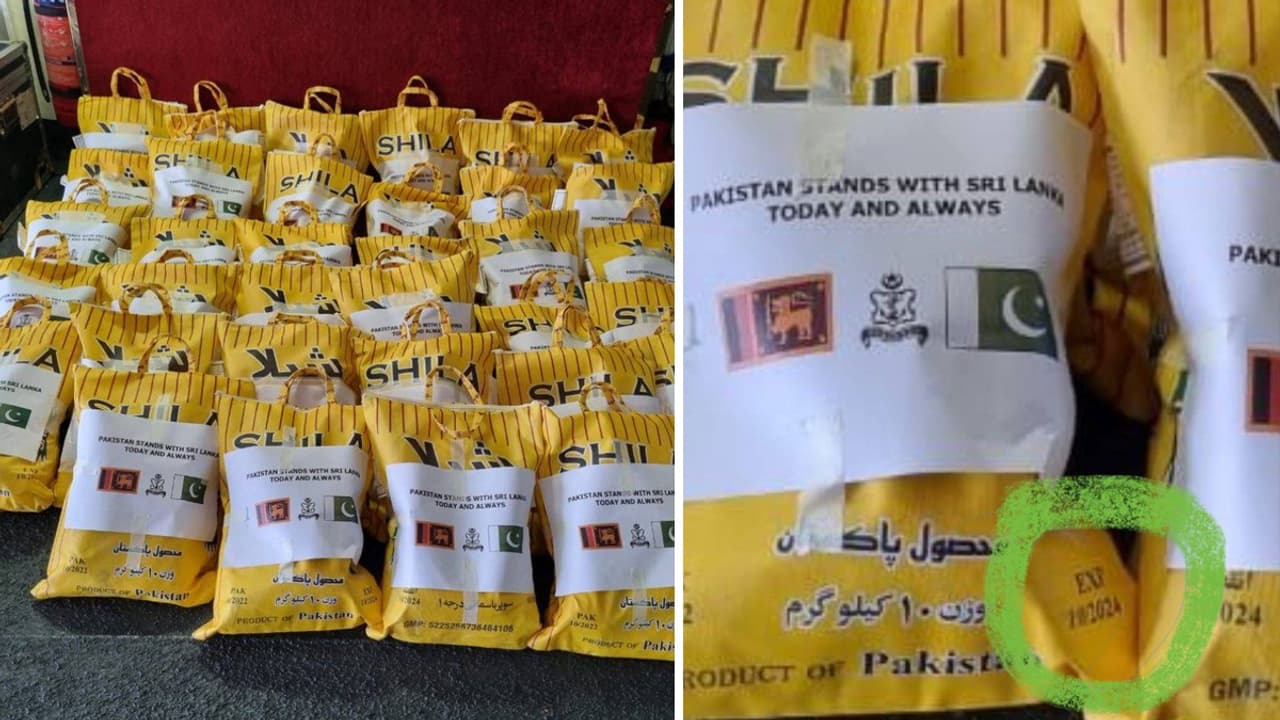
Pakistan faces backlash for sending alleged expired food items as flood aid to Sri Lanka, while India leads the real emergency response after Cyclone Ditwah devastated millions.
In the middle of Sri Lanka’s worst humanitarian crisis in recent years, the difference between two neighbours could not have been more visible. One arrived with rescue forces and relief on the ground — the other with criticism trailing behind its so-called “help”.
Pakistan’s, ‘Aid’ Turns Into Social Media Embarrassment
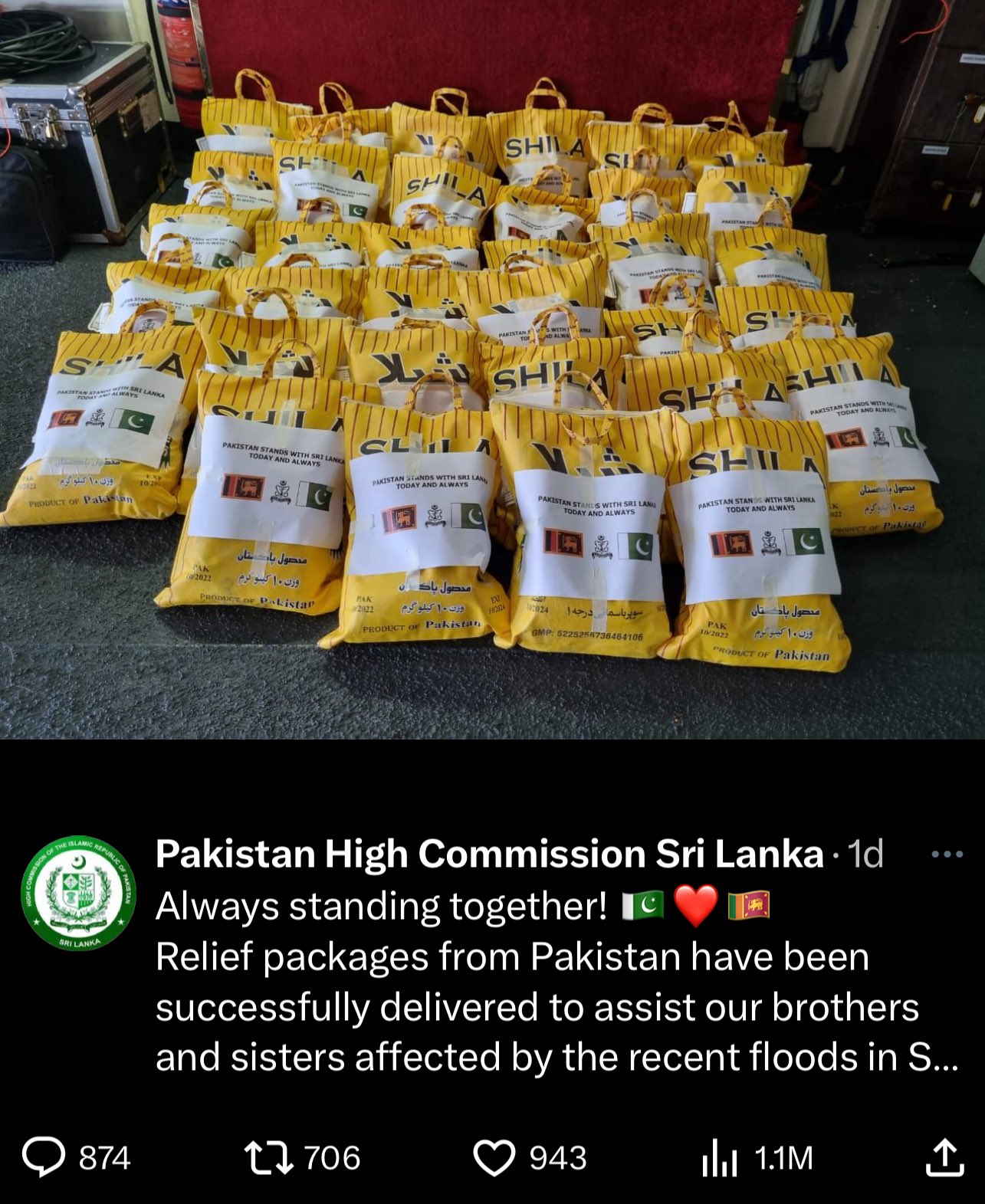
As Sri Lanka continues to battle the aftermath of catastrophic flooding caused by Cyclone Ditwah, the Pakistan High Commission in Colombo attempted to score diplomatic points by showcasing “relief packages”.
Posting photos of stacked supplies, the Commission wrote:
“Relief packages from Pakistan have been successfully delivered to assist our brothers and sisters affected by the recent floods in Sri Lanka, which signifies our unwavering solidarity.”
But within seconds, the narrative crumbled.
Sharp-eyed online users zoomed in and spotted what appeared to be expiry dates — October 2024 — printed on the visible food items. Outrage followed.
One user slammed Islamabad’s gesture bluntly:
“Instead of disposing in garbage, Pakistan chose to send its expired food materials to flood-hit Sri Lanka.”
What was meant to be a goodwill gesture became a diplomatic embarrassment — a reminder of Pakistan’s declining credibility and crumbling economy. Instead of helping a nation in grief, it ended up adding insult to injury.
It’s worth noting that the Pakistan High Commission in Sri Lanka deleted the post following the backlash.
“Pakistan sent expired Food materials to flood hit Sri Lanka. This isn’t the first time either- Islamabad has a track record of forwarding old aid it earlier received from other countries or dispatching outdated consignments while labeling them as humanitarian assistance,” wrote another X user.
Another X user remarked, “Instead of disposing in garbage, Pakistan chose to send its expired Food materials to flood hit Sri Lanka.”
Scroll to load tweet…
Scroll to load tweet…
Scroll to load tweet…
Scroll to load tweet…
Scroll to load tweet…
Scroll to load tweet…
Scroll to load tweet…
India Steps Up Where It Matters
In sharp contrast, India’s response has been swift, strategic, and deeply humane.
According to the President Anura Kumara Dissanayake’s office:
“Prime Minister Narendra Modi conveyed heartfelt condolences to President Anura Kumara Dissanayake and reaffirmed that India stands firmly beside Sri Lanka and its people in this difficult hour.”
Modi spoke directly with the Sri Lankan President on Monday, assuring full support in rehabilitation efforts across the affected regions. India launched Operation Sagar Bandhu, sending two urban search and rescue teams comprising 80 NDRF personnel — a show of genuine solidarity and professional disaster assistance.
This is not just diplomacy. It is India’s “Neighbourhood First” policy in action — helping without hesitation.
Human Cost: A Nation in Pain
Cyclone Ditwah’s devastation is staggering:
- 410 deaths confirmed
- 336 people still missing
- 14,66,615 people affected
- 4,07,594 families displaced
- 256 major roads damaged
- 15 crucial bridges destroyed
Entire districts remain isolated. Sri Lanka’s infrastructure is wounded. The nation is grieving — and fighting for survival.
To speed up relief, Colombo announced that flood aid items will now be exempt from customs duties — as long as they are consigned to the Director General Disaster Management or the Secretary to the Defence Ministry.
Two Very Different Partnerships
Sri Lanka didn’t need a PR stunt. It needed rescue teams, food, boats, medicine — not expired packets from Islamabad’s trash pile.
India delivered exactly what was required — manpower, logistics, and compassion. Pakistan delivered… well, a trending social media scandal.