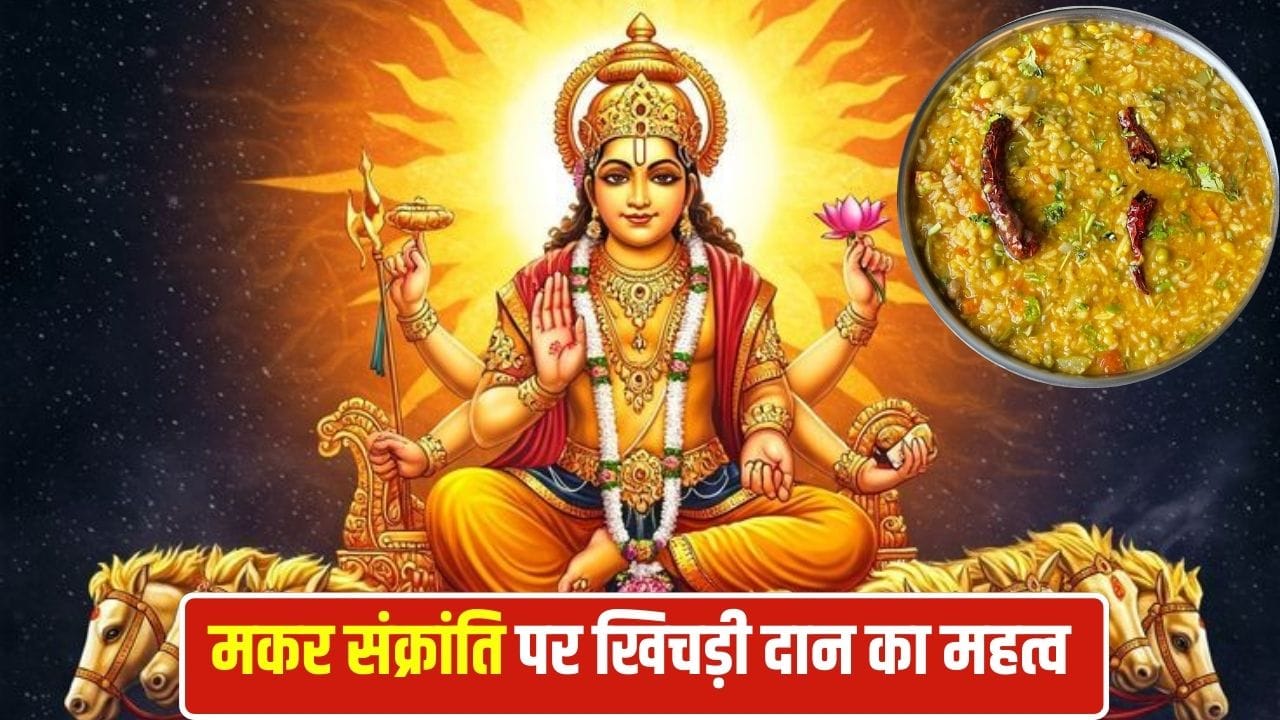
makar sankranti 2025
Khichdi religious significance: Makar Sankranti, the festival of light, joy and happiness and prosperity, not only symbolizes the Uttarayan of Sun God, but it is also a festival which is directly related to Khichdi. Making and donating Khichdi at homes on this day is an ancient tradition, behind which deep religious and historical significance is hidden. According to the calendar, in the year 2026, the festival of Makar Sankranti will be celebrated on Wednesday, January 14. Let us know why Khichdi is eaten and donated on this day, and how this custom started.
Religious significance of Khichdi
makar sankranti But Khichdi is not just a dish but is considered a Mahaprasad that pacifies the evil effects of the planets. In astrology, every ingredient used in Khichdi is seen to be associated with some planet, and its consumption is considered to strengthen the position of the planets.
- Rice (Anna) Moon makes the mind calm and stable.
- black urad dal : Shani Dev reduces the inauspicious effects of Shani’s Sade Sati and Dhaiya.
- Turmeric: Guru/Jupiter increases knowledge and auspiciousness.
- Ghee: Surya Dev provides the power of Sun and increases health.
- Green Vegetables: Mercury brings success in intelligence and business.
Special belief: On the day of Makar Sankranti, Sun God enters Capricorn, whose lord is Shani Dev. By eating Khichdi and donating on this day, both Sun and Saturn are pleased, due to which the animosity between father and son (Sun-Saturn) ends. It is believed that by doing this the planetary defects are pacified and happiness and prosperity comes in the house.
Historical basis of the custom of eating Khichdi
Along with religious beliefs, there is also a historical and folk tale behind the tradition of Khichdi, which further strengthens the tradition:
Story of Baba Gorakhnath
It is said that the tradition of eating Khichdi started from the Gorakhnath temple in Gorakhpur, Uttar Pradesh. At the time of Khilji’s attack, Nath Yogi often used to beg for food, which wasted a lot of time and he was not able to prepare for the war. Then Baba Gorakhnath started the cooking method of mixing pulses, rice and vegetables together, which was called Khichdi. Not only was it prepared in less time, but it was also nutritious and gave instant energy to the yogis.
Baba Gorakhnath advised his devotees to make this Khichdi. On the day of Makar Sankranti, this Khichdi started being distributed as Prasad. Even today, a grand fair of Khichdi is organized in the Gorakhnath temple of Gorakhpur on Makar Sankranti and the tradition of offering Khichdi is followed in the temple. For this reason, Makar Sankranti festival is also known as ‘Khichdi festival’ in many places.
Importance of donating Khichdi on Makar Sankranti
Charity is an integral part of Indian culture, and Makar Sankranti is considered the festival of great charity. Anna Daan: Khichdi mainly consists of rice, pulses and vegetables, which comes under the category of Anna Daan. According to the scriptures, donating food on this day gives manifold virtuous results. It is extremely cold in the month of January. The taste of Khichdi is hot. Donating it to the poor and needy gives them relief from cold, which is also considered very auspicious from the point of view of charity. It is believed that by donating Khichdi, one gets special blessings of Sun and Shani Dev, and poverty is removed from a person’s life.
Disclaimer: The information given in this news is based on religious beliefs and general information. TV9 Bharatvarsha does not confirm this.