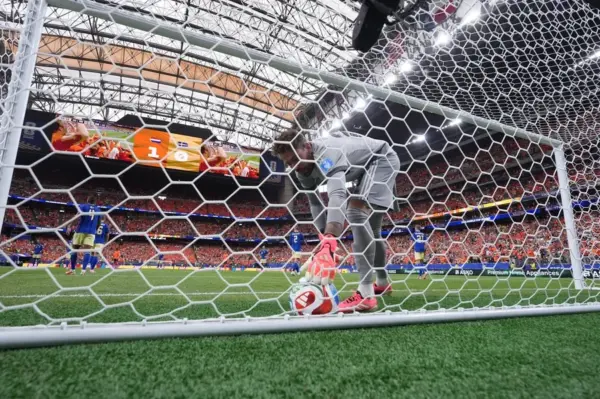
Goals have been flowing at an unprecedented rate during the 2026 FIFA World Cup, putting the tournament on track to become one of the highest-scoring editions in history.
After the first 40 matches, fans have witnessed 121 goals, nearly 25 per cent more than were scored during the same stage of the 2022 World Cup. The tournament is averaging three goals per game, with only three goalless draws recorded so far.
One factor frequently cited by players and coaches is FIFA’s newly designed match ball. According to FIFA, the ball features deeper seams intended to provide “optimal in-flight stability.” Players say the design allows shots to travel at greater speed, making life difficult for goalkeepers. The ball also offers improved grip in humid and wet conditions.
“This ball is as fast as a cannonball. I think today and the last couple of days, you saw if you kick the ball in the right position, it’s extremely difficult to save,” Austria coach Ralf Rangnick said.
Another contributor has been longer match durations. New hydration-break protocols have increased stoppage time, creating additional opportunities for goals. The expanded 48-team format has also widened the competitive gap between some nations, leading to more one-sided encounters.
Colombia coach Nestor Lorenzo believes modern football itself favors attacking play.
“They didn’t have this protection some 20, 30 years ago, when they were hit a lot more, when rough play was a lot more common,” he said Monday. “Today, any team that defends well and uses counterattacks and tries to play, can manage to do well.”
The increased scoring has been driven largely by players from Europe’s biggest leagues. More than half of all goals scored in the tournament have come from players representing clubs in England, Germany and Spain, with the English Premier League contributing the largest share.
The trend was evident in the Netherlands’ 5-1 victory over Sweden, where every goal was scored by players who featured in the Premier League during the 2025-26 season.
“I think the Premier League is more intense than this World Cup,” said Brazil forward Gabriel Martinelli of Arsenal. “But it’s certainly still a very beautiful World Cup, with high-quality and intense matches.”
At club level, Real Madrid, Inter Miami and Liverpool have supplied the most goal scorers. Inter Miami’s contribution has come largely , who has already scored five goals in two matches for Argentina.
Premier League-based players have accounted for nearly 30 goals so far, followed by 16 from Germany’s Bundesliga, 11 from Spain’s La Liga, seven from France’s Ligue 1 and five from Italy’s Serie A.
Major League Soccer players have scored eight goals, with Messi leading the way. Additional MLS scorers include Croatia’s Petar Musa, Paraguay’s Matías Galarza and New Zealand’s Finn Surman.
Real Madrid players have combined for seven goals, including four from , two from Vinicius Junior and one from Jude Bellingham. Liverpool players have contributed five goals, while Bayern Munich players have scored four.
Manchester City sent the most players to the World Cup with 19, although its four goals have all come from Norway striker Erling Haaland.
Of the 121 goals scored so far, 88 different players have found the net, while eight goals have been registered as own goals.
The tournament is currently on pace to comfortably surpass the 172-goal record set at the 2022 World Cup in Qatar. While direct comparisons are complicated by the expansion from 64 to 104 matches, the current scoring rate projects to nearly 194 goals over a 64-match schedule.
The rise in goals is not limited to international football. The UEFA Champions League has also seen record scoring levels in recent seasons, averaging 3.27 goals per game in 2024-25 and 3.47 goals per game in 2025-26, reflecting a broader shift toward more attack-minded football.