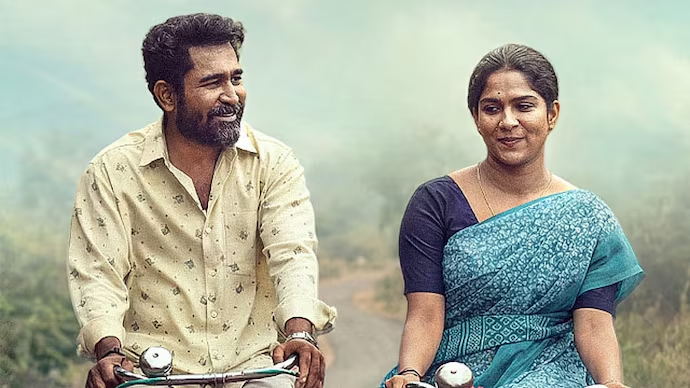
Director Sasi and actor-composer Vijay Antony reunited for Nooru Sami, 10 years after Pichaikkaran, a film that ended up as a sleeper hit for the actor. Pichaikkaran is an emotional drama about a mother and son, while Nooru Sami explores the concept of remarriage for a widow in a conservative world.
Selvi (Swasika), a widowed mother, raises her two sons Bhaskar (Ajay Dhishan) and Vivek (Sakthi) on her own. She watches them come up in their lives only for them to be consumed by ego and hating each other. One day, Selvi, in passing, mentions that she might like to remarry, much to the shock of her two sons.
While they initially oppose the idea based on societal perceptions, as the story progresses, they warm up to Selvi’s desire and where it stems from. The two sons then try to fulfil their mother’s wish, understanding that everyone deserves companionship and happiness, even if struck by life once.
Director Sasi is known for helming strong subjects with great social messaging. While he has films like Poo and Pichaikkaran to his credit, it has been a while since he had a hit in his name. In Nooru Sami, he decides to talk about the remarriage of a 43-year-old widowed mother. This opens up a lot of potential for an emotionally loaded film with drama and social commentary. The film is split in a way where the first half focuses on the two sons trying to accept the idea of remarriage, while the second is all about them standing up against the relatives and villagers who oppose it.

The filmmaker’s intention to explore a socially taboo topic works to the film’s favour, to an extent. A few emotional stretches, especially involving tough conversations between familial relationships, leave the desired impact. However, this feeling doesn’t last throughout the film. The tone keeps shifting between heartfelt drama and confrontational social commentary without settling into either, which pulls Nooru Sami back from achieving its full potential.
The film also takes a lot of dramatic detours that make it difficult to stay invested throughout. The central conflict, established at the beginning, gets conveniently pushed aside, only to find its footing again later — adding to the film’s tonal unevenness.
Swasika does most of the heavy lifting, and with a character like this, she gives what was needed for the role. However, the dubbing for her character Selvi could have been better.
Vijay Antony, who plays a character offering great support to Swasika’s Selvi, has a brief role. His character demands a subtle, not-so-OTT performance, and he delivers exactly that, making a solid impact. Ajay Dhishan, as one of her sons, makes an impact in an emotionally demanding role, but his expressions need much more nuance in key emotional sequences.