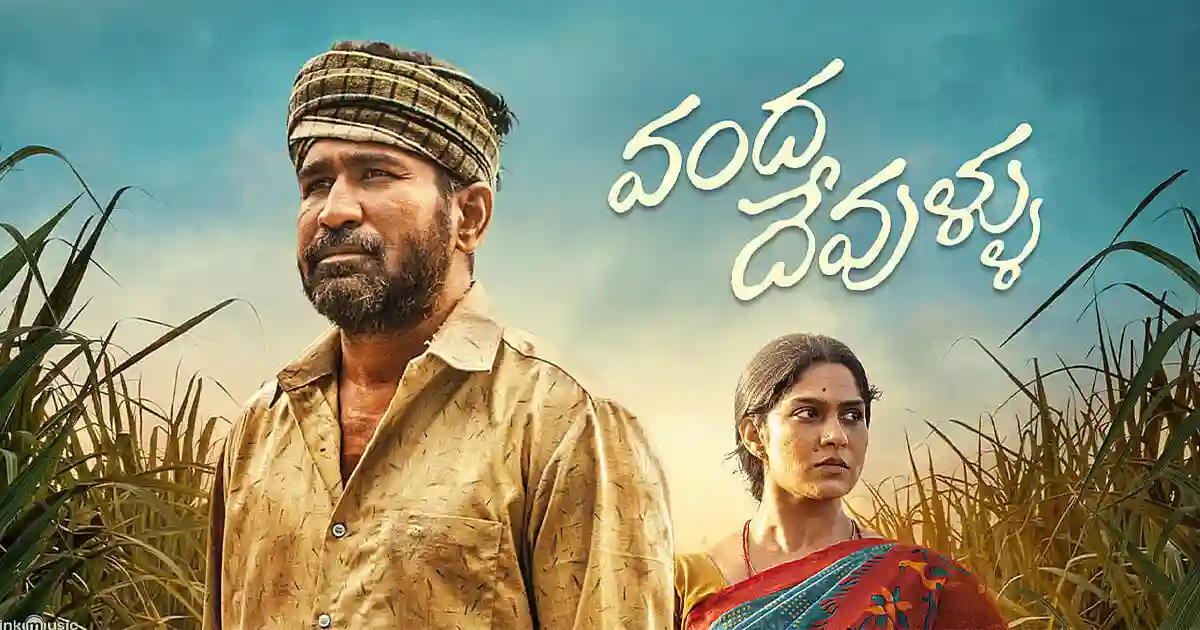
Vanda Devullu (Nooru Saami) marks the reunion of Bichagadu (Pichaikkaran) actor Vijay Antony and director Sasi. Their previous collaboration earned appreciation from audiences, creating a fair amount of curiosity around this film. With the movie hitting theatres today, let’s find out whether it lives up to the expectations.
Story:
Vaasavi (Swasika) is a middle-aged single mother raising her two sons, Baskar (Ajay Dhishan) and Vivek (Sakthi). As the sole breadwinner of the family, she shoulders every responsibility on her own. At one stage in her life, she wishes to remarry and start afresh. However, Baskar strongly opposes the idea, believing that marriage at her age would be inappropriate and socially unacceptable. Years later, Baskar undergoes a change of heart and realises that his mother deserves companionship and happiness. He begins encouraging her to remarry, but by then, Vaasavi herself is unwilling to take that step. This emotional conflict becomes the foundation of the story. Will she eventually agree to remarry, or will she spend the rest of her life alone? How do the villagers react when they learn about the situation? What is the response from her relatives? And how is Yedu Kondalu (Vijay Antony) connected to these developments? The film answers these questions as the narrative unfolds.
Plus Points:
Swasika delivers a remarkable performance and proves to be the film’s biggest strength. At first, one may wonder why she chose to portray a character much older than her real age. However, as the story progresses, it becomes evident why she accepted the role. The character is emotionally demanding and carries the weight of the entire narrative. Swasika embraces the challenge wholeheartedly and delivers a performance filled with conviction, maturity, and emotional depth. Her expressions, body language, and dialogue delivery elevate several scenes.
The film’s central premise is engaging. While the concept itself is not entirely new, the fact that it is inspired by a real-life incident involving a mother from a conservative village adds authenticity and emotional weight. Director Sasi presents the struggles faced by Vaasavi and the reactions of her relatives in a realistic manner. Many situations feel genuine because they mirror how people in similar circumstances might actually behave.
Ajay Dhishan performs adequately in his role and does what is required. Vijay Antony enters the narrative in the latter half and brings noticeable energy to the proceedings. His scenes with Swasika are among the film’s highlights and contribute significantly to the emotional impact. The second half, in particular, succeeds in keeping the audience invested, as the film effectively builds curiosity about how Vaasavi’s journey will ultimately conclude.
Minus Points:
The biggest drawback of Vanda Devullu is its sluggish first half. The narrative repeatedly circles around the same emotional conflict between the mother and her sons, making the proceedings feel repetitive. Instead of creating anticipation about where the story is heading, several scenes give the impression that the film is moving in circles. As a result, the audience is left waiting for the story to progress meaningfully before the interval.
The drama also needed stronger writing. Given the emotional potential of the subject, the film could have explored the conflicts with greater intensity and generated stronger emotional stakes. While the core idea is compelling, the screenplay often settles for a surface-level treatment instead of extracting maximum impact from crucial moments.
Another issue is the underutilisation of several supporting characters. The film introduces multiple characters who appear important initially but ultimately have very little influence on the narrative. Better usage of these roles could have added more depth to the story.
A number of scenes in the first half and a few in the second half feel stretched beyond necessity. Tighter narration and sharper editing would have significantly improved the overall pace. Additionally, the frequent insertion of comedy during emotionally charged moments weakens the dramatic impact. This tonal inconsistency affects several scenes that could have otherwise landed with greater effectiveness.
Technical Aspects:
Director Sasi deserves credit for handling the emotional core of the story with sincerity. His strength lies in portraying human relationships and social realities with authenticity. However, the screenplay lacks the urgency required to keep the audience consistently engaged, especially during the first half. Stronger writing and a more focused narrative could have elevated the film considerably.
Darshan Kirlosh’s cinematography effectively captures the rural setting and lends authenticity to the proceedings. The village atmosphere feels natural and believable throughout. Harish Yuvaraj’s editing is one of the weaker aspects of the film, as several sequences could have been trimmed for better impact. Balaji Sriram’s music serves the narrative reasonably well, though portions of the background score occasionally evoke a sense of familiarity. The Telugu dubbing is decent and blends well with the narrative. Bhashyasree’s Telugu dialogues are sharp and suit the emotional nature of the story.
Verdict:
the whole, Vanda Devullu works to an extent, thanks to its emotionally driven storyline and Swasika’s outstanding performance. She is the film’s biggest strength, while the second half delivers several engaging moments and emotional payoffs, with Vijay Antony adding value through his presence. However, a slow and repetitive first half, underutilised supporting characters, and an uneven screenplay hold the film back from reaching its full potential. Despite these flaws, its strong emotional core and realistic portrayal of a sensitive subject make it just a passable watch for fans of character-driven dramas.