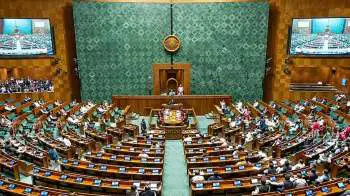
The Lok Sabha is set to take up three important bills for discussion and passage on Monday, November 30, including the Constitution (132nd Amendment) Bill, 2026, aimed at facilitating the implementation of women’s reservation.
The legislative agenda also includes a and amendments to laws governing Union Territories.
According to the Lok Sabha’s agenda released on Saturday, Union Law Minister Arjun Ram Meghwal will move the Constitution Amendment Bill and the Delimitation (Second) Bill, 2026, for consideration and passage. Union Home Minister Amit Shah will move the Union Territories Laws (Amendment) Second Bill, 2026.
The government is also set to withdraw the original Delimitation Bill, 2026, and the Union Territories Laws (Amendment) Bill, 2026, both of which were introduced in the Lok Sabha on April 16. Revised versions of the two bills will subsequently be taken up along with the Constitution Amendment Bill.
What is the Constitution (132nd Amendment) Bill, 2026?
The Constitution (132nd Amendment) Bill, 2026, is aimed at facilitating the implementation of women’s reservation in the Lok Sabha and state and Union Territory Legislative Assemblies.
The accompanying Delimitation (Second) Bill, 2026, seeks to provide for the allocation of seats reserved for women and adjustments in the distribution of seats. It also includes provisions for the delimitation of parliamentary and Assembly constituencies.
The proposed legislative changes are intended to establish the framework required to implement women’s reservation across the relevant legislatures.
What does the Union Territories Laws (Amendment) Bill propose?
The Union Territories Laws (Amendment) Second Bill, 2026, seeks to amend three existing laws:
- The Union Territories Act, 1963
- The Government of National Capital Territory of Delhi Act, 1991
- The Jammu and Kashmir Reorganisation Act, 2019
The proposed amendments are intended to facilitate the implementation of women’s reservation in the three Union Territories that have legislatures: Delhi, Jammu and Kashmir, and Puducherry.
Why will the three bills be considered together?
The legislative agenda provides for the three bills to be considered together. Meghwal will also move a resolution seeking suspension of the application of Lok Sabha Rule 66 in relation to the consideration and passage of two bills, to the extent that they are dependent on the Constitution Amendment Bill.
The government plans to take up the revised versions of the delimitation and Union Territories bills alongside the constitutional amendment, allowing the House to consider the connected legislative proposals together.
Delimitation Bill sparks political debate
The proposed delimitation legislation has triggered political discussions, with several Opposition leaders, including Rahul Gandhi, raising questions about its implications.
The DMK and the Nationalist Congress Party (Sharadchandra Pawar), both part of the INDIA bloc, have reportedly decided to support the Delimitation Bill. The DMK’s position was communicated by MP Kanimozhi following a meeting with Union Home Minister Amit Shah.
The three bills are expected to be among the key legislative matters before the Lok Sabha on November 30, with their proposed provisions on delimitation and women’s reservation likely to draw considerable attention.