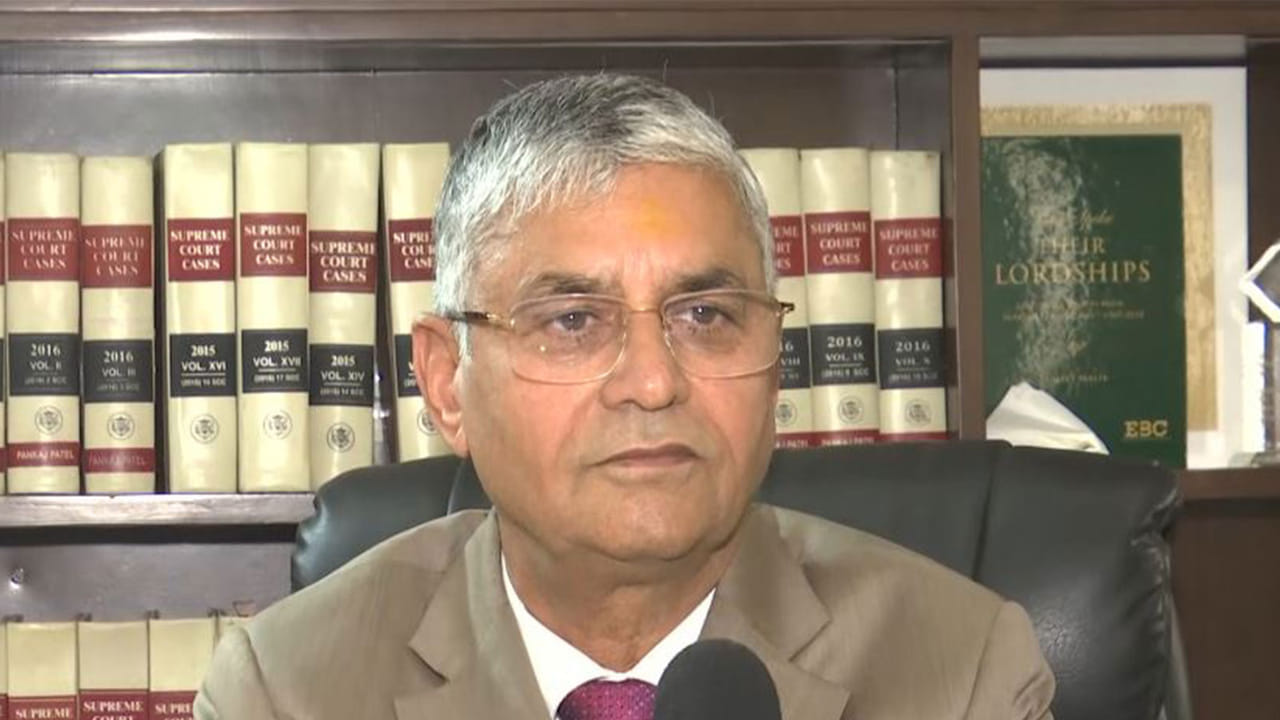
Former Justice Lokpal Singh criticized BR Gavai’s recent letter regarding judicial appointments, warning against political interference while questioning Gavai’s own efforts toward promoting diversity during his tenure as Chief Justice.
New Delhi [India], November 28 (ANI): Former Justice of Uttarakhand High Court Lokpal Singh on Saturday criticised former Chief Justice of India BR Gavai’s letter to President Droupadi Murmu over alleged bias in judicial appointments, emphasising that there should be no political interference in appointments to judicial posts. Speaking to ANI, Singh, referring to his nephew’s appointment in the Bombay High Court, alleged that former Chief Justice of India BR Gavai did not make sufficient efforts to increase the appointment of SC, ST, OBC and minority communities during his tenure.
“… As far as Justice Gavai’s letter is concerned, I agree that women candidates from SC, ST, OBC and minority communities should be considered for elevation to the High Courts and the Supreme Court. However, there should be no political interference. If the President of India issues directions based on this letter, there could be a perception that the government, particularly the BJP government, is interfering through the President. That message should not go out to society. When Justice Gavai was Chief Justice of India, he should have made efforts in this regard, but I do not think sufficient efforts were made… I came to know that his nephew has been appointed as a judge of the Bombay High Court, so he should also be mindful of candidates from SC, ST and OBC communities. During his tenure, I do not think any woman judge was considered for elevation to the Supreme Court…” said Singh.
Singh’s remarks came after Former Chief Justice of India BR Gavai wrote to President Droupadi Murmu expressing concern over what he described as a growing disregard for the principles of merit, diversity and inclusivity in appointments and transfers in the higher judiciary, alleging that recommendations are increasingly favouring a particular community at the cost of other sections of society.
In a letter dated November 27, Gavai urged the President to acknowledge the issue and intervene as deemed appropriate to ensure that the constitutional duty of equal representation is upheld in one of the most significant pillars of Indian democracy. Citing parliamentary data, the former CJI said that, as per information provided by the Union Law Minister in March 2025, of the 715 High Court judges appointed since 2018, only 22 belonged to Scheduled Castes, 16 to Scheduled Tribes, 89 to Other Backward Classes and 37 to minority communities. He said the Law Ministry had informed a parliamentary committee that there was an “inequitable representation of backward and minority communities” in the higher judiciary.
Gavai further pointed out that between January 2021 and January 2026, the reported share of forward communities among judicial appointments was close to 80 per cent, while the representation of Other Backwards Classes was around 14 per cent. He also raised concerns over the representation of a particular community in appointments to the Supreme Court, stating that a community constituting less than five per cent of the country’s population had secured over 40 per cent representation in the apex court in the recent past.
Referring to Professor George Gadbois’s study of the Supreme Court’s first four decades, Gavai said one community, constituting about one-nineteenth of the population, had held over one-third of all Supreme Court judgeships between 1950 and 1989. He observed that despite seven decades of the Republic, the profile of the Supreme Court had barely changed, adding that familiarity, networks and unexamined notions of who “looks like” a Supreme Court judge continued to perpetuate such patterns.
Recalling his tenure in the Collegium, Gavai said he had always followed the principles of diversity and inclusion and ensured adequate representation of different sections of society, including Scheduled Castes, Scheduled Tribes, Other Backward Classes, minorities, women and other marginalised communities, while recommending candidates for elevation to the High Courts and the Supreme Court. (ANI)