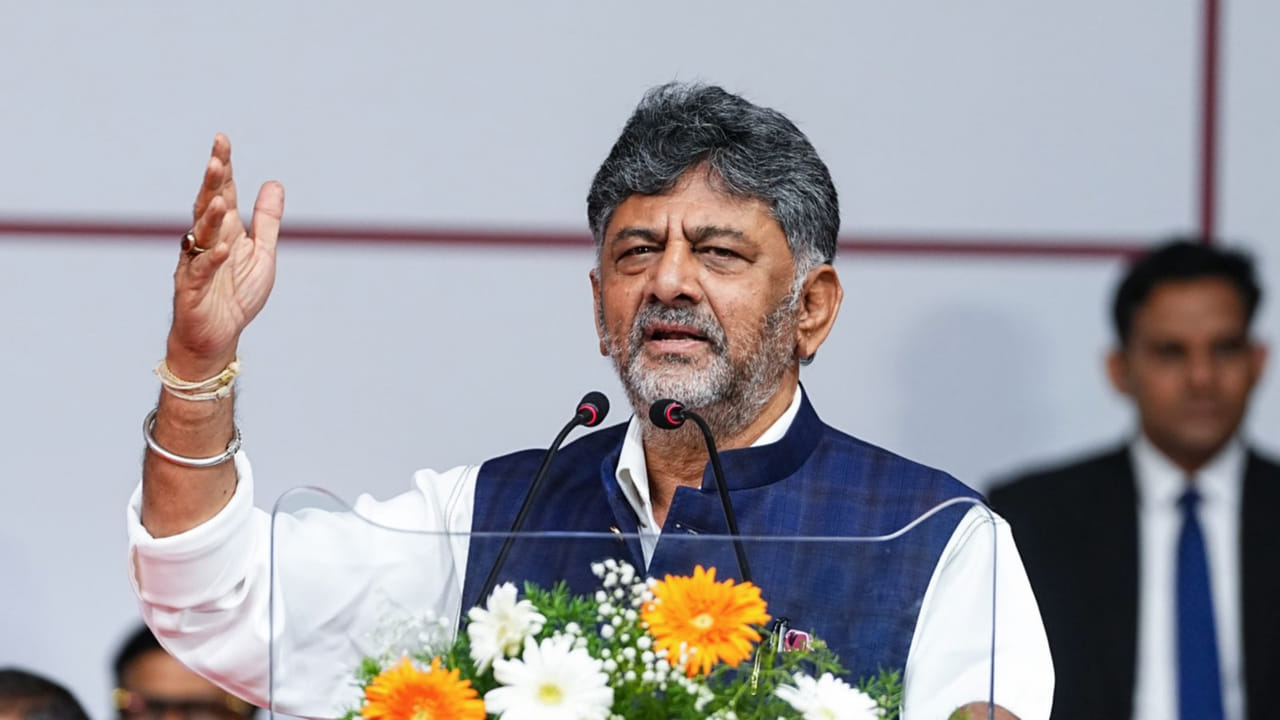
Karnataka CM DK Shivakumar plans to adopt Japanese urban transport, waste management, and infrastructure models in the state after a recent visit. The initiative aims to attract investments ahead of next year’s Global Investors Meet in Bengaluru.
Bengaluru (Karnataka) [India], November 28 (ANI): Karnataka Chief Minister DK Shivakumar on Saturday said the state government would take steps to implement Japan’s best practices in urban transport, waste management, urban development infrastructure and the industrial sector following his three-day visit to the country. Addressing a press conference at the ‘Sangam’ conference hall in Vidhana Soudha, the Chief Minister shared details of his Japan visit and said there was much to learn from the country’s urban development, manufacturing sector, transport systems and waste management practices.
“There is a lot to learn from Japan in urban development, the manufacturing sector, urban transport system and waste management. That country’s time discipline, discipline and commitment are exemplary. Many Kannadigas whom I met during the Japan visit also shared their experiences in this regard,” he said.
Shivakumar said the visit was part of preparations for the Global Investors Meet scheduled to be held in Bengaluru in April next year. He said roadshows were being organised in various countries to attract investments, with several East Asian countries showing greater interest in Karnataka.
“As a precursor to the Global Investors Meet to be held in Bengaluru in April next year, we are holding roadshows in various countries. Many East Asian countries are showing greater interest in investing in Karnataka. Plans will be drawn up after consulting officials about the feasibility of Japanese models that can be implemented in our state. I have also held talks with the Foreign Minister of Japan and the Ambassador. Everyone has assured cooperation,” he said.
The Chief Minister further said discussions were held with several delegations in Japan regarding urban development and that Karnataka aimed to establish new greenfield projects beyond Bengaluru.
“We held talks with several delegations in Japan regarding urban development during the three-day visit. Karnataka state is in the first position in the country in foreign direct investment. We aim to start new greenfield projects beyond Bengaluru also,” he said.
He said the delegation examined new city construction, townships and the expansion of commercial activities in Japan. They also visited a plant that generates at least 24 MW of electricity through waste processing.
“We have invited them to examine the implementation of such a project in Karnataka also. Such a waste disposal system can be implemented not only in Bengaluru but also in cities like Hubballi-Dharwad and Mysuru. The Central government will also assist in this regard,” he said.
Highlighting Japan’s urban transport system, Shivakumar said the country made maximum use of its Metro network, with stations functioning as organised commercial centres.
“Japan’s urban transport system is exemplary, and they are making maximum use of Metro facilities. The Metro stations there are functioning as systematic commercial centres. Every railway station is better than an airport. A model for punctuality and cleanliness. We also need to formulate plans to make maximum use of Metro stations. I have already instructed officials in this regard,” he said.
Shivakumar said around 525 Japanese industrial institutions were currently operating in Karnataka, and several manufacturing companies had expressed interest in investing in the state.
“At present, 525 Japanese industrial institutions are in Karnataka. Many manufacturing units have expressed interest in investing in the state. We aim to create more jobs through new investments in the state. During the visit to the Toyota unit, they expressed interest in expanding the existing manufacturing unit in the state,” he said.
He assured that the state government would extend all necessary support for the expansion of Toyota’s manufacturing unit. The Chief Minister said an agreement had been reached with Kawasaki Heavy Industries to create 600 technical employment opportunities in Harohalli in the Bengaluru South district.
“During the visit to the Kawasaki Heavy Industries unit, an agreement was made to provide technical employment to 600 people in Harohalli in Bengaluru South district. The company has shown enthusiasm to invest in various sectors here,” he said.
Shivakumar said the state had invited Japanese companies to manufacture hybrid taxi cars in Karnataka, referring to a taxi-type hybrid car launched during the Tokyo Olympics.
“During the Tokyo Olympics, a taxi-type hybrid car was launched. We have invited them to produce the same model of car in our state. This will not cause any problem for local autos. We also need to encourage autos. The taxi car we saw was more convenient,” he said. He reiterated that the introduction of the hybrid taxi model would not affect local auto-rickshaw operators and that the state would continue to encourage the auto-rickshaw sector.
The Chief Minister said the delegation examined commercial and public transport infrastructure in Nagoya and visited Osaka on November 24 to study energy production through waste processing. Discussions were also held with Panasonic and JFE Steel. He added that Industries Minister MB Patil held meetings with representatives of Sumoto, Ajinomoto, Akeda, Shake Pharma and Yokosawa companies.
“We will take all steps to facilitate foreign investment. Instructions have already been given to expedite approvals required for starting industries and to avoid delays,” Shivakumar said. Responding to a question about the proposed Metro extension to Tumakuru under the public-private partnership (PPP) model, the Chief Minister said a proposal was under consideration.
“There is a proposal for a Metro extension to Tumakuru on the PPP model. Cities develop along with Metro. People’s convenience is important. The state government is not investing any capital. At present, we are implementing Metro projects with the cooperation of the Central government,” he said.