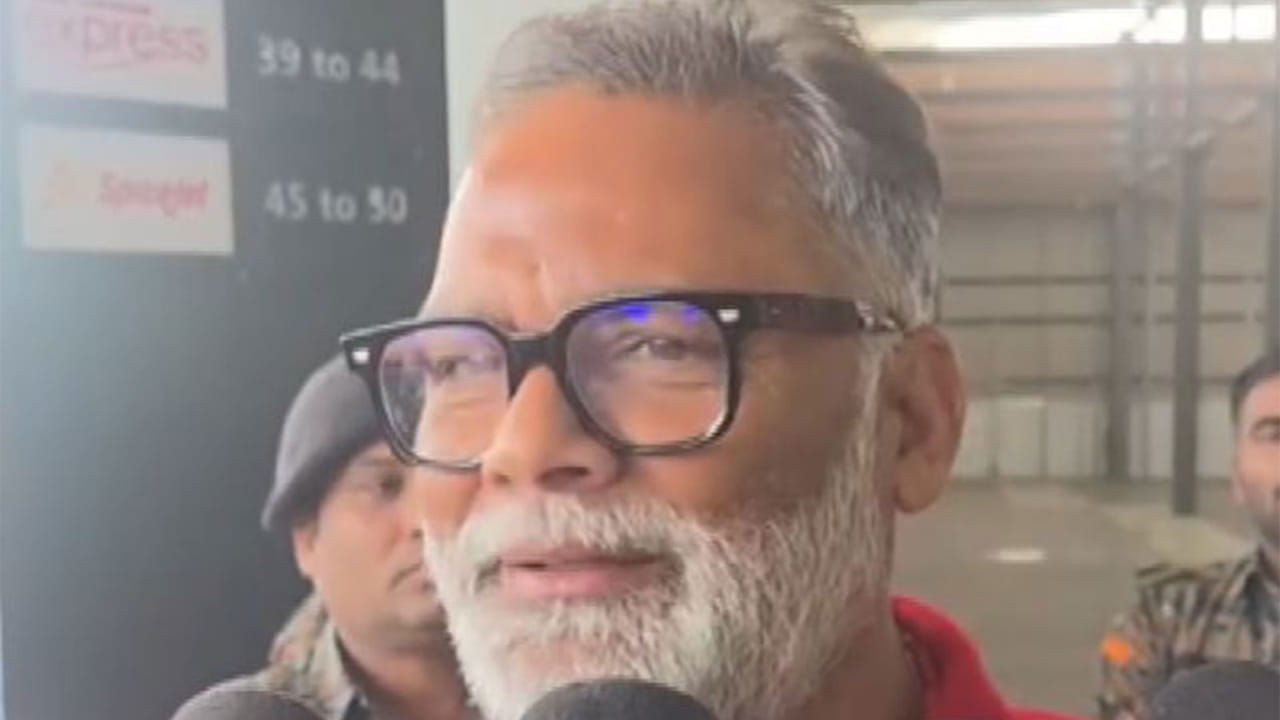
Independent MP Pappu Yadav opposes linking women’s reservation with delimitation, citing concerns for southern states and marginalized communities, while BJP leaders welcome the proposed 50 percent increase in parliamentary seats.
Patna (Bihar) [India], November 28 (ANI): Independent MP Pappu Yadav on Saturday questioned the Centre’s proposed delimitation exercise, alleging that the South had been ignored and calling for reservation for women from Extremely Backward Classes (EBCs), Other Backward Classes (OBCs) and minority communities, while BJP leaders in West Bengal and Jharkhand welcomed the proposed 50 per cent increase in Lok Sabha and Assembly seats.
Reacting to the proposed delimitation and women’s reservation Bills in Patna, Yadav said the Women’s Reservation Bill had already been passed with the support of both Congress and the BJP under Sonia Gandhi’s leadership, and questioned the need to link its implementation with the fresh delimitation exercise. “This government is always in a hurry. The Women’s Reservation Bill was already passed with the support of both Congress and the BJP under Sonia Gandhi’s leadership,” he told reporters.
Yadav further argued that women from disadvantaged communities, including EBCs, OBCs and minorities, should also receive representation under the proposed framework. “If the BJP is in such a hurry, it should provide reservation for women, including those from Extremely Backward Classes, OBCs and minorities, ensuring that even poor women have a voice,” he said.
Calling delimitation the central issue, the Independent MP said, “Women’s reservation is already settled. The real issue is delimitation and the proposed 50% increase in seats.” “The South has been ignored, and the delimitation exercises in Assam and Jammu and Kashmir raise serious concerns about the redistribution of constituencies,” Yadav added.
Meanwhile, West Bengal Minister Dilip Ghosh welcomed the proposed increase in seats, arguing that the growing population had made it difficult for MPs to effectively address the concerns of voters in their constituencies. “Look at how much the country’s population has grown. Keeping this in mind, the capacity of the new Parliament building has been increased by 50%. Naturally, the process is moving forward,” Ghosh told the media in Kolkata.
Pointing to the size of some parliamentary constituencies, he said, “Currently, some of our Lok Sabha constituencies have as many as 30 lakh voters; it is simply impossible for a single MP to reach out to everyone, listen to their concerns, and address their issues. It is a positive development that the number of seats is increasing.”
In Ranchi, Jharkhand BJP chief spokesperson Pratul Shah Deo described the proposed legislation as an opportunity to correct what he called a historical mistake by Congress and the Opposition when the Bill was introduced previously. “This is a major opportunity for the entire Parliament and all its MPs to correct the historical mistake made by Congress and the Opposition when this Bill was introduced previously,” he told ANI.
Expressing confidence that the proposals would be passed, Shah Deo said, “We are confident that the Prime Minister’s vision of increasing Lok Sabha and Assembly seats by 50%, while providing women with 33% reservation in both State Assemblies and the Lok Sabha, will now become a reality.”
The Union Cabinet has cleared a legislative package, including the Constitution (One Hundred and Thirty-Second Amendment) Bill, 2026, and the Delimitation (Second) Bill, 2026, to facilitate the delimitation exercise and implement 33 per cent reservation for women in legislatures. The Centre is set to introduce the Delimitation (Second) Bill during the Special Session of Parliament beginning November 30.
Under Section 10 of the proposed Delimitation Bill, the number of seats allocated to each state and Union Territory in the Lok Sabha, as well as the total number of seats in state Legislative Assemblies, would increase by 50 per cent. If passed by both Houses, the proposal would increase the maximum strength of the Lok Sabha to 850 seats and that of state Assemblies to 650.
The Centre’s three-Bill package seeks to link the implementation of the 33 per cent women’s reservation, provided for under the 106th Constitutional Amendment in 2023, with the fresh delimitation exercise. The government aims to complete the process before the 2029 Lok Sabha elections.
The Opposition has supported women’s reservation but objected to making its implementation dependent on delimitation, arguing that the quota could be implemented in the existing 543-member Lok Sabha. It has also demanded the use of the latest Census data instead of the 2011 figures.
The Centre has proposed using the 2011 Census for redrawing constituencies and determining SC/ST-reserved seats, while retaining the 1971 population basis for state-wise allocation of Lok Sabha seats until 2051. The Opposition has also raised concerns over the representation of southern states and the absence of a separate sub-quota for OBC women. The proposed one-third reservation includes women from Scheduled Castes and Scheduled Tribes, while the framework does not provide a separate sub-quota for OBC women. (ANI)