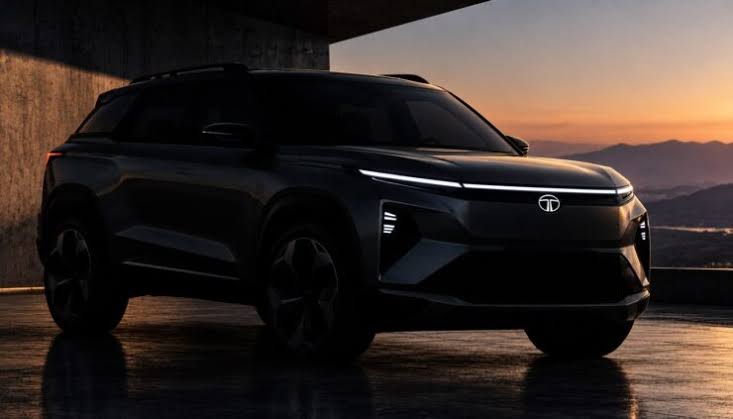
Tata Motors is currently developing a key 2027-28 SUV programme.
As well as updating existing SUVs, it is developing five key new or revised products, including a new generation Nexon and a new Kuno electric SUV, alongside a small SUV codenamed Scarlet and a new three-row Safari EV. Plus, Tata is also developing the Avinya X – a premium SUV.
As well as adding four further electric vehicles to its current six-strong electric vehicle programme (announced at its June 2026 Investor Day), Tata is also developing new and updated conventional – petrol and diesel – SUVs.
New Generation Nexon
Although the Nexon has been on sale since 2017, it has only had two significant facelifts rather than a full vehicle generation change. Soon however, reports suggest Tata is testing a new generation Nexon in India.
It appears that the new Nexon may include twin displays in the cockpit – adding greater modernity and luxury to the vehicle. Furthermore, the new Nexon may also adopt Tata’s new, flexible ATLAS architecture which could improve areas such as safety, stiffness and quality.
Significant changes are also expected to the rear section so that the new Nexon has a distinctive new design. Tata is likely to continue to supply the existing 1.2 litre turbo-petrol and 1.5 litre diesel powertrains, but this has yet to be confirmed.
As mentioned, the new Nexon is due in 2027. Following this, there may then be a new Nexon EV version so that Tata can continue to effectively compete in the compact SUV sector against vehicles such as the Maruti Fronx, Hyundai Venue, Kia Sonet and Mahindra XUV 3XO.
Tata Kuno EV
The Kuno EV is anticipated to slot neatly between the Nexon and soon-to-be-released Sierra EV within Tata’s electric SUV programme. Likely to be of medium size, it is thought to be around 4.3 metres long.
This sees it head-to-head with the MG Windsor EV, which has performed well in India’s family EV sector. By offering greater space than the Nexon EV, but without the higher price tag of a Sierra EV, the Kuno EV could successfully attract customers seeking a vehicle of this type.
Whilst Tata has not yet given details of the Kuno’s battery size, powertrain or driving range, the likely 2027/8 launch date indicates that it intends to further bolster its involvement in the rapidly-expanding family EV sector.
Provided that Tata can effectively price the Kuno EV, it has the potential to be one of the most significant electric SUV launches in the next two years. Success will hinge on aspects including range, interior room, features and recharging facilities.
Tata Scarlet
Another compact SUV being developed is believed to be codenamed the Scarlet. As it is expected to be under 4 metres in length, it will enter India’s fiercely-competitive sub-compact SUV sector.
It is thought that the Scarlet will incorporate styling elements from the upright and square Tata Sierra. Doing so could provide a striking SUV-style appearance, which younger customers may find attractive and which can convey good road presence.
Within the sub-compact SUV sector, Tata can choose from a variety of powertrains including naturally-aspirated and turbo petrol. Again, however, Tata has not yet specified which powertrain will be fitted to the Scarlet. The vehicle may also be electrified, although this too has yet to be confirmed.
Should the Scarlet be launched, it could compete with other sub-compact SUVs such as the Tata Punch, Hyundai Exter, Maruti Fronx and Kia Sonet. As with many Tata vehicles, success is likely to largely depend on price, running costs, safety and design.
Tata Safari EV
Among Tata’s most eagerly-awaited new SUVs is the Safari EV. It may even become the group’s first 3-row electric SUV – thus making it a good choice for big families or those who really require 7-seat functionality.
Moreover, spy images suggest that the Safari EV may have a differing rear suspension system to that of the petrol and diesel Safari. This implies that Tata is undertaking substantial engineering work to adapt its existing Safari structure for the new electric powertrain and batteries.
As with the Harrier EV, the Safari EV may be equipped with either 65kWh or 75kWh batteries. The latter option could ensure that it has a good driving range. Additionally, it may be fitted with a potentially even more powerful, twin motor, four-wheel drive system.
Should Tata decide to equip the Safari EV with four-wheel drive, it could then directly compete with the Mahindra XEV 9S – providing solid premium family EV competition.
Tata Avinya X
Possibly the group’s most premium and innovative vehicle is the Avinya X. In June, Tata stated that the Avinya range will be built upon the Freelander platform, which has been jointly developed by Chery and Jaguar Land Rover. Manufacturing of these vehicles is expected to occur at Tata’s Panapakkam plant in Tamil Nadu.
The Avinya X concept was unveiled at the 2025 Bharat Mobility Global Expo. It reflects Tata’s aspirations for its forthcoming premium EV marque, emphasising key areas of design, innovation, comfort and electric motoring.
Indeed, it has reportedly been reported that the Avinya X production model may well be the first vehicle to be sold in India under Tata’s new premium brand in 2027. Were this to happen, then the Avinya X could prove to be amongst Tata’s most important premium EV launches.
The Avinya X is anticipated to be positioned above Tata’s existing electric SUVs. It may also include enhanced cabin facilities, state-of-the-art driver-aid technology and an extended range. Nonetheless, details regarding its precise features, cost and launch timing have yet to be disclosed.
Significance of Tata’s Upcoming SUV Programme
Clearly, Tata is not limiting itself to just one sector. It is developing products for the compact, mid-sized EV and 3-row family and premium EV sectors.
Whilst the new Nexon will help sustain Tata’s position in the mass market SUV sector, the Kuno EV and Scarlet will enable Tata to aim its marketing at fresh customer bases. On the other hand, the Safari EV and Avinya X will allow Tata to further penetrate the premium and family EV markets.
The 2027-28 timeframe may well prove to be very significant for Tata Motors in India. Currently, Tata is developing five new or revised SUVs and is positioning itself to further enhance its petrol and electric SUV programmes.
Whereas the new Nexon will be key to Tata’s mass market offering, the Safari EV and Avinya X may set the tone for its premium EV future. Undeniably, Tata’s imminent SUV programme should therefore be closely watched by those intending to buy an SUV over the next couple of years.