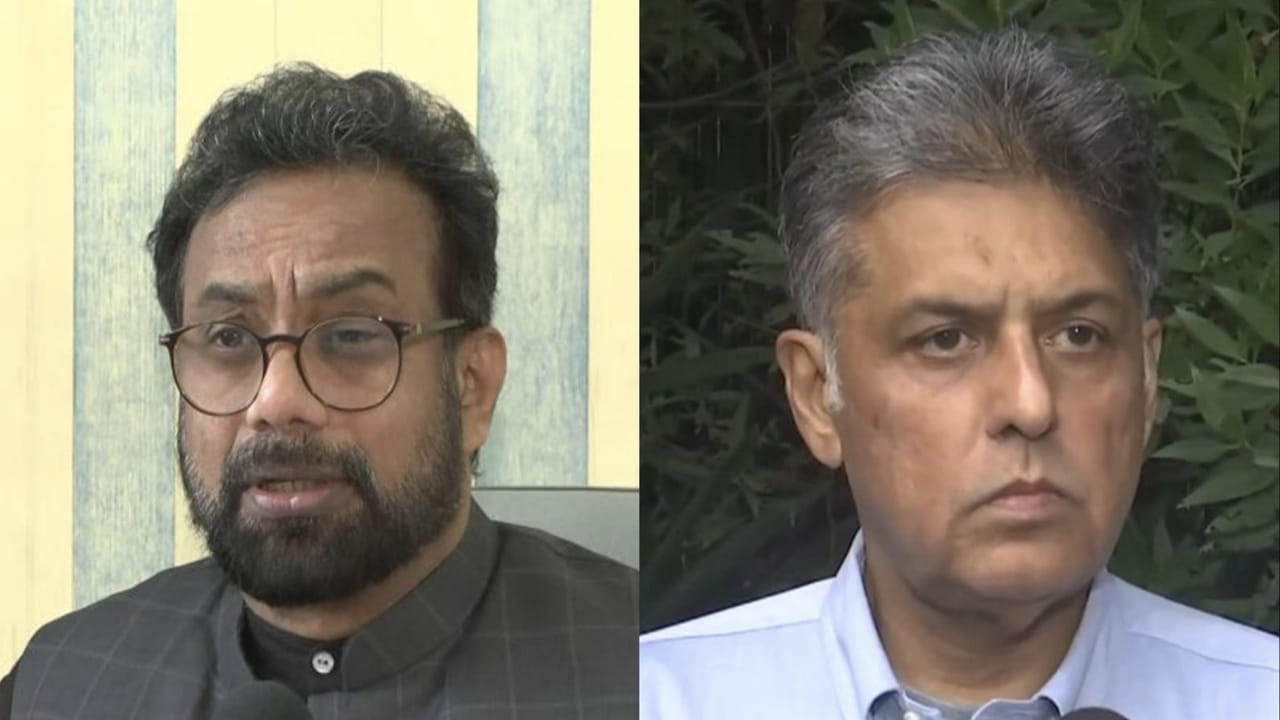
CPI(M) MP John Brittas has accused the central government of orchestrating a parliamentary majority to pass the delimitation exercise, calling the special November 30 session a potential mockery of democracy and women’s empowerment.
New Delhi [India], November 26 (ANI): Communist Party of India (Marxist) Rajya Sabha MP John Brittas on Thursday accused the Central government of attempting to engineer a parliamentary majority through political manoeuvring to push through the delimitation exercise in the Lok Sabha ahead of the November 30 sitting of Parliament. In a post on social media platform X, Brittas alleged that the Women’s Reservation Bill was being used as a cover for that objective and questioned the real cost of the upcoming sitting. “Modi Govt’s so-called amalgamations, takeovers, mergers and buyouts appear to have one sinister objective: manufacture a majority to push through delimitation under the guise of the Women’s Reservation Bill. The real ‘expenditure’ for the session will be humongous!!” Brittas wrote.
Warning against reshaping the country’s electoral framework through partisan tactics, he argued that women’s empowerment should not be exploited for political ends. “A majority manufactured through political manipulation is not a mandate. It is a mockery of democracy. If this is how India’s electoral future is being reshaped, the special session of Parliament on November 30 could mark the saddest chapter in the history of Indian democracy. Women’s empowerment must never become a smokescreen for electoral engineering,” he added. Echoing the criticism, Congress MP Manish Tewari argued that an extraordinary sitting should not replace the customary year-end parliamentary schedule. “This request mocks the institution of Parliament. It is time for the Winter Session of Parliament to convene. A Special Session is a mechanism for convening during the inter-session period. It can and should not become a substitute for a regular winter session. Why not just convene a regular winter session and the government can if the government chooses too, it can always regurgitate defeated legislation,” Tewari said in a post on X.
This comes after Union Minister of Parliamentary Affairs Kiren Rijiju, earlier today, said the Central government has requested the Lok Sabha Speaker and the Rajya Sabha Chairman to reconvene the Lower House on November 30 and the Upper House on December 2 to transact essential government business. In a post on X, Rijiju added that the sittings of both Houses of Parliament are expected to conclude on December 3, subject to the exigencies of business. “The Government has requested Hon’ble Speaker, Lok Sabha and Hon’ble Chairman, Rajya Sabha to reconvene Lok Sabha on Monday, 30th November, 2026 and Rajya Sabha on Wednesday, 2nd December, 2026 respectively to transact essential Government Business,” Rijiju posted on X. “Subject to exigencies of the Business, the sitting of both Houses may conclude on 3rd December, 2026,” the Union Minister added.
The sittings of both Houses are scheduled to conclude on Thursday, December 3, subject to the exigencies of essential government business. Speculation over the legislation proposing delimitation and women’s reservation has intensified following Rijiju’s announcement. The Constitution (131st Amendment) Bill, 2026, along with the Delimitation Bill, 2026 and the Union Territories Laws (Amendment) Bill, 2026, fell in the Lok Sabha on April 17 after failing to gain the required two-thirds majority. However, with the NCPI bloc and seven AAP MPs joining the BJP in April, the NDA is speculated to bring in the legislation with renewed strength in both Houses. Meanwhile, a Congress Parliamentary Strategy Group meeting is to be held on November 27 in Delhi to discuss the strategy for the Parliament sitting.
The decision to reconvene the Houses at short notice comes against the backdrop of an unprecedented procedural timeline following the previous parliamentary session. Parliament last met during the Monsoon Session 2026, which concluded with both the Lok Sabha and Rajya Sabha being adjourned sine die (indefinitely) on August 13. Neither House was prorogued following the August 13 adjournment. Crossing the 100-day mark in late November, this became the longest unprorogued gap between parliamentary sittings in India’s constitutional history, surpassing the previous record of 87 days set in 2008. Because the Monsoon Session was never prorogued, the government does not need the President to summon a brand-new session (which conventionally requires a 14-day notice). (ANI)