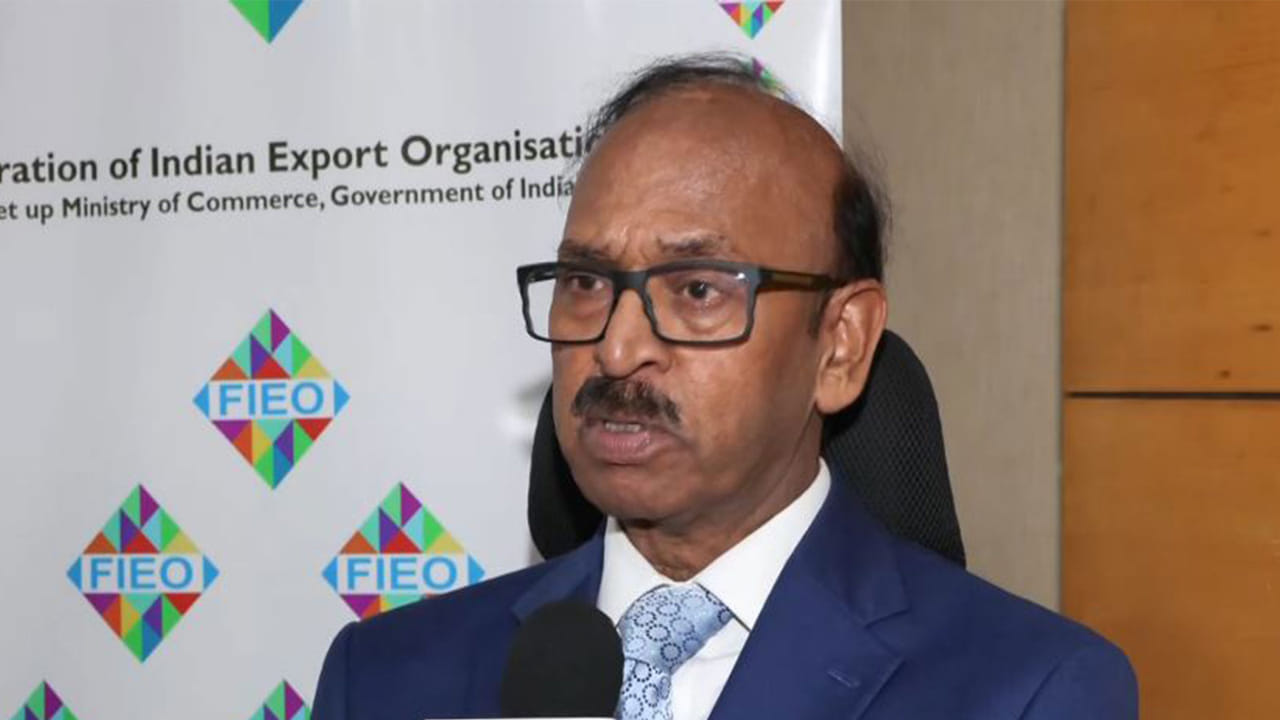
FIEO Chief Ajay Sahai warns that potential 17 percent tariff concessions in an India-US trade deal might offer little advantage over Southeast Asian rivals, urging strategic negotiations to mitigate risks of added exporter costs.
New Delhi [India], November 26 (ANI): Even if India secures a lower tariff rate of 17 per cent under the proposed bilateral trade agreement (BTA) with the United States, it may not offer Indian exporters a significant competitive advantage over their Southeast Asian counterparts, Federation of Indian Export Organisations (FIEO) Director General and CEO Ajay Sahai said on Thursday. Speaking to ANI amid the US proposal to impose tariffs of up to 25 per cent on Indian imports following a Section 301 investigation, Sahai said India must carefully evaluate the concessions it offers in exchange for lower tariffs, particularly as competing economies could secure more favourable trade terms in the future.
“Even if you’re getting a concession of 17 per cent, which is giving you a 1 per cent advantage over Southeast Asian economies, they are not going for the FTA,” Sahai said. He highlighted that countries such as Vietnam could potentially secure lower tariff rates through their own trade negotiations with the US, thereby putting Indian exporters at a competitive disadvantage. “So I think the task is not easy for the negotiators. Every industry would like the best option for them,” he said.
Sahai suggested that the government should prioritise sectors based on their contribution to India’s exports and employment generation while negotiating sector-specific tariff concessions with the US. He also sought clarity on whether the proposed duties would be imposed if the bilateral trade agreement is concluded at a tariff rate of 17 per cent and whether existing exemptions for sectors such as pharmaceuticals and smartphones would continue.
On the potential financial impact of the proposed tariffs, Sahai estimated that Indian exporters could face an additional burden of around 8 per cent if the US imposes a 25 per cent tariff and the historical practice of sharing the tariff burden continues. “In the past, in most of the cases, it was a principle of one-third, one-third, one-third. One-third was shared by the Indian exporter, one-third by the importer, and one-third by the consumer,” he said. “If that applies and assuming the tariff is 25 per cent, probably an additional burden of 8 per cent will come,” he added.
While businesses with higher profit margins may be able to absorb the additional costs, exporters operating on thin margins could face difficulties in continuing shipments to the US, he said. However, Sahai noted that Indian textile and leather exports for the upcoming summer fashion season were unlikely to face an immediate impact, as shipments had either already been dispatched or were scheduled to be shipped by February.
Responding to US allegations of excess manufacturing capacity in India, Sahai argued that Indian manufacturers were expanding production capacity to meet future domestic demand rather than to dump products in overseas markets. “When industry is creating capacity, they have vision for 10 years, 15 years down the line,” he said, questioning the rationale for imposing tariffs across export sectors over alleged excess capacity in a few industries.
Sahai urged exporters not to panic and called for using the available window for negotiations and dialogue with the US. “Let the industry not panic. And the good thing is the industry is not panicking. They are concerned, and their concern is quite genuine also. Let us use whatever two months’ window is available for further negotiation and dialogue,” he said. (ANI)