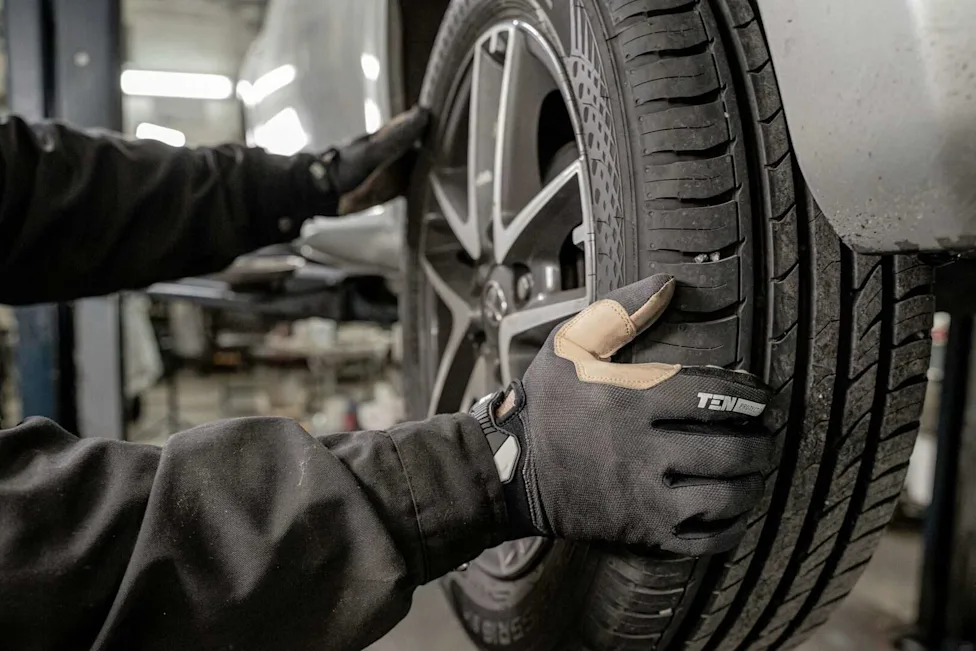
Your tires are the only thing connecting your car to the road — four palm-sized patches of rubber doing all the work — and most of us ignore them until one goes flat. Knowing when they’re past their prime keeps you from blowouts, bad-weather scares, and wasted fuel. Here’s how long tires really last and how to catch the warning signs early.
How long they actually last
Most modern tires are built to go 50,000 to 60,000 miles, and premium touring tires can stretch further. But miles aren’t the whole story: replace tires roughly every six years no matter the mileage, and never run them past ten years from their build date. Rubber ages and hardens even on a car that mostly sits in the garage.
What wears them out faster
How and where you drive matters a lot. Hard braking, fast cornering, and long highway stints chew through tread, and so do potholes, curbs, and brutal heat. The two cheapest ways to make tires last? Keep them properly inflated and rotate them on schedule. Watch your alignment too — it’ll quietly shave one edge bald long before the rest of the tire is worn.
The penny test, in ten seconds
Grab a penny, stick it in a tread groove with Lincoln’s head pointing down. If you can see the top of his head, your tread’s shot. New tires start around 10/32 of an inch, and most pros say swap them at 4/32 — sooner if you regularly drive in rain or snow.
The red flags to watch for
Tread depth isn’t the only tell. Look for cracks in the sidewall, bulges or blisters, a steady vibration as you drive, or uneven wear across the tread. And those little tread-wear bars sitting flush with the surface? That’s the tire telling you it’s done. Spot any of these and get to a tire shop sooner rather than later.
How to read the tire’s age
Every tire has a DOT code stamped on the sidewall ending in four digits — the first two are the week, the last two the year it was made. A code ending in 2422 means it rolled off the line in the 24th week of 2022. Worth a 30-second check, especially on a used car or a spare you’ve never thought about.
The bottom line
Plan to replace your tires around six years or once the tread hits 4/32 — whichever comes first. Keep them inflated, rotate them, and eyeball them now and then. This is not the spot to cut corners; they’re the only thing keeping your car glued to the road.