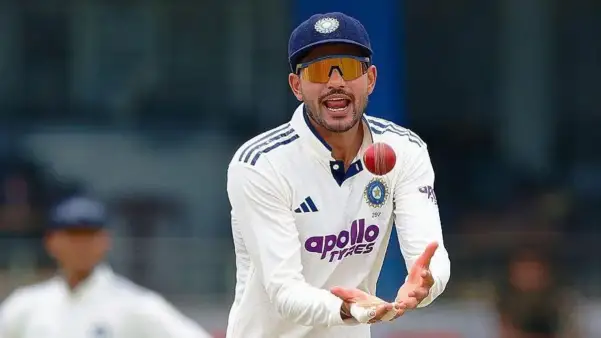
The International Cricket Council (ICC) has no immediate plans to review its ban on applying saliva to the cricket ball, despite India captain Shubman Gill calling for the restriction to be lifted.
The governing body’s position remains unchanged even after Gill raised concerns about the difficulties faced by bowlers in maintaining the ball’s condition during Test matches. The issue returned to the spotlight following India’s drawn opening Test against New Zealand in Wellington, where the Indian bowling attack struggled to dismiss the hosts on the final day. Gill argued that allowing players to use saliva could help bowlers maintain the ball for longer, particularly on pitches that offer limited assistance to the bowling side. However, the ICC continues to maintain that the existing restriction is necessary for health and cricketing reasons.
Gill raised the issue during his interaction with the media after the first Test ended in a draw at the Basin Reserve. The Indian captain expressed frustration over the continued prohibition, pointing out that the restriction was originally introduced during the COVID-19 pandemic. He questioned why players were still prevented from using saliva to shine the ball several years after the pandemic-related restrictions were introduced. “I don’t understand why we haven’t been allowed to shine the ball yet – we are way past Covid times. There was a rule that you can’t put saliva on the ball to make it shine. It’s been seven-eight years and I still don’t understand why they are not allowing it,” Gill said. He also described the restriction as an important factor affecting bowlers, particularly when playing on surfaces that provide little movement.
Apart from the saliva restriction, Gill also questioned the quality and durability of the Kookaburra cricket ball, saying it was becoming soft much earlier than expected. According to the India captain, the ball had started losing its hardness after approximately 25 to 30 overs during the Wellington Test. He explained that a softer ball reduced the chances of edges carrying to the wicketkeeper or slip fielders, making it difficult for fast bowlers to generate dismissals through conventional methods. Gill said similar concerns had emerged during India’s previous overseas assignments, including their 2025 tour of England. He also suggested that the combination of an unresponsive pitch, a rapidly softening ball and the inability to use saliva made it increasingly difficult for bowlers to create wicket-taking opportunities.
The ICC introduced the saliva ban in 2020 as a precautionary measure to reduce the risk of spreading COVID-19 among players and match officials. The restriction was initially implemented as a temporary measure but was made permanent in the governing body’s playing conditions in 2022. The decision was subsequently aligned with the Marylebone Cricket Club (MCC) Laws of Cricket, under which applying saliva to the ball is treated as an unfair method of altering its condition. Before the restriction, fast bowlers regularly used saliva to polish one side of the ball while allowing the other side to become rough through normal wear. This difference in surface condition helps create reverse swing, allowing the ball to move unpredictably in the air and making it difficult for batters to judge its trajectory.
The ICC’s position is also linked to concerns about monitoring and regulating the practice. The governing body believes saliva can significantly alter the ball’s condition, particularly when mixed with substances such as sweets, chewing gum and mints. Such practices could make it difficult for match officials to distinguish between ordinary ball maintenance and deliberate attempts to manipulate the ball. The organisation also considers saliva a potential health risk for players and match officials. According to reports, the issue was not discussed during the ICC meetings held in Bali earlier in November. Any future amendment to the playing conditions would have to be raised by a member through the relevant ICC committee before being considered by the ICC Board.
Meanwhile, the Indian Premier League (IPL) has already moved away from the restriction, allowing players to use saliva to shine the ball from the 2025 edition. The difference between domestic and international cricket has added to the debate over whether the ICC should reconsider its position. Gill’s comments came after India missed an opportunity to secure a victory and valuable World Test Championship points against New Zealand. The hosts finished the final day at 239 for five, successfully batting out the day to secure a draw. India’s bowlers had delivered close to 250 overs during the match, placing considerable demands on the attack. The teams are now preparing for the second and deciding Test in Christchurch, scheduled to begin on Friday, where conditions could offer more assistance to fast bowlers.