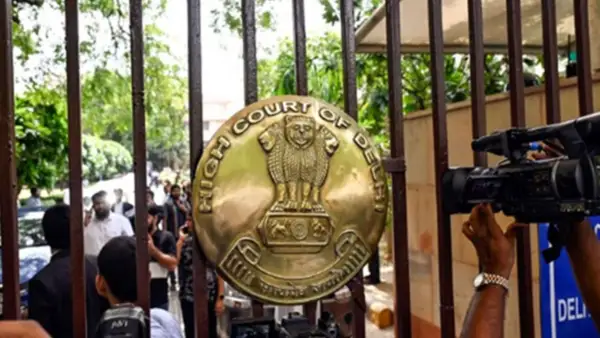
The Delhi High Court has ruled that an elderly parent asking for his children to be evicted from his self-acquired home does not have to prove he was harassed or ill-treated.
It is enough, the court said, to show that the property needs protection so he can live there in peace and with dignity.
Orders set aside, couple given four weeks
Justice Amit Mahajan overturned the orders of the District Magistrate and the Divisional Commissioner, who had turned down the plea of an 85-year-old man from Masjid Moth in south Delhi. He had asked for his eldest son and daughter-in-law to be removed from his house.
The court gave the couple four weeks to leave and told the local SHO to help the senior citizen enforce the order if needed.
The court stressed that the man is the absolute owner of the house, and the couple never claimed any ownership.
They lived there only because of their relationship with him. It also remarked that a senior citizen cannot be forced to share his home with his children against his wishes, especially when relations have soured so badly that he has been in litigation since 2022 and needed police help under court orders.
“Error of law” by authorities
According to the judge, the authorities wrongly assumed that harassment had to be proved through clear and convincing evidence. Neither the Act nor the 2009 Rules demand this, he said, and by insisting on it the authorities added a condition the law does not contain, which amounted to an error of law. He noted that mistreatment of elderly parents usually happens behind closed doors, where independent evidence is hard to find.
Proceedings under the Maintenance and Welfare of Parents and Senior Citizens Act, 2007 are summary in nature, so the standard of proof of a civil or criminal trial should not be applied.
The court also pointed to the several police complaints the man has filed since 2022. A business dispute between his sons, it said, was no reason to doubt his grievance or to deny him protection under the law.
Precedents relied upon
Justice Mahajan relied on the Supreme Court’s judgment in Ravi Kant Gupta v. State of Uttar Pradesh, which says a Maintenance Tribunal can order children out of a senior citizen’s property when that is necessary for his protection and upkeep.
He also cited the High Court’s own ruling in Pritam Singh v. Government of NCT of Delhi, which holds that the owner only needs to show the property requires protection.