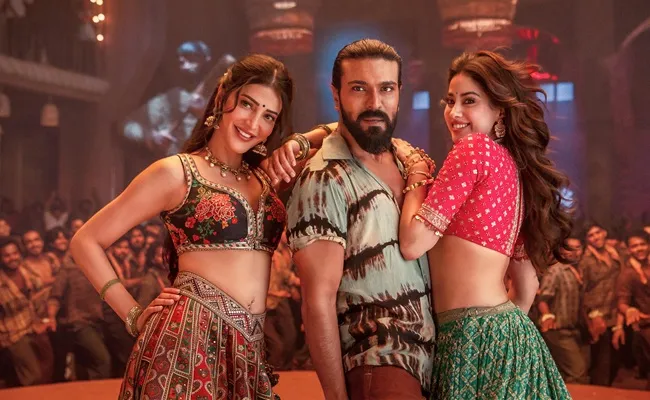
Five months after the release of Buchi Babu Sana’s Peddi, the film continues to face criticism over its portrayal of women, particularly Janhvi Kapoor’s character.
The director has been criticised for allegedly objectifying the actress and presenting sexual assault as an expression of love.
Actress Shruti Haasan, who appeared in the special song “Hellallallo” in the film, has now opened up about her decision to perform in the number and shared her views on the ongoing debate over the representation of women in cinema.
During an interview with Galatta Plus, Shruti was asked whether she had ever questioned the need for special songs in films and why she agreed to appear in “Hellallallo”.
The actress said she had often questioned the purpose of such songs but maintained that she genuinely enjoys dancing, dressing up and expressing herself through glamorous performances.
“I have always asked that question (why films require special numbers). I enjoy dancing; let me be very, very clear. I enjoy dressing up. And that’s the approach that I have to it,” she said.
Shruti explained that she views glamour and sensuality as forms of personal expression rather than something intended solely to please others.
“My approach to visual sexuality has been very liberating for myself. I have never been a panderer in any capacity,” she said.
She also made it clear that she sets her own boundaries when it comes to costumes and performances.
According to Shruti, she has refused to wear outfits that made her uncomfortable, even when doing so led to disagreements with filmmakers.
“When I’m not comfortable with something, I’m gonna say I’m not gonna wear this. Rest assured, I am doing it; I am comfortable with it. If I’m uncomfortable, I am not gonna do it. I’ve had arguments about it; I’ve been called difficult for it. And I am okay with it,” she stated.
Shruti Responds to Objectification Debate
Shruti acknowledged the criticism surrounding Peddi and the broader discussion about how women are portrayed in commercial cinema.
However, she maintained that her participation in glamorous songs comes from her enjoyment of dance and performance rather than a desire to cater to the male gaze.
“I understand the discourse around it. But genuinely, my approach to it is: I have fun dancing, I have fun doing choreography, I have fun being sexy. It’s not with a pandering gaze,” she explained.
She also argued that pandering to audience expectations is not limited to special songs or revealing costumes.
According to her, the entertainment industry caters to different expectations in several ways, and performers must decide what they are personally comfortable doing.
Shruti Refuses to Speak for Janhvi
When the interviewer brought up Janhvi Kapoor’s experience with Peddi, Shruti chose not to comment on her behalf.
Although the two actresses worked together on the song, Shruti said it would not be appropriate for her to speak about Janhvi’s personal experience or feelings regarding the film.
Meanwhile, Janhvi had earlier expressed regret over the portrayal of her character in Peddi.
During an appearance on Koffee With Karan in October, she admitted that the film’s treatment of women had left her uncomfortable and raised questions about her own responsibility as an actress.
“It weighs heavily on my conscience the sort of negative impact a narrative like that can have our society. Specific to my gender. That shame I will always carry with me,” Janhvi said.
She also questioned whether she could have been more careful while choosing the project and evaluating its content.
“Could I have done more? Could I have been more vigilant? 100% yes. Was it problematic, was it extreme objectification? Did it even propagate sexual assault narratively? Yes. But the only thing I can do is ensure that it doesn’t happen again,” she stated.
While Janhvi has openly expressed regret over the film’s portrayal of women, Shruti has defended her own decision to participate in the special song, emphasising that personal comfort and individual choice are important to her.
Their contrasting responses have added another dimension to the ongoing discussion about glamour, objectification and the responsibility of filmmakers and actors in portraying women on screen.