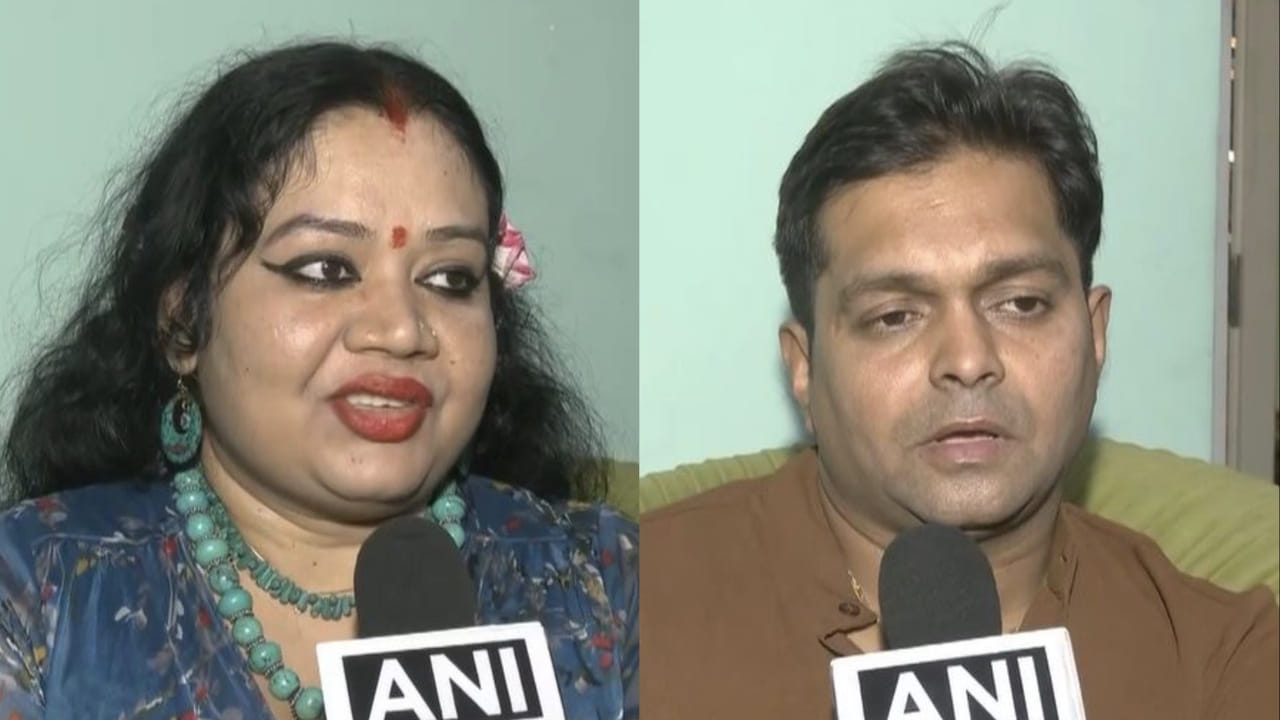
Nepal PM Balendra Shah’s family praises his historic India visit, celebrating the strengthened cultural bonds, the new Ayodhya-Janakpur railway service, and the warm hospitality extended by PM Narendra Modi during the successful state visit.
Bengaluru (Karnataka) [India], November 24 (ANI): Nepal Prime Minister Balendra Shah’s family members have welcomed his two-day state visit to India, describing it as a historic step in strengthening the centuries-old cultural, familial and strategic ties between the two neighbouring countries. They also praised Prime Minister Narendra Modi’s hospitality towards Shah and highlighted the significance of the newly launched railway service connecting Ayodhya in Uttar Pradesh with Janakpur in Nepal.
Speaking to ANI on Monday, Shah’s brother-in-law, Harish Kumar Sejekan, said the visit was significant as it brought tangible outcomes alongside the longstanding cultural relationship between India and Nepal. Sejekan said, “I would like to thank the Prime Minister of Nepal, Balen Shah, and my brother-in-law for choosing India. It’s very relevant because India and Nepal are deeply rooted in cultural ties and multifaceted connections that go beyond words. I think it was very apt that he chose India because India has—just as Modi ji said—a roti-beti ka rishta. I think it’s very important on more fronts than one, and I think this has been a historic visit because it’s a visit where there has been actual coordination and results, along with the package that Modi ji has agreed to give Nepal. I’m very proud that someone from my family has represented the entire Nepali nation and taken Nepal onto the global stage, thanks to his UN speech.”
He further described the visit as historic, pointing to the coordination and outcomes achieved during Shah’s meetings with the Indian leadership. He also welcomed the launch of the new railway service between Ayodhya and Janakpur, saying it would strengthen cultural and religious connections and facilitate travel between the two important destinations. “I would also like to thank our Prime Minister Narendra Modi ji for taking care of him so well—whether at the guard of honour or in the way they hugged each other. You can see there’s a lot of camaraderie and affection between both of them. You can see that in the way they hugged and held hands. I think this is very important for both countries because Nepal has been a very important part of India’s economic and strategic relationship,” he further said.
“…This is very important and fantastic because Ayodhya—which is very close to us Hindus, and which many people in India associate very closely with the Ayodhya temple—is crucial for us. There are also many tourists who come to Ayodhya and want to go to Janakpur. Janakpur is the place in Nepal where Mata Sita was born, and it’s culturally a very important place…This will bridge a lot of relationships between the two countries,” Sejekan said.
Further, Shah’s elder sister, Sujata Sah Sejekan, described the India-Nepal relationship as a bond that transcends geographical boundaries, drawing from her own family ties across the two countries. “I am, in fact, a living testament to this connection: I was born in Janakpurdham, Nepal, and my husband is from Karnataka. We both work in the arts—a field that knows no boundaries. We believe in living life, allowing others to live, and sharing happiness. I believe this should be the guiding philosophy for everyone today: “live and let live,” be happy, spread joy, and foster a peaceful environment around us—that is our highest duty. Borders do not—and should not—confine any nation; we live in an era of global identity, which calls for openness rather than hesitation in embracing the virtues of others. As for the deep-rooted cultural and familial ties—the ‘roti-beti’ (bread and daughter) relationship—this has existed for centuries. Mother Sita was from Nepal, and she married Lord Ram; historically, such cross-border unions were common and free from any discrimination,” Sujata said.
Sujata also welcomed the commencement of the railway service, describing it as a significant development in bilateral relations. She further praised her brother’s leadership, saying his position as Nepal’s Prime Minister had become a source of pride and inspiration for young people.
“The commencement of the railway services today marks a significant development in the relationship between India and Nepal. It serves as a powerful symbol of the sacred, centuries-old bond that connects our two nations. This initiative sets a clear example, demonstrating that we are one—sharing common traditions, culture, and spiritual values,” she said.
“It is a moment of great pride. He himself has become a significant figure—an inspiration for the youth and for the world at large. This is a remarkable achievement for the present era; he has shattered the stereotype that leaders must necessarily be seasoned veterans. Furthermore, there was a prevailing notion—at least among the youth in this part of the world—that they did not belong in such high-level leadership roles; it simply wasn’t the norm. He has become a trendsetter—he is the Prime Minister of Nepal, which is a source of immense pride for all Nepalis. His visit to India today, his meeting with Narendra Modi ji, and the warm welcome he received—we were truly touched by the hospitality. It felt as though the two Prime Ministers were engaged in a profound ‘manthan’ (churning of ideas) to extract something invaluable for the world—a message of peace. It was a significant achievement to witness these two powerful leaders come together, and I am overjoyed,” she further said.
During Shah’s two-day state visit to India on November 22-23, India and Nepal announced 19 key outcomes spanning connectivity, infrastructure, energy, trade, education, healthcare and security. New Delhi also unveiled a development cooperation package worth Rs 15,000 crore to support Nepal’s reconstruction and long-term development. Among the key outcomes were the launch of the Sarayu-Kamala Express, connecting Ayodhya Cantt in Uttar Pradesh with Janakpur Dham in Nepal, the inauguration of a new cross-border motorable bridge between Dharchula in India and Darchula in Nepal, and the advancement of several energy and infrastructure projects.