Many children may not drink enough water during the day. Learn how much water kids need by age, warning signs of dehydration, when to give ORS and simple hydration habits parents can follow.
Ask any parent whether their child drinks enough water and you will usually hear, “I think so.” As a paediatrician, I regularly meet children who are not ill, just running a little dry every day. Surveys from several countries suggest many children drink less than recommended, especially on school days and in hot weather. Young children often cannot ask for a drink or reach one, so hydration depends on the adults around them.
How much do children need?
These figures are estimates of total water intake, including milk and the water in food, which supplies roughly a fifth to a quarter of the total. They are not strict targets.
Under 6 months: Only breastmilk or formula. No extra water, even in summer.
- 6-12 months: Mostly milk, with small sips of water (about 120-240 ml a day) once solids begin.
- 1-3 years: about 1.3 litres
- 4-8 years: about 1.6 litres
- 9-13 years: about 1.9-2.1 litres
- 14 years and above: about 2-2.5 litres
Fever, diarrhoea, vomiting, sport and heat all raise needs. In an Indian summer, children will need more than these averages.
Recognising dehydration
No single sign is reliable, so look at the whole child. A thirsty, irritable child with dark urine and fewer toilet trips is mildly dehydrated. Dry lips alone tell us little.
Moderate dehydration shows as reduced tears, sunken eyes, a very dry mouth, and in infants a sunken soft spot on the head and noticeably fewer wet nappies.
See a doctor immediately if your child has:
- Unusual drowsiness, limpness, or irritability that does not settle
- Fast or deep breathing
- Cold, mottled hands and feet
- Repeated vomiting and an inability to keep fluids down
- Blood in the stool, or high fever with poor intake
- No urine for 6-8 hours, or very few wet nappies in an infant These signs need medical care, not just more water at home.
When your child has diarrhoea or vomiting
Oral rehydration solution (ORS) is the treatment. Use the WHO low-osmolarity formula, mixed exactly as the packet says, and give a spoonful or a syringe every few minutes rather than a large
glass. Continue breastfeeding, and let older children return to normal food early. In diarrhoea, zinc supplementation for 14 days, as prescribed by your doctor, is part of standard Indian guidance.
Coconut water, nimbu pani, buttermilk, juice and soft drinks are not substitutes for ORS during illness, because their salt and sugar balance is wrong for rehydration. They are fine as everyday drinks when your child is well.
Three common myths
“Juice counts as water.” Juice hydrates, but it adds sugar and calories. Whole fruit is the better choice.
“Wait until they ask.” Many children never ask. Offer water on a routine.
“Babies need water in summer.” Under six months, feed more often instead. Extra water can displace milk and, in excess, cause dangerously low blood sodium.
Building the habit
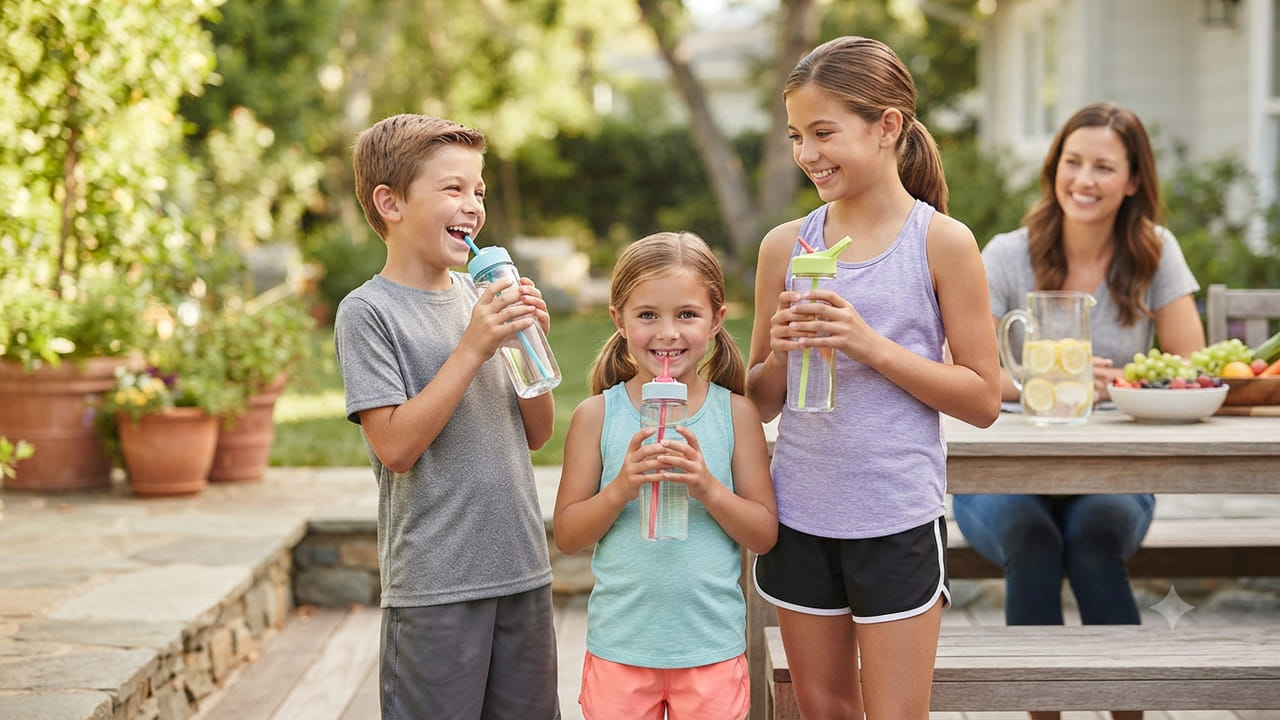
- Give every child a bottle. Send it to school and check how much is left when they return.
- Attach water to routines. A glass on waking, with meals, after play and after school.
- Teach the urine colour check. Pale straw means well hydrated, and darker yellow means drink more. It is a handy teaching tool for older children, not a diagnostic test.
- Serve water-rich foods. Watermelon, cucumber, oranges and buttermilk all add to daily intake.
- Make it enjoyable. Fruit-infused water, a sticker chart or a bottle with time markings works without added sugar.
- Lead by example. Children copy what they see.
The bottom line
Most children are not at risk of severe dehydration, but many may drink less than they should. Some studies suggest that even mild dehydration can affect concentration and mood, though the evidence is limited. The practical approach is simple: build routines, offer water proactively, use ORS when a child is unwell, and know the warning signs.
-This article is authored by Dr Srimukhi, Consultant Paediatrician and Neonatologist, Manipal Hospitals, Vijayawada