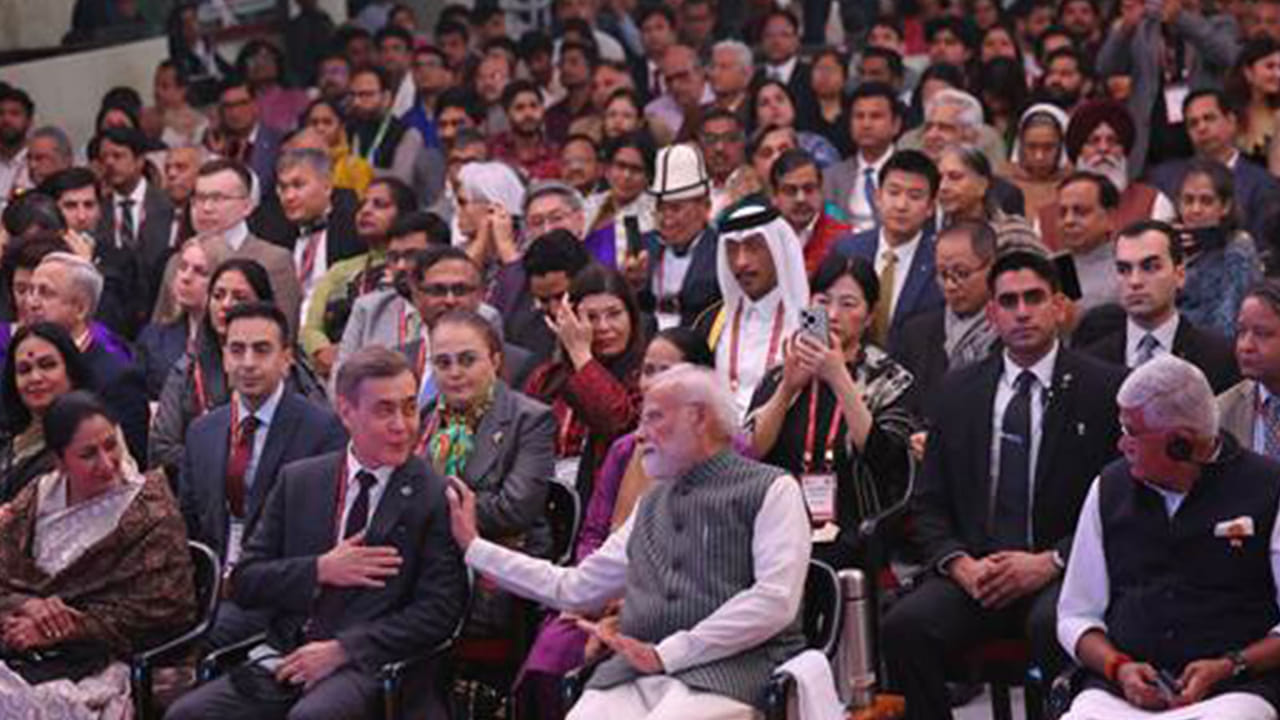
The inaugural SCO Civilisational Dialogue Forum in New Delhi concluded with the Indraprastha Communiqué, setting a roadmap for enhancing cultural ties, shared heritage, and people-to-people cooperation among member states.
The first Shanghai Cooperation Organisation (SCO) Civilisational Dialogue Forum, held at Purana Qila in New Delhi from November 20 to 22, concluded with the adoption of the Indraprastha Communiqué, outlining a roadmap for strengthening cultural cooperation, preserving shared heritage and promoting people-to-people exchanges among Member States and Dialogue Partners.
Organised under the Government of India’s Ministry of Culture, the forum brought together participating countries to deliberate on their shared civilisational histories, cultural traditions and opportunities for greater cooperation. During the discussions, participants reflected on centuries of interaction, movement of people, exchange of ideas and shared knowledge that had shaped their respective societies while preserving their distinct cultural identities, traditions and beliefs.
The communiqué reaffirmed the importance of mutual trust, harmony, equality, consultation, respect for civilisational diversity and sustainable development, recognising culture as an important bridge for friendship and good-neighbourliness under the SCO Charter. The participating countries also recognised cultural heritage as encompassing monuments, manuscripts, literature, artworks, living traditions, cuisine, performing arts, creative expressions and knowledge systems passed down through generations.
Emphasising equality among civilisations, the forum highlighted the importance of respecting every civilisation and celebrating diversity in the spirit of Vasudhaiva Kutumbakam, meaning “the world is one family”. The communiqué also outlined proposals for identifying common tangible, intangible and documentary heritage for joint nominations to UNESCO, along with efforts to preserve languages, literature, scripts, manuscripts, folk traditions and oral heritage. These efforts would include digitisation, cataloguing, preservation, joint research, translations and the proposed establishment of a digital repository.
Participants also called for the constructive use of Artificial Intelligence in cultural preservation, while ensuring accuracy, contextual integrity and respect for the interests of communities and institutions. The forum further emphasised strengthening institutional cooperation among museums, libraries, archives, universities, research organisations and heritage institutions.
On people-to-people engagement, participants highlighted the importance of organising joint exhibitions, cultural festivals, film events and performing arts programmes, alongside exchanges involving artists, scholars and students. They also underlined the need to honour spiritual and philosophical traditions, places of learning and pilgrimage, and promote respectful dialogue across different beliefs.
Addressing threats to cultural heritage, the communiqué highlighted the need for cooperation to prevent illicit trafficking in cultural property and tackle challenges arising from environmental pressures and natural calamities. Participants also discussed sharing experiences and exploring a platform to strengthen resilience against climatic tragedies, while exchanging good practices in heritage preservation, cultural education and public engagement.
Highlighting the role of younger generations, the forum called for encouraging them to become flagbearers of shared civilisational and cultural heritage. The forum also took note of India’s proposal to organise the SCO Civilisational Dialogue once every two years, at a location to be decided by SCO Member States during their respective SCO Summits.