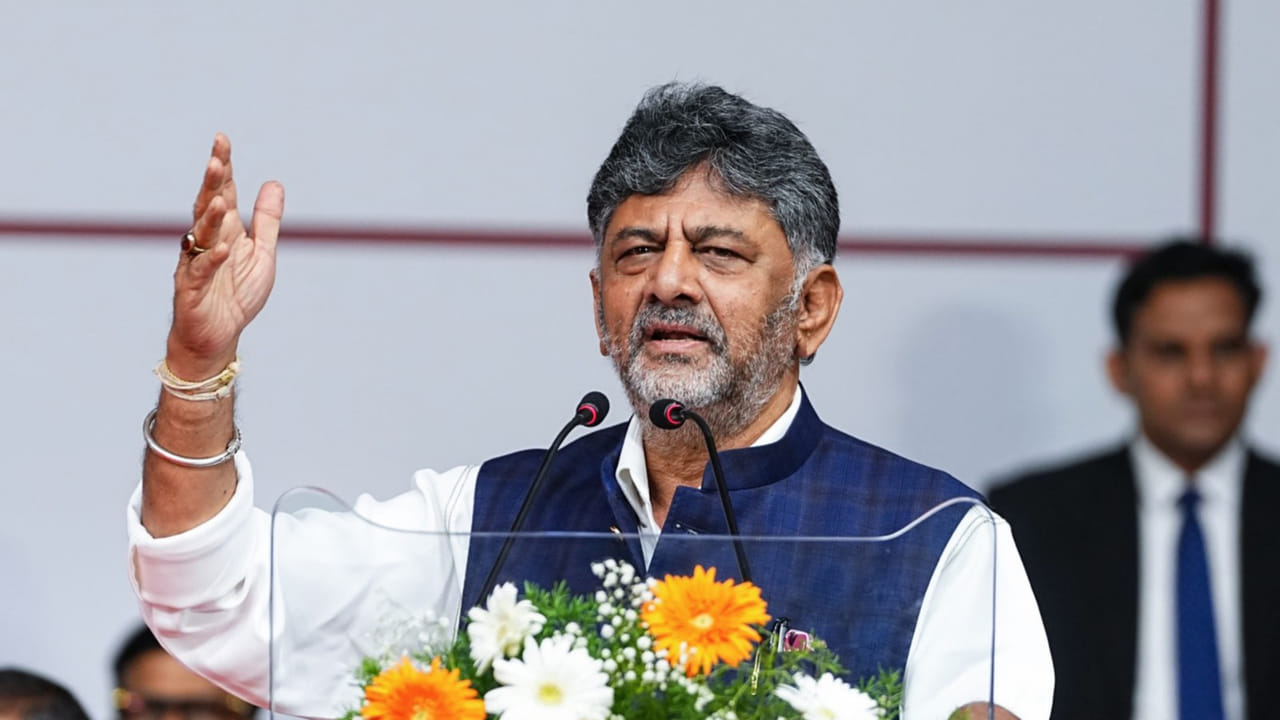
The Karnataka Cabinet has launched a massive housing drive to distribute 15 lakh residential sites and build one lakh new homes for landless and economically weaker families across rural and urban regions, costing an estimated Rs 2,241 crore.
Bengaluru (Karnataka) [India], November 21 (ANI): In a major housing initiative aimed at providing residential security to homeless and landless families, the Karnataka Cabinet has approved a plan to distribute 15 lakh free residential sites across the state and construct one lakh new houses at an estimated cost of Rs 2,241 crore. The decisions were taken at the 26th meeting of the State Cabinet, chaired by Chief Minister DK Shivakumar on November 19, 2026.
The initiatives are part of the government’s efforts to ensure that economically weaker families, including former defence personnel and vulnerable sections, have access to land and housing. Under the proposed ‘Bhooguarantee’ initiative, the government plans to provide 15 lakh free residential sites to eligible landless families. The first phase will cover five lakh sites, with an estimated development expenditure of Rs 1,000 crore. Alongside this, the Cabinet has approved the construction of one lakh new houses under various state housing schemes during 2026-27, with financial assistance to beneficiaries substantially increased to account for rising construction costs.
The government estimates that nearly 14.4 lakh people in Karnataka may be without residential sites, based on the state’s estimated population of 7.2 crore. To address this requirement, it has set a target of developing 15 lakh sites across rural and urban areas. Of the proposed sites, nine lakh are planned in rural areas, requiring approximately 45,000 acres. In urban areas, five lakh beneficiaries are proposed to be accommodated through a G+3 housing model on around 5,000 acres.
District administrations have been directed to identify and reserve suitable government land under Section 71 of the Karnataka Land Revenue Act, 1964. The government has already identified approximately 23,500 acres of government land across all 31 districts, which is estimated to be sufficient for developing around 4.70 lakh residential sites. In the first phase, five lakh sites will be developed across approximately 25,000 acres at an estimated cost of Rs 20,000 per site, taking the total expenditure to Rs 1,000 crore.
Around Rs 400 crore, or 40 per cent of the expenditure, is proposed to be mobilised through convergence of funds from various sources, including VB-G-RAM-G, Scheduled Caste Sub-Plan (SCP), Tribal Sub-Plan (TSP), District Mineral Foundation (DMF), Kalyana Karnataka Regional Development Board (KKRDB), Malnad Development Board and the local area development funds of MPs and MLAs. The remaining amount is proposed to be mobilised through available government funding sources.
The proposed Niveshana Yojane (Residential Site Scheme), under the Sainik Samman Yojane, will provide free residential sites to eligible landless families, including former defence personnel. A three per cent reservation has been proposed for ex-servicemen. Priority will also be given to senior citizens, widows, widowers, divorced persons, single mothers, persons with disabilities and transgender persons. The government has also proposed measures to ensure that beneficiaries receive proper ownership documents without additional financial burden, including waiving stamp duty and registration charges.
Separately, the Cabinet has approved the construction of one lakh new houses during 2026-27 under various state housing schemes, including Basava Vasati Yojane, B R Ambedkar Nivas Yojane, Devaraj Urs Housing Scheme and Vajpayee Urban Housing Scheme. Taking into account the increase in construction material costs, the government has decided to enhance financial assistance from Rs 1.20 lakh to Rs 2 lakh for general category beneficiaries and from Rs 2 lakh to Rs 3 lakh for Scheduled Caste and Scheduled Tribe beneficiaries.