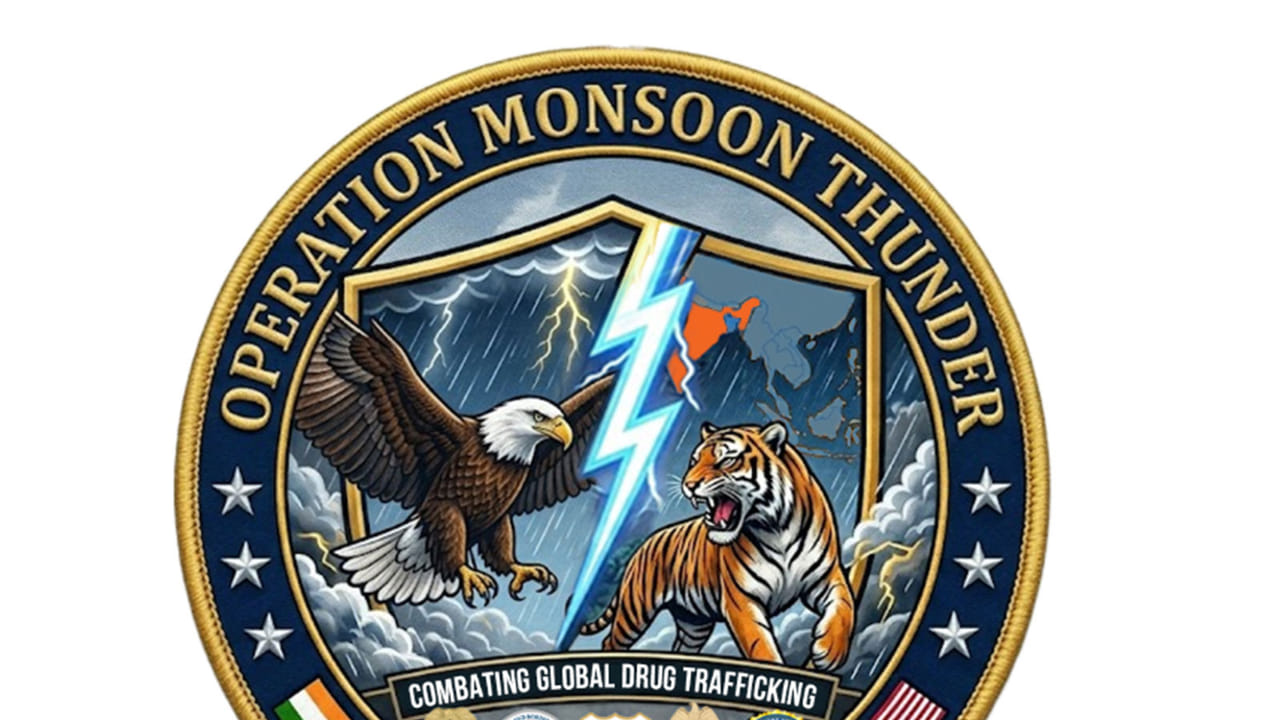
India’s NCB and the US DEA dismantled a transnational drug trafficking network in Operation Monsoon Thunder. The joint effort led to six arrests and the interception of 500,000 tablets, marking a major success in bilateral law enforcement ties.
New Delhi [India], November 21 (ANI): Sergio Gor has praised the US-India partnership in a joint crackdown dubbed “Operation Monsoon Thunder” as a great example of the bilateral ties after India’s Narcotics Control Bureau (NCB) and the US Drug Enforcement Administration (DEA) dismantled a transnational drug trafficking module. Responding to NCB India’s announcement on X, Gor highlighted the joint effort between Indian and American authorities and credited India’s leadership.
“Under Operation Monsoon Thunder, India’s @narcoticsbureau, in close coordination with the U.S. @DEAHQ, disrupted a transnational drug trafficking network supplying illegal drugs to consumers across the United States – and apprehended six individuals,” Gor wrote, adding, “Thank you, Home Minister @AmitShah, for your leadership.” A great example of the U.S.-India partnership in action! Under Operation Monsoon Thunder, India’s @narcoticsbureau, in close coordination with the U.S. @DEAHQ, disrupted a transnational drug trafficking network supplying illegal drugs to consumers across the United States – and apprehended six individuals. Thank you, Home Minister @AmitShah, for your leadership. — Ambassador Sergio Gor (@USAmbIndia) November 21, 2026
In its own post, NCB India said it worked closely with the US DEA to bust “the Indian module of a transnational drug trafficking network facilitating the supply of psychotropic and opioid drugs within the United States.” According to NCB India, the syndicate relied on encrypted and everyday digital tools to run its operations. “The network operated through digital platforms, including Telegram and WhatsApp, with Google Sheets used for managing orders,” the agency stated, noting that deliveries moved through postal routes including drop-shipping consignments, while payments flowed through “digital payments, cryptocurrency and hawala networks.”
NCB India reported that the crackdown led to six arrests across four Indian cities and the identification of roughly 3,000 parcels containing nearly 500,000 tablets shipped inside the United States. Authorities also shared records tied to more than 59,000 US subjects with the US DEA, which intercepted two live consignments. Framing the bust as a milestone in bilateral enforcement, NCB India said the operation “underscores the strength of India–US law enforcement cooperation and the commitment of both agencies to dismantling transnational drug trafficking networks.” Investigators are continuing efforts “to identify the masterminds, dropshipers [sic], trace financial proceeds and establish wider international linkages,” while NCB India pledged to stay focused on “intelligence-led enforcement and strong international partnerships.”
Earlier this month, the Narcotics Control Bureau (NCB), Ministry of Home Affairs, Government of India, hosted the 2nd India-US Drug Policy Executive Working Group Meeting on November 2-3 in New Delhi. According to a press release, a wide spectrum of policymakers and law enforcement officials working closely on counternarcotics from both countries participated in the meeting. The Indian delegation was led by Anurag Garg, Director General, NCB, and the US delegation was headed by Debbie Seguin, Acting Deputy Director, Office of National Drug Control Policy (ONDCP).
Pursuant to the terms of reference of the US-India Drug Policy Framework, the meeting reviewed bilateral cooperation in combatting illicit drug trafficking and identified priority areas for strengthening intelligence sharing, coordinated law enforcement action, precursor control, pharmaceutical supply chain integrity, and drug demand reduction. As per the release, in his opening remarks, Anurag Garg highlighted the India Vision Roadmap 2026–2029, formulated under the guidance of Prime Minister Narendra Modi and the leadership of Union Home Minister Amit Shah. The roadmap outlines a comprehensive strategy to combat the illicit narcotics trade, emphasising network-centric investigations, precursor control, financial investigations, prevention, and rehabilitation. The Director General also highlighted India’s adoption of a network-centric approach to decisively dismantle drug trafficking networks by targeting their entire ecosystem, including financiers, suppliers, facilitators and logistical networks.
According to the release, the United States and India built on the progress of the first Executive Working Group meeting, held in Washington, DC, in January 2026. The delegations discussed current drug trafficking trends and emerging threats. They welcomed joint and national initiatives at the operational and regulatory levels, including Operation MedMax, Operation WIPE, and India’s Voluntary Code of Conduct to prevent the diversion of precursor chemicals used to make synthetic drugs. The meeting underscored the importance of sustained institutional engagement, timely intelligence exchange, and coordinated action to address emerging narcotics threats and promote demand reduction. Both sides agreed to further sharing of best practices in targeted law enforcement topics. The meeting signified the abiding and shared commitments by India and the United States to advance bilateral counternarcotics cooperation towards ensuring the safety and well-being of their communities. The White House Office of National Drug Control Policy leads and coordinates US drug policy, develops and implements the President’s National Drug Control Strategy, and supports communities through the Drug Free Communities Support (DFC) and High Intensity Drug Trafficking Area (HIDTA) programs. (ANI)