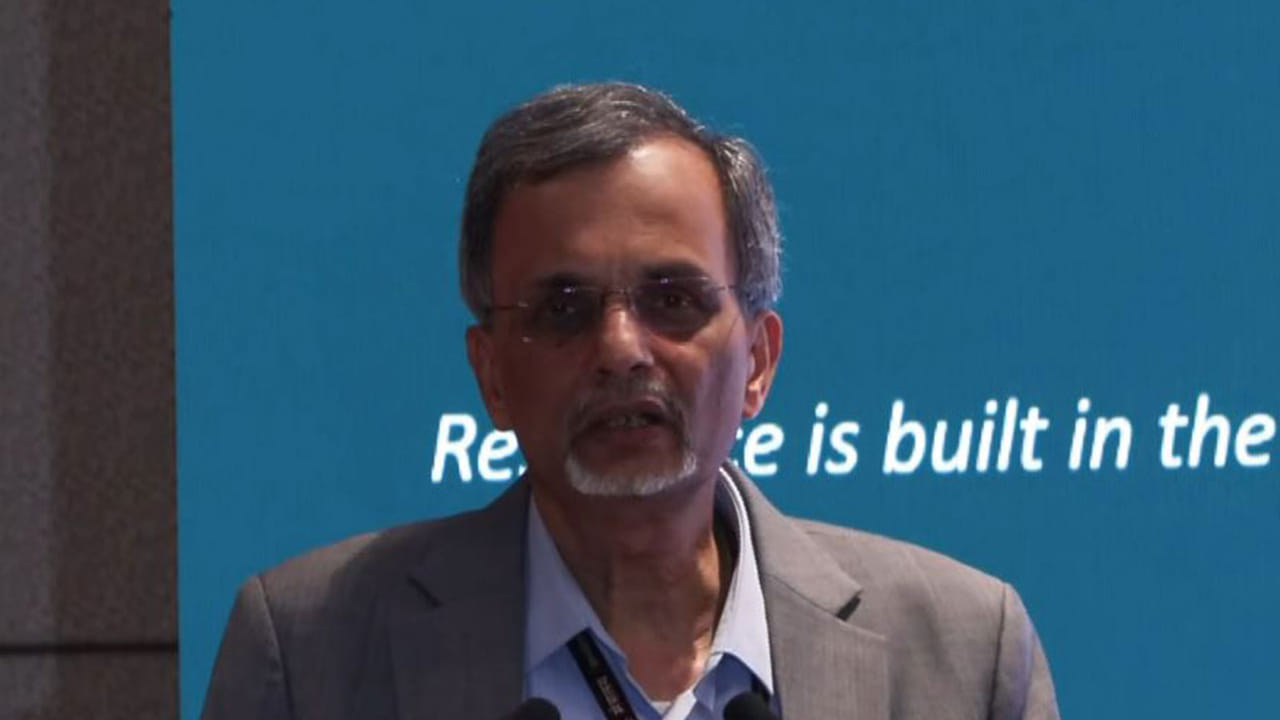
India may face a stronger rupee in FY28 as lower crude oil prices and shifting capital flows boost economic prospects. Chief Economic Advisor V Anantha Nageswaran remains optimistic about growth, citing India’s resilience amid global market shifts.
India May Face Challenge of Stronger Rupee in FY28: CEA
India could face the challenge of managing a stronger rupee rather than currency weakness in the next financial year (FY28), as easing global energy prices and a potential shift in capital flows away from artificial intelligence (AI)-related investments could improve the country’s economic outlook, Chief Economic Advisor V Anantha Nageswaran said on Wednesday.
Speaking at FICCI’s Annual General Meeting and Annual Convention in New Delhi, Nageswaran expressed optimism about India’s growth prospects for 2027-28, citing the possibility of lower crude oil prices, improving capital inflows and stabilising trade relations with the United States. “In fact, who knows? Our problem next year may be one of managing rupee strength rather than rupee weakness in FY28,” he said.
Highlighting the potential benefits of easing energy prices, Nageswaran said several agencies expect Brent crude prices to fall below USD 80 per barrel next year, which could provide significant relief to the Indian economy. “If that happens to be the case, then India will have a huge windfall in terms of lower energy prices next year, which will naturally spill over into lower input costs, lower inflation and higher growth as well,” he said.
The CEA also suggested that concerns surrounding elevated AI valuations could redirect global investment flows towards India, which has relatively limited exposure to the development of frontier AI models. “So, no further proof is required to suggest that India is being seen as an alternative safe haven,” he said, pointing to the relative resilience of Indian equities when US technology stocks face selling pressure.
He noted that India attracted net foreign institutional investor equity inflows of USD 5.2 billion during July and August, when concerns about AI safety emerged and India’s landed crude oil costs declined to around USD 82-85 per barrel. Nageswaran further stated that net FII flows had reached approximately USD 10 billion during the current month until the previous day.
Commenting on India’s economic outlook, he said, “This is the backdrop against which we are entering the tail end of the 2026–27 financial year, setting the stage for a fairly decent 2027–28 as well, in terms of how growth numbers and capital inflows would stack up.”
On the trade front, Nageswaran expressed hope that India’s unsettled trade relations with the United States could improve, providing another positive factor for the economy. He also highlighted India’s export performance, noting that shipments of goods and services reached USD 568 billion during the first seven months of the current financial year. “Those of us who are not that mathematically challenged can easily extrapolate this to a 12-month figure and say that we will be close to achieving USD 1 trillion this year,” he said.
Nageswaran added that India’s post-pandemic growth performance, supported by macroeconomic stability and fiscal prudence, had strengthened the country’s medium-term economic prospects despite multiple global supply shocks. However, he cautioned that geopolitical uncertainty, supply-chain disruptions, China’s manufacturing dominance and the challenges posed by AI would require India to strengthen its economic resilience. “Business as usual will not work,” he said, emphasising the need for cooperation between the government, private sector and households to navigate the changing global economic environment.