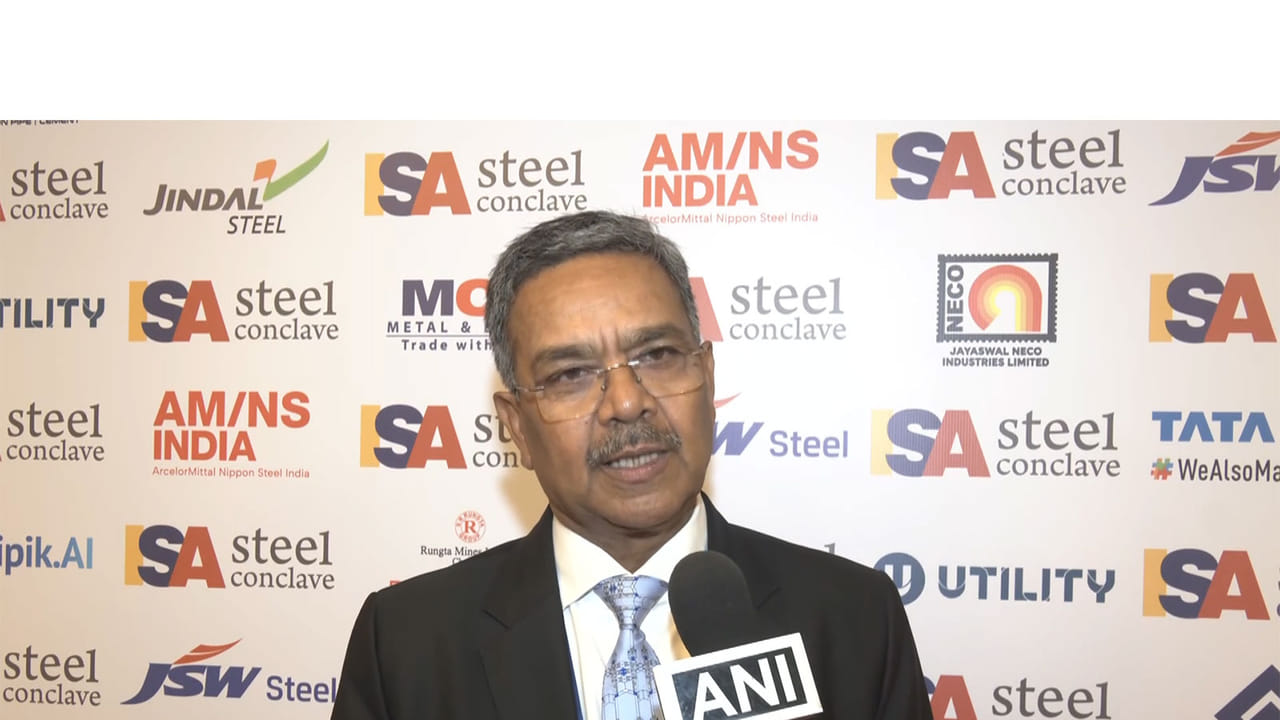
Indian steelmakers excel in factory efficiency, ranking in the global top 10. However, high logistics costs and subsidized Chinese imports pose significant challenges, discussed recently at the ISA Steel Conclave with a focus on AI integration.
Indian steelmakers rank among the top 10 most competitive steel producers in the world within the factory gate, though high logistics costs, unsubsidised taxes, and subsidised Chinese imports create hurdles outside the plant, said Ashok Sahay, Secretary General and Executive Head, Indian Steel Association. Speaking exclusively to ANI on the sidelines of the ISA Steel Conclave, Sahay cited a World Steel Dynamics study that evaluates production costs across 35 global steelmakers.
“World Steel Dynamics carried out a study of what kind of costs there are among different countries of steelmakers. Indian steelmakers, the top steelmakers, are among the top 35 in the study, and we are in the top 10. Most of our major members are in the top 10 of the most competitive, best steelmakers,” Sahay stated. He noted that domestic producers maintain strong efficiency inside their plants, but external expenses erode that advantage.
Referencing a NITI Aayog study, Sahay pointed out that Indian producers face an additional USD 80 to USD 100 in costs outside the factory gate due to logistics expenses of about 15 per cent, compared to 7 per cent globally, alongside 8 to 12 per cent in levies and duties not subsumed under the Goods and Services Tax (GST).
On the trade front, Sahay flagged a sudden rise in Chinese steel imports, noting that the Chinese government subsidizes its industry to support employment. He pointed out that the European Union levied a 35 per cent countervailing duty on Chinese steel after identifying state subsidies. Sahay also outlined the four key focus areas of the two-day ISA Steel Conclave, which covers raw material security, trade issues, technology, and infrastructure building as the sector targets a capacity of around 604 million tonnes. For the first time, the conference integrated Artificial Intelligence (AI) into the main agenda to improve energy efficiency, drive decarbonization, and cut product development timelines.