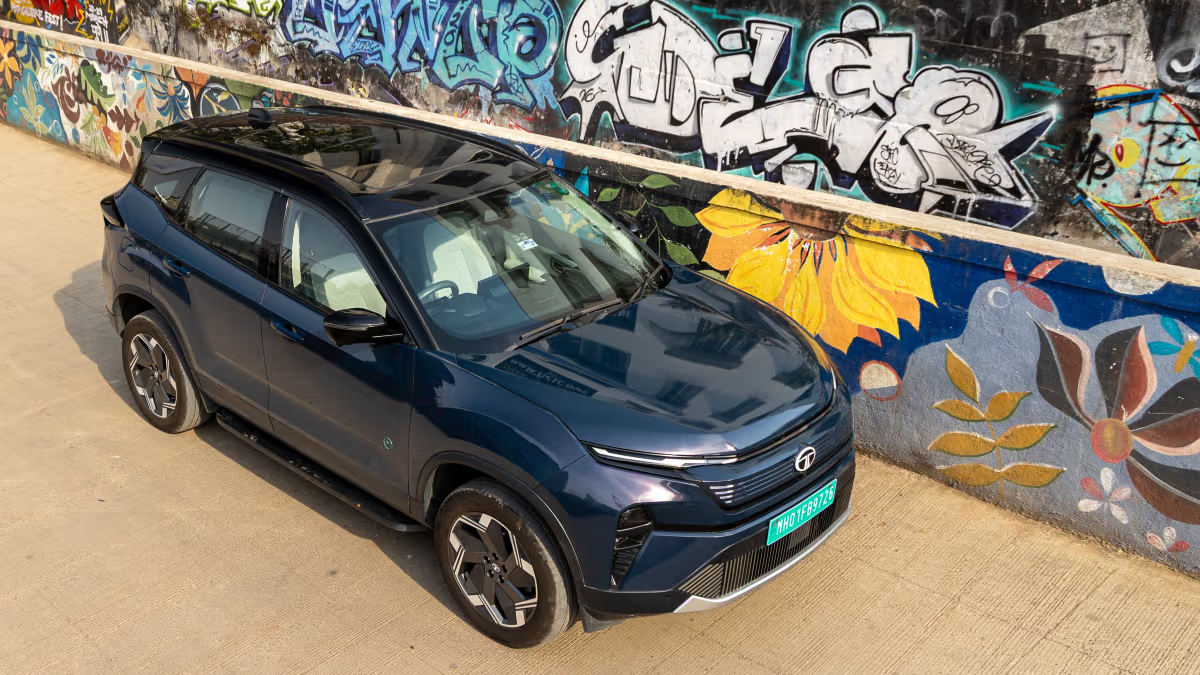
Some cars take a few days to understand, some take a few thousand kilometres; the belongs firmly in the second category.
When I wrote the introduction report, the odometer had just crossed 1,500 km. Most of that distance came from city commutes, office runs and the usual routine that every long-term test car goes through. At the time, I felt like I understood only half of what the Harrier EV was about.
Today, the odometer reads a little over 5,000 km. And somewhere between Mumbai traffic, a Goa road trip, midnight food cravings and a drive-in movie date, the Harrier EV has slowly started revealing its true personality.
Not all of it has been perfect, but that’s exactly why long-term tests exist.
Goa, Mumbai And Everything In Between
A large chunk of the additional kilometres came courtesy of my colleague Ujjawal, who took the Harrier EV on a road trip to Goa. The rest came from me.
Over the past few weeks, Mumbai has almost started feeling like an extension of Delhi. Four separate trips later, I’ve become extremely familiar with the Mumbai-Pune Expressway, charging stops, and just how effortlessly this big electric SUV eats up kilometres. The further I drive it, the more I realise that this is where the Harrier EV feels most at home.
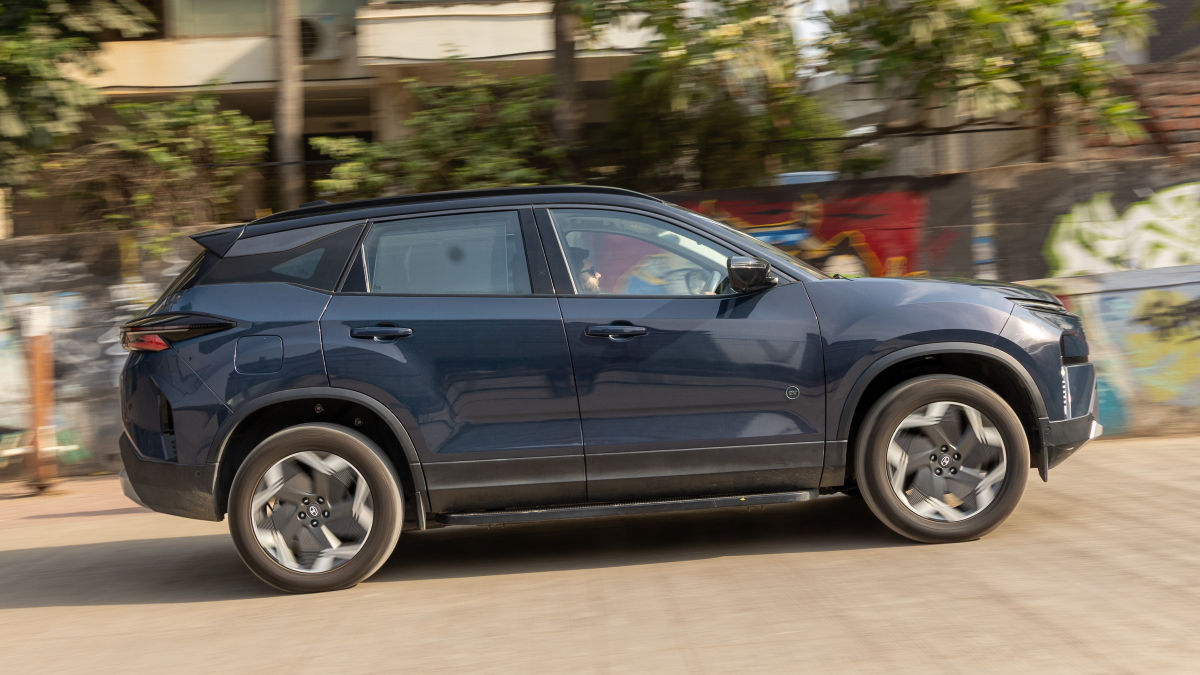
In city traffic, it’s comfortable and on highways, it feels complete. The cabin remains remarkably quiet at cruising speeds, road and wind noise stay well controlled, and the effortless nature of the dual-motor powertrain means overtakes happen with almost no planning whatsoever.
You spot a gap, you press the accelerator and you’re past. It’s the kind of performance that never gets old.
The Frunk Became The Unexpected Hero
One feature I genuinely underestimated was the frunk. Like most people, I initially thought it would be something I’d show friends once and then forget about entirely. Turns out, I couldn’t have been more wrong. A few weeks ago, my soon-to-be better half and I decided to catch a movie at Mumbai’s drive-in theatre at Jio World Drive. Now, anyone who has ever bought food at a multiplex knows that financial planning goes out the window the moment you approach the snack counter.
My little evil mind had a thought, why not smuggle food in, in the frunk, and so, we prepared!
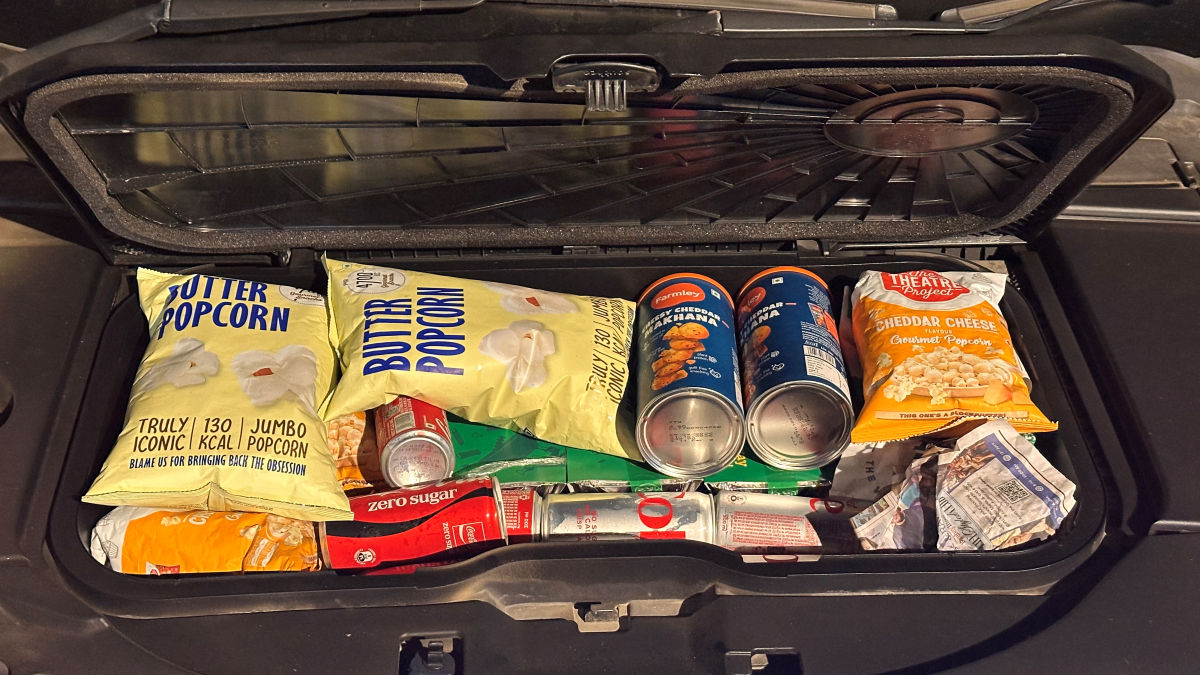
Vadapav, Samosa Pav, Pasta, Popcorn, soft drinks, and a few other items that are probably better left undocumented. Everything fit neatly into the Harrier EV’s frunk. The cabin remained clutter-free, nobody questioned our cargo, and for one glorious evening, the frunk became the most useful storage compartment I’ve ever had in a car.
I suspect Tata’s engineers had charging cables in mind when they designed it; I had very different priorities.
The Range Story Wasn’t What I Expected
One thing that has genuinely surprised me over the past few thousand kilometres is efficiency. Conventional EV wisdom tells you that city driving is where electric vehicles shine, while highways usually take a toll on range. The Harrier EV has repeatedly challenged that assumption.
On long highway runs, when you settle into a comfortable cruising speed and simply let the car do its thing, the efficiency figures start looking surprisingly healthy.
The usable range often feels better than what I experience during some city drives; part of that comes down to consistency.
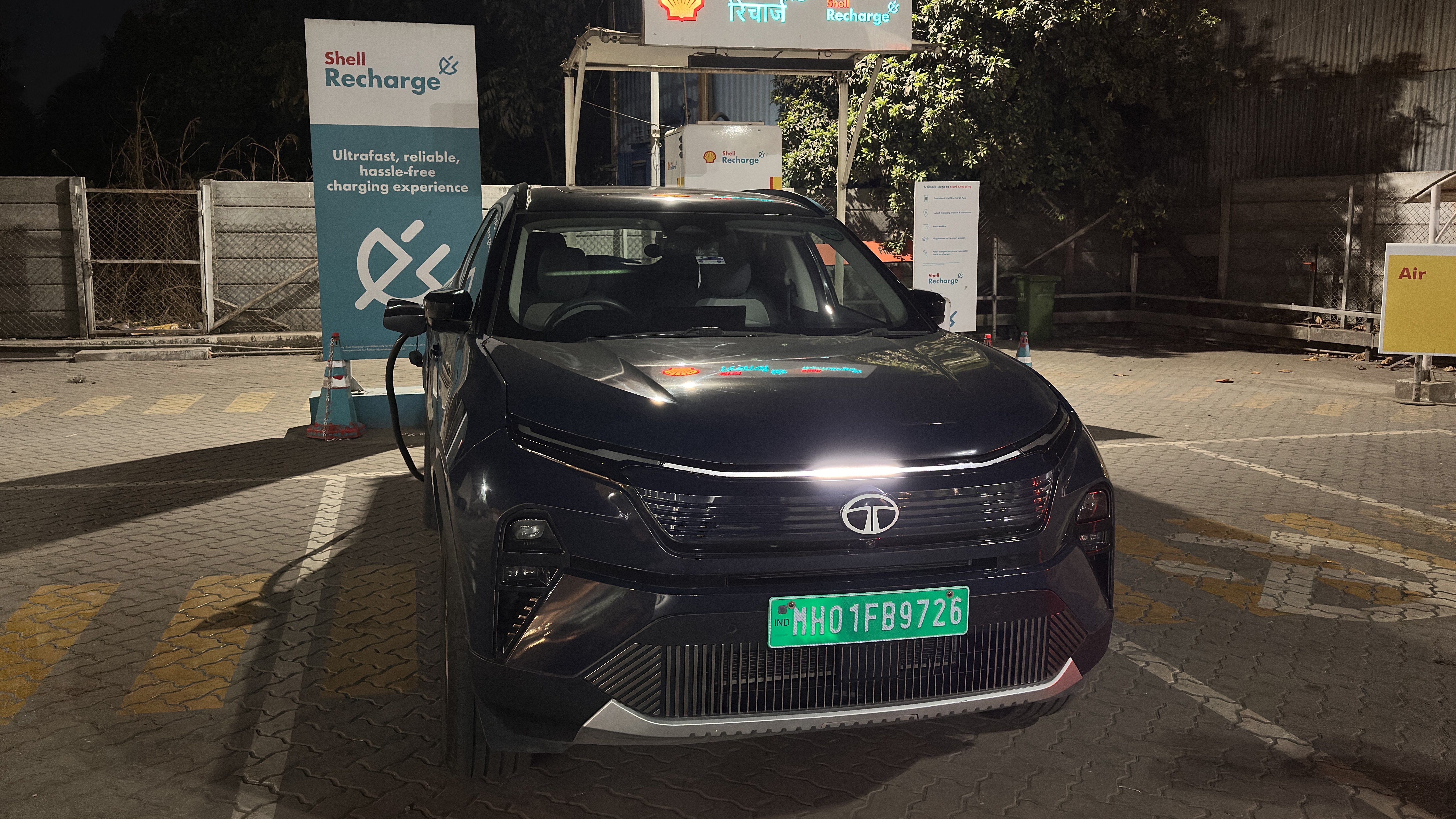
In urban traffic, you’re constantly accelerating, braking, crawling through congestion and dealing with unpredictable conditions. On the highway, the Harrier EV seems to find its rhythm. The motors settle down, energy consumption stabilises, and the projected range starts looking increasingly optimistic.
I still need a long road trip before making any definitive conclusions, but one thing has become clear. This is an EV that enjoys stretching its legs.
Finally Understanding The Suspension
If you read my first report, you’ll remember I wasn’t entirely convinced by the suspension setup, not because it was bad; I just hadn’t experienced anything that made me understand why people were praising it so much. That changed recently, and strangely enough, it happened because I was homesick.
One evening, I found myself desperately craving proper Kathiyawadi food. The restaurant I wanted to visit was on the opposite side of the city and, predictably, Pune traffic had turned the journey into an exercise in patience. Then I spotted an alternative route, it wasn’t exactly a road, more of a rough patch connecting two roads, the sort of route most people would avoid.
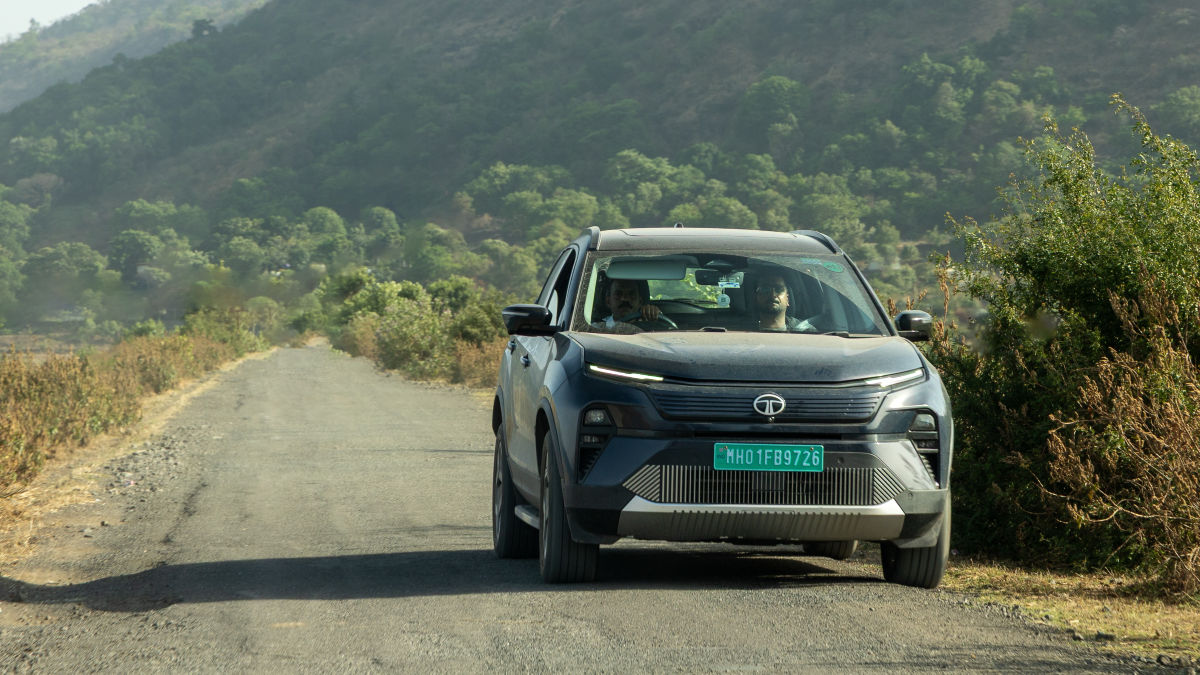
The Harrier EV took it surprisingly well; the combination of the Quad Wheel Drive system and the multi-link rear suspension suddenly started making sense. Despite weighing well over two tonnes, the car never felt unsettled. Traction remained strong, body movements were controlled, and it simply carried on without drama.
No, I wasn’t climbing mountains, and no, I wasn’t attempting hardcore off-roading, but for the first time, I understood why Tata invested so heavily in the hardware underneath this SUV.
Then There Are The Days It Throws A Tantrum
Unfortunately, spending more time with a car also means discovering its bad habits, and the Harrier EV definitely has a few. Every now and then, the TPMS system decides it has something important to tell me. Sometimes, the infotainment system appears to perform a complete reset, forgetting previously paired devices and forcing me to reconnect everything from scratch.
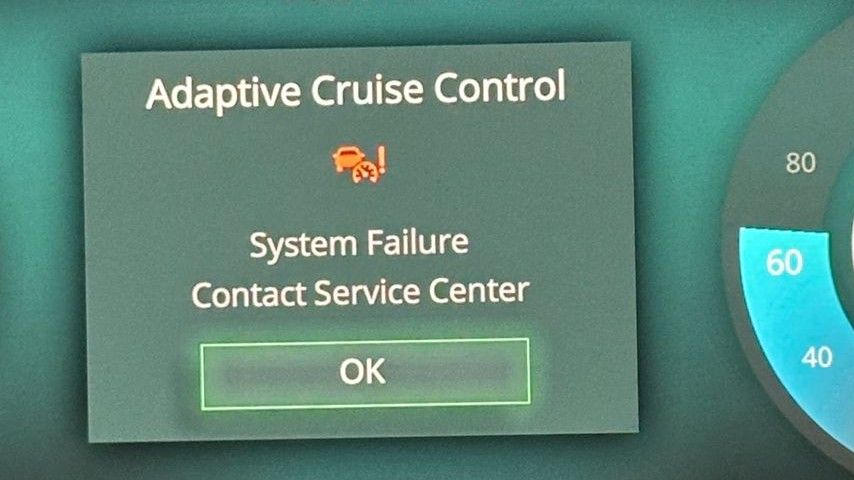
The 360-degree camera system has frozen on occasion, and a few other software gremlins have also appeared from time to time. None of these issues has stranded the car, nor have they left me calling roadside assistance, but they’re noticeable because the rest of the experience is generally so polished.
The Harrier EV feels genuinely great when everything works. It’s just that every now and then, the software reminds you that modern cars are becoming computers on wheels.
And apparently, computers occasionally have bad days, too!
A Question Mark On The Tyres
One observation that has started catching my attention is tyre wear. For a car that has covered just over 5,000 km with us (and in total, close to 10,000 km), the degradation seems slightly quicker than I expected.
Now, there are plenty of possible explanations: this is a heavy vehicle, it produces serious torque, most of its life has involved journalists behind the wheel, and Indian roads aren’t exactly known for being gentle on tyres. So I’m not drawing any conclusions yet, but it’s definitely something I’ll be keeping a close eye on over the coming months.
The Next Test: A Trip Home!
As for what comes next, the Harrier EV is about to become part of a much bigger chapter in my life. Over the next month, I expect it to spend a lot less time doing routine office runs and a lot more time helping me prepare for my very own Great Indian Wedding.
That means long drives, shopping hauls, multiple bags that somehow turn into multiple suitcases, and at least one proper trip back home to Gujarat with the soon-to-be wife in tow.
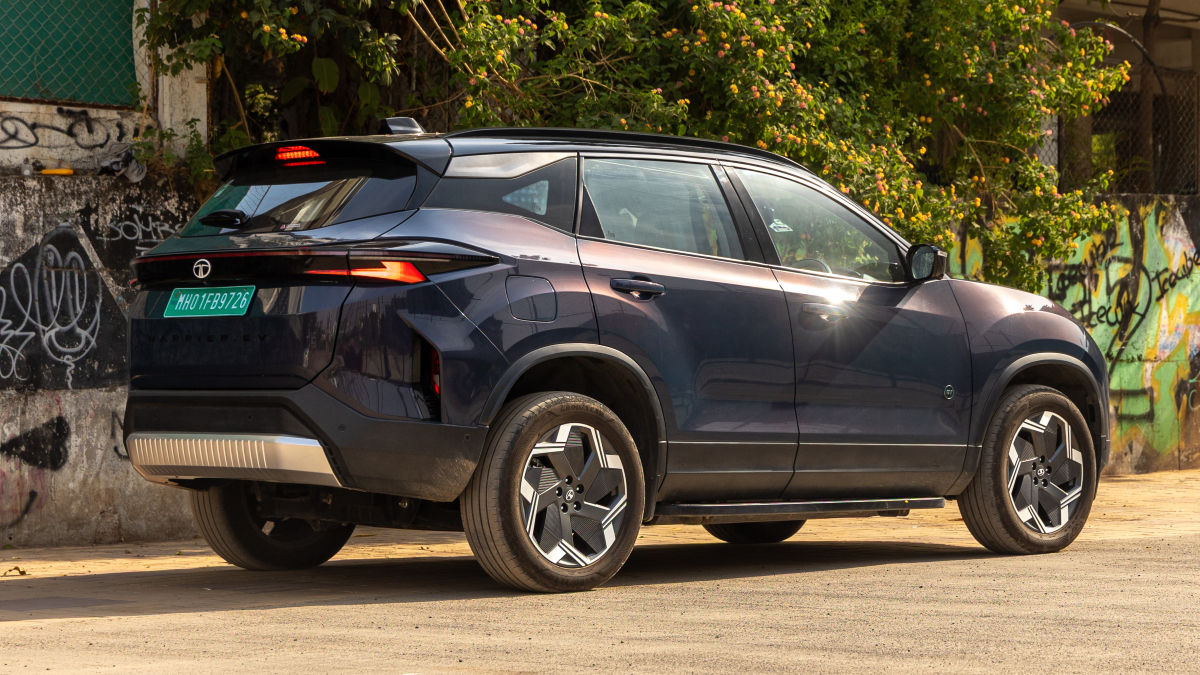
In many ways, this might be the most relatable test yet for a family SUV, loaded with luggage, packed with wedding essentials, and covering long distances with two people who are already debating what needs to be packed and what doesn’t.
I’m genuinely looking forward to seeing how the Harrier EV handles this phase, because if there’s one thing I’ve learnt over the last 5,000 km, it’s that the best way to understand a car is to simply live with it. And over the next month, life is about to get a lot busier, a lot more chaotic, and hopefully, a lot more memorable. The Harrier EV is coming along for the ride, and I can’t wait to see how this story unfolds.