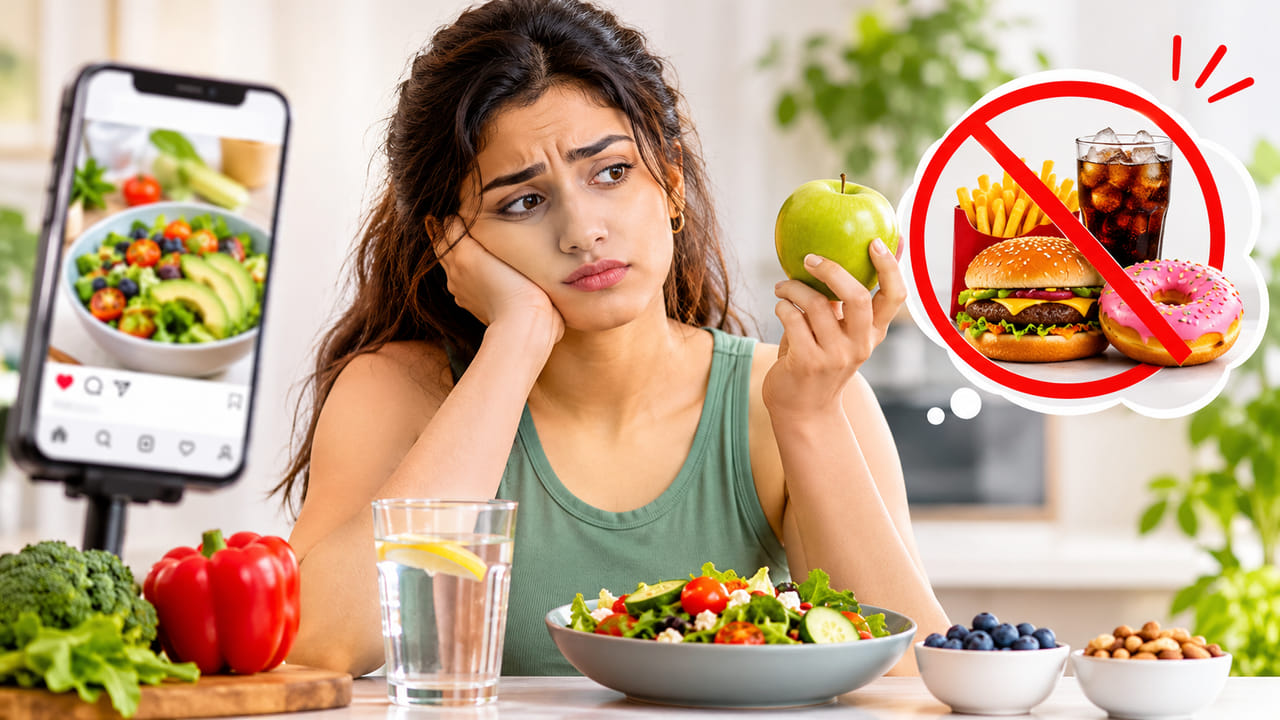
Clean eating is often promoted as the key to good health, but can avoiding certain foods go too far? Explore how social media diet trends, food guilt and strict eating rules can affect your relationship with food.
There are a number of suggestions about clean eating, detox diets, sugar-free diets, and other approaches to eating on social media. While it may indeed be wise to choose healthy food in order to become a healthier person, the pressure to eat in the right way could sometimes lead to good eating habits turning into diet obsession. One may start looking for ways to eat better to become a healthier person but eventually may suffer from such problems as food anxiety and guilt.
What’s Wrong With Healthy Eating?
Basically, clean eating means eating as many unprocessed foods as possible and eating more fruits and vegetables while limiting sugar, salt, and unhealthy fats. The difficulty starts when people assign labels to a particular food and think of it as completely “good” or “bad”. Because of this, tons of people refuse to eat a certain group of food despite having no medical grounds to do so, considering that even the slightest violation of their diet is harmful.
The Social Media Effect
Popular institutions and wellness influencers might promote very strict regimes, meal planning methods and offer suggestions that might result in removing defined ingredients from our diets. Nevertheless, the fact that those recommended products do not always have a strong scientific basis and suitability for one’s dieting needs has to be highlighted.
Certain diet patterns presented in social media may also create misleading expectations about normal eating, which might end up in unhealthy feelings of guilt and dissatisfaction.
Consequences of Incorrect Nutrition
Narrowing down the food choices might lead to getting insufficient amounts of proteins, healthy fats, vitamins, minerals and calories. Depending on how severe the restriction is, the results may vary from fatigue to nutritional deficiency and hormonal imbalance.
Elimination of whole groups of food without their proper substitutes may result in compromising even more one’s nutritional balance. Eating must be in the first place sufficient instead of just concentrating on food eliminated from the menu no matter if it is considered healthy or unhealthy.
Identifying Warning Signals
Not attending events due to unavailability of appropriate food, feeling severe regret after consuming particular types of food, or being worried about the inability to abide by a diet are signs that should not be ignored. In some cases, intense concern about consuming only healthy food might be mistaken for orthorexia even though orthorexia is not recognized as an independent diagnosis within the most commonly used taxation systems.
Establishing a Healthy Balance
A proper diet includes a number of different foods, allowing for some treats here and there and flexibility. Instead of following various extreme diet practices promoted online, it is advisable to pay attention to both specific needs in nutrition as well as individual needs and preferences. Consulting with a dietitian can help develop the proper way of eating.
-This article is authored by Ms. Archana Chief Dietician KIMS Hospitals, Mahadevapura