Researchers analysed data from 6,220 adults who took part in the Australian Diabetes, Obesity and Lifestyle Study, also known as AusDiab.
The participants had an average age of around 51 years at the beginning of the analysis, and approximately 54 per cent were women. Researchers used information collected at different points during the study to examine changes in kidney function, television-viewing time, physical activity and blood sugar status.
Kidney function was assessed using estimated glomerular filtration rate, commonly known as eGFR. This measure helps doctors understand how effectively the kidneys are filtering waste from the blood. A declining eGFR can indicate a reduction in kidney function.
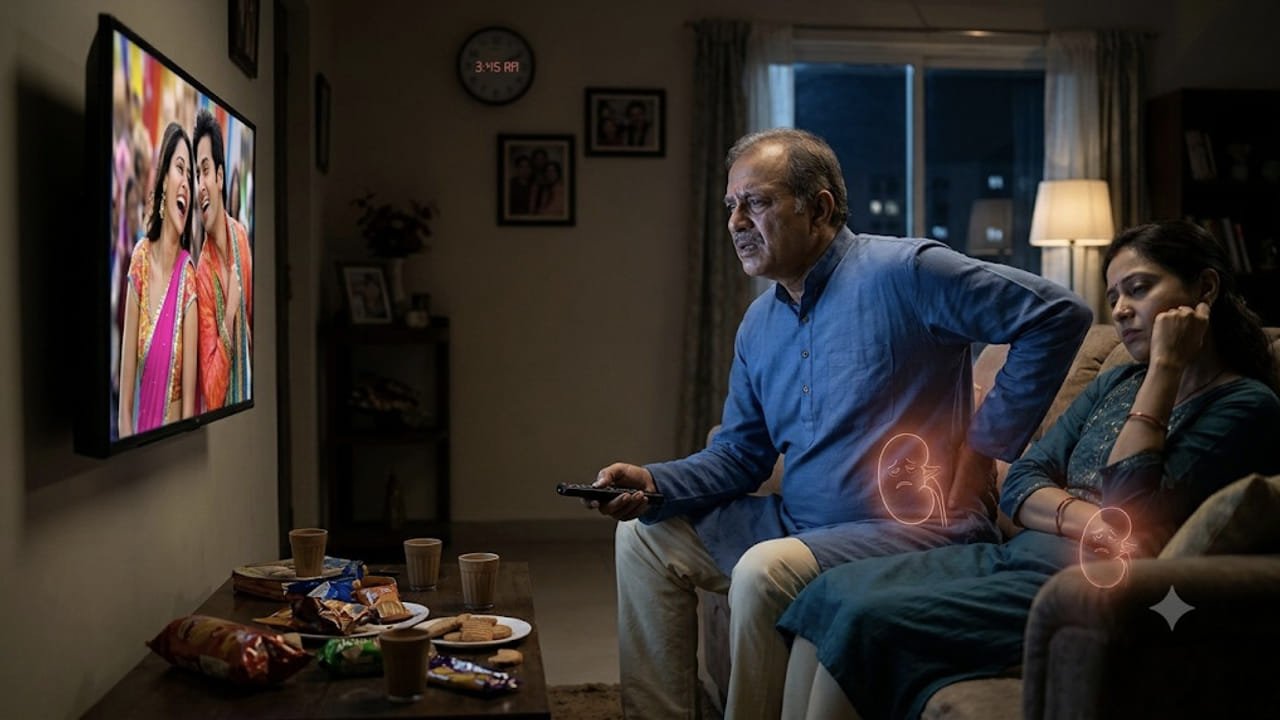
The researchers found that average kidney function decreased over the 12-year period, while the amount of time participants spent watching television increased.
They also observed that people who increased their TV-viewing time tended to experience a greater decline in eGFR.
At the age of 50, the estimated average eGFR was around 98 mL/min/1.73m². Across the study, kidney function declined by approximately 0.80 mL/min/1.73m² each year on average.
These figures describe the overall pattern observed in the study. They do not mean that every person who watches television for longer will experience the same decline.