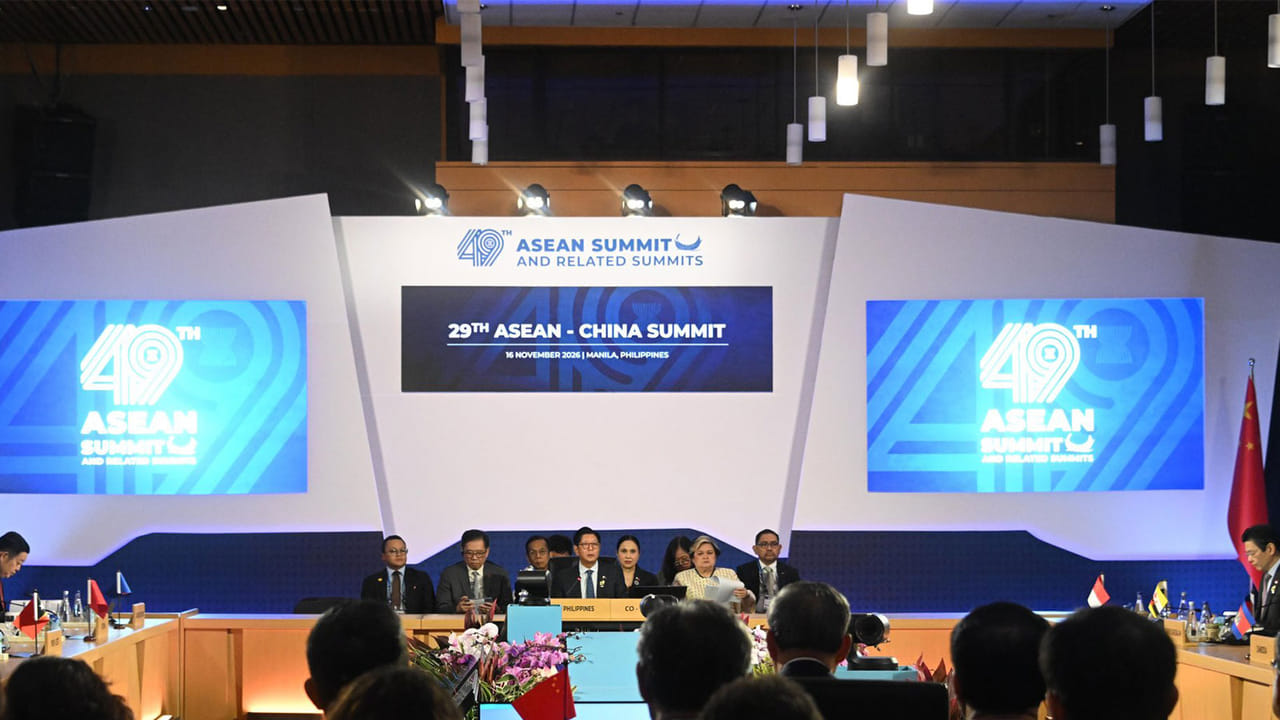
President Marcos urges ASEAN and China to move beyond verbal pledges, advocating for concrete actions and self-restraint to resolve territorial disputes while pushing for the swift conclusion of a Code of Conduct in the South China Sea.
Marcos Urges ASEAN to Turn Verbal Pledges Into Concrete Actions
Philippine President Ferdinand R. Marcos Jr. on Monday called on regional partners to translate verbal pledges regarding the peaceful resolution of disputes into concrete actions, highlighting the need for self-restraint, mutual respect and practical cooperation amid ongoing regional tensions. Addressing delegates at the 29th ASEAN-China Summit in Manila, Marcos noted that the 50th anniversary of the Treaty of Amity and Cooperation in Southeast Asia (TAC) provides an ideal platform to reaffirm adherence to international law and the peaceful settlement of disputes.
“During this anniversary year, our shared commitment to international law and the peaceful settlement of disputes must be reflected in our actions, including through self-restraint, mutual respect and practical cooperation,” he stated. While avoiding explicit references to specific territorial disputes, his comments came against the backdrop of continued tensions in the South China Sea, particularly within the West Philippine Sea, where Manila and Beijing maintain overlapping territorial claims.
Marcos also highlighted progress in negotiations concerning a substantive and effective Code of Conduct (COC) in the South China Sea, noting that dialogue had advanced based on guidelines agreed upon in 2023. He reaffirmed that any finalised pact must strictly align with international law, particularly the 1982 United Nations Convention on the Law of the Sea (UNCLOS). Serving as the ASEAN chair for 2026, the Philippines has consistently advocated for an accelerated conclusion to COC negotiations to effectively manage disputes and prevent maritime incidents from escalating in contested waters. Although discussions remain active, the Department of Foreign Affairs (DFA) has indicated that talks are approximately 80 per cent complete.
Furthermore, Marcos underscored broader milestones in bilateral relations, as ASEAN-China relations mark their 35th anniversary alongside the fifth anniversary of their comprehensive strategic partnership. He pointed to joint achievements spanning commerce, investment, energy security and environmental protection, highlighting the adoption of a joint declaration in July addressing regional economic spillovers from developments in the Middle East and joint energy initiatives. Chinese Premier Li Qiang noted that bilateral trade between Beijing and the regional bloc surpassed USD 1 trillion over the previous year, while cumulative mutual investments exceeded USD 500 billion. Li also highlighted joint progress in the digital and green economies, artificial intelligence and regional connectivity frameworks. Even as Manila maintains commercial engagement with Beijing, the Philippines continues to expand its broader defence alliances with international partners to navigate ongoing maritime challenges in the South China Sea.