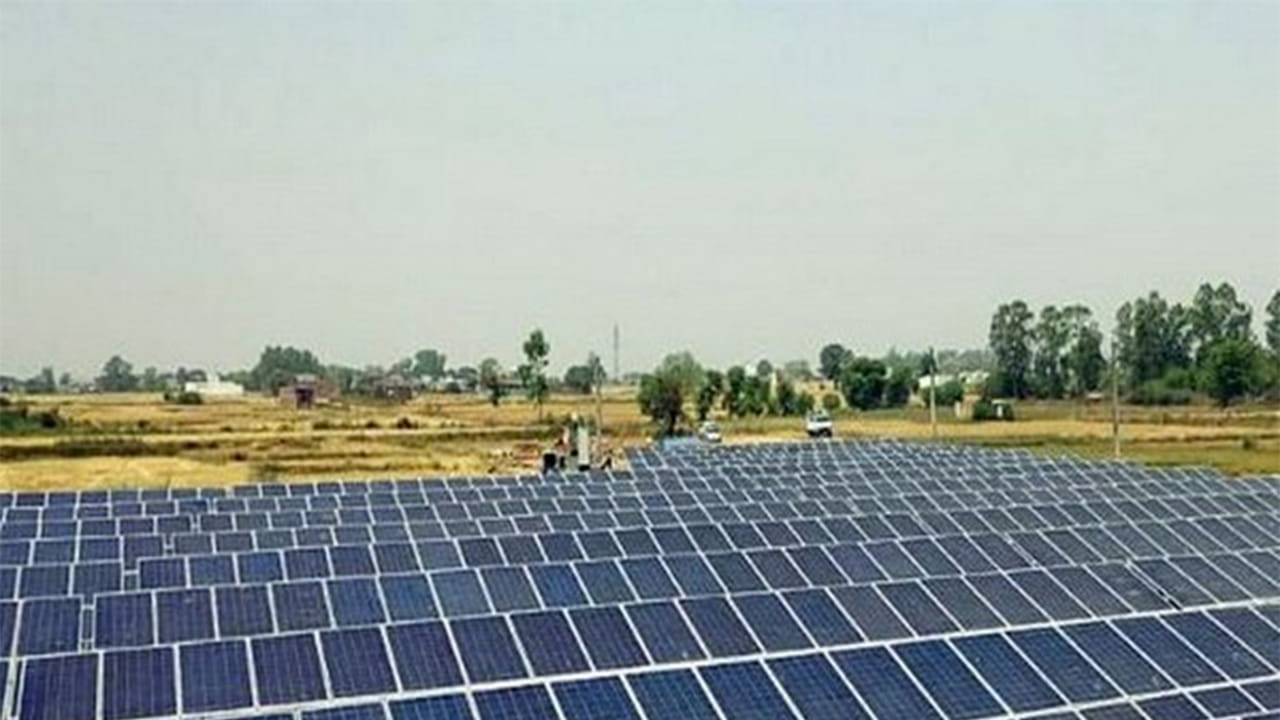
NITI Aayog reports that PLI-backed projects added 24 GW to India’s solar manufacturing capacity. The sector grew 15-fold to 116 GW, effectively reducing import reliance and strengthening domestic production under the Rs 24,000 crore scheme.
New Delhi [India], November 16 (ANI): Projects supported by the Production Linked Incentive (PLI) scheme have contributed around 24 GW to India’s solar module manufacturing capacity, which has expanded nearly 15-fold from approximately 8 GW to nearly 116 GW, according to a report by NITI Aayog. The report stated that approximately 20.7 per cent of India’s current solar photovoltaic (PV) module manufacturing capacity is directly attributable to PLI-supported projects, highlighting the scheme’s contribution to strengthening domestic manufacturing capabilities.
The High Efficiency Solar PV Modules PLI scheme has an outlay of Rs 24,000 crore and aims to promote large-scale domestic production, encourage advanced technologies and reduce dependence on imports. Cumulative investment under the scheme reached Rs 64,873 crore by March 2026. The expansion in manufacturing capacity has coincided with a decline in imports and an increase in exports. Solar PV module imports fell from approximately USD 4.35 billion in 2023-24 to USD 2.15 billion in 2024-25. Exports rose from USD 83 million in 2021-22 to USD 1.97 billion in 2023-24, before remaining relatively strong at around USD 1.12 billion in 2024-25, the report said.
It noted that the scheme had also encouraged manufacturers to increase domestic sourcing by linking incentives to the level of local value addition. The report said this approach was aimed at developing a more integrated solar manufacturing ecosystem within the country. “Overall, the Solar PV PLI Scheme demonstrates strong early outcomes in investment mobilisation, manufacturing capacity creation, import substitution and export expansion,” the report said. However, the assessment noted that employment generation and production-related outcomes were still evolving, as several manufacturing facilities were in the process of scaling up capacity. It also flagged pressure from falling global module prices, partly due to excess manufacturing capacity and aggressive pricing by Chinese producers. Supply constraints affecting critical materials and China’s continued dominance in global solar supply chains were identified as additional challenges. The report said the scheme’s long-term effectiveness would depend on manufacturers achieving higher domestic value addition, remaining globally cost-competitive, developing capabilities across the wider value chain and sustaining export growth amid changing global market conditions.