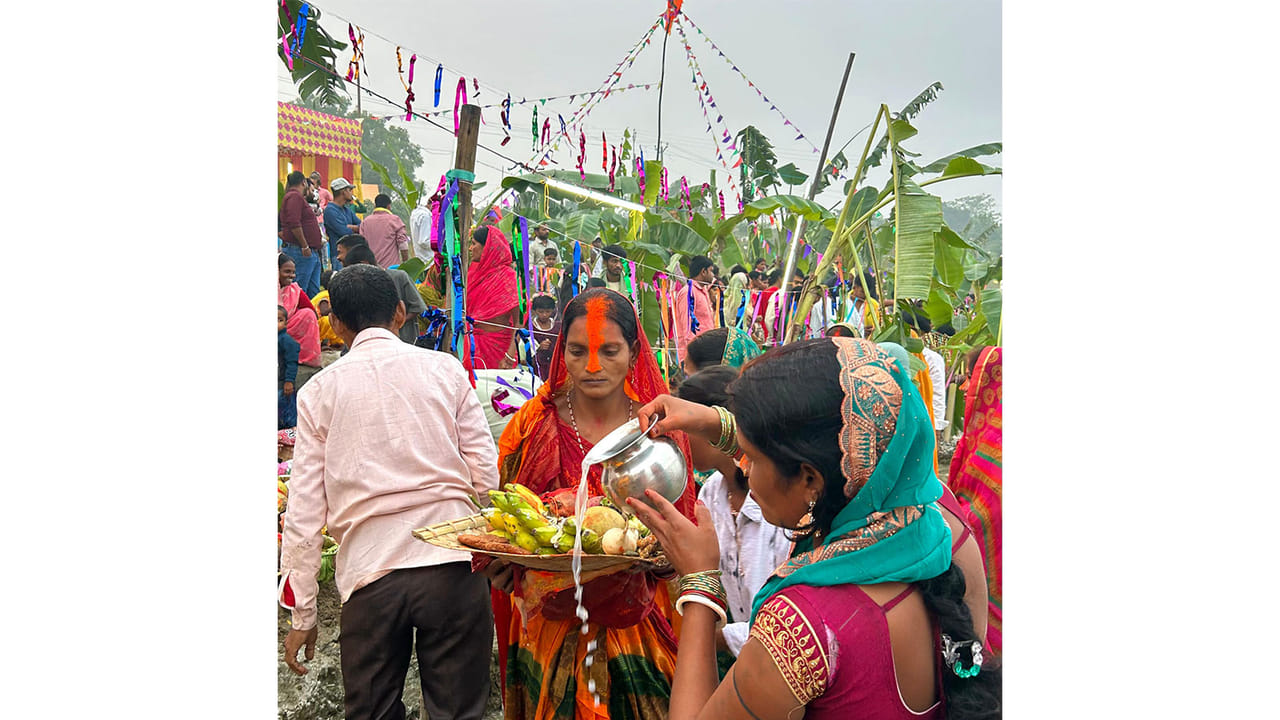
Chhath is more than a religious event in Bihar; it is a vital homecoming that reunites families, supports the rural economy through local artisans, and preserves cherished cultural traditions for future generations across the diaspora.
For Bihar, Chhath is much more than a religious celebration. It is a homecoming for families, a source of seasonal livelihood for thousands and a tradition that continues to define generations. At 65, Rambha has probably seen more Chhath than she can count. The rituals may have remained familiar, the songs may still sound the same, but every year brings with it a feeling she never seems to grow tired of.
As the festival approaches, there is a certain excitement in her household in Katihar. The courtyard needs cleaning, ingredients have to be arranged, and Thekua must be prepared. There is much to do, but there is also something to look forward to. For Rambha, Chhath is not simply about offering prayers to the setting and rising sun. It is about the people who gather around her, the traditions she inherited and the memories that return every year with the festival.
Perhaps that is what makes Chhath so difficult to explain to someone who has never experienced it. It is a festival, but it is also a homecoming. It is about faith, but equally about family. And sometimes, its greatest significance lies not in the prayers offered at the ghat, but in the people who make it there together.
As Chhath approaches, a familiar question begins echoing through Bihari households: “Ghar kab aaoge?” For millions of people living outside Bihar, this is not just a question about travel plans. It is an invitation to return to a place where someone is waiting.
For many small traders and artisans, Chhath is among the most important periods of the year. A bamboo artisan spends long hours weaving soop and daura, carefully shaping each strip of bamboo into something that will eventually carry a family’s offerings to the ghat. The festival creates a chain of economic activity that reaches deep into rural markets.
The most remarkable thing about Chhath is that it refuses to remain confined to Bihar. People who have moved to Delhi, Mumbai, Bengaluru and other cities carry the festival with them. They organise celebrations around local ponds, lakes and community ghats, recreating a little piece of their hometowns in unfamiliar surroundings.
On the final morning, as devotees stand in water waiting for the first rays of sunlight, the celebrations reach their conclusion. But Chhath leaves behind something that cannot be measured in earnings, offerings or the number of devotees at a ghat. It leaves behind the comfort of belonging.