India calls for preserving freedom of navigation in the South China Sea and insists any ASEAN-China Code of Conduct must adhere to international law to protect rights of nations outside the territorial disputes and ensure regional stability.
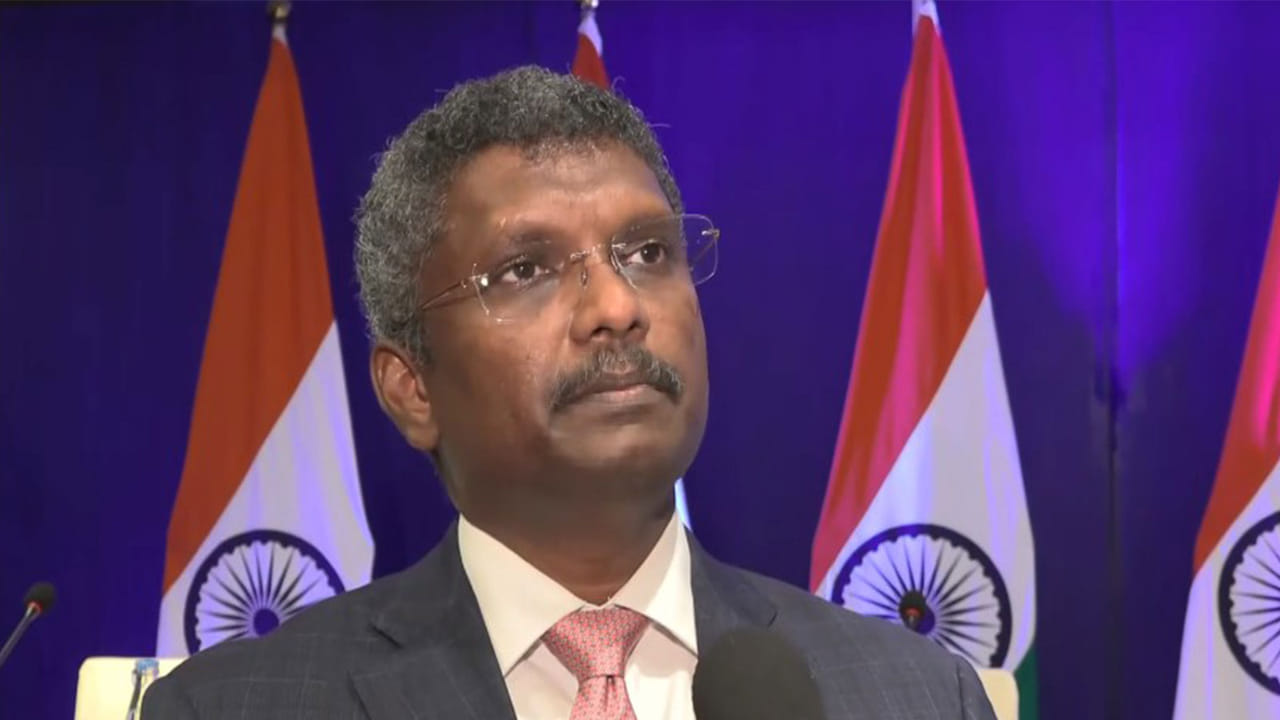
India has called for preserving freedom of navigation in the South China Sea and emphasised that any Code of Conduct (CoC) being negotiated between ASEAN and China must be consistent with international law and should not prejudice the rights of countries not party to the territorial disputes, India’s Ambassador to ASEAN Srinivas Gotru said. In an interview with ANI in Manila, Gotru said that although India is not a party to the territorial disputes in the South China Sea or the ongoing negotiations between ASEAN and China on the Code of Conduct, the region remains strategically important for New Delhi because of its significance as a major global trade and energy route.
“Because it is such a vital sea lane of communication and a huge merchandise trade goes through the Malacca Straits, important for energy and mineral exports, our interest has been that freedom of navigation should be preserved,” Gotru told ANI. He further stressed that the Code of Conduct, once finalised, should be consistent with international law and safeguard the rights of countries outside the region and those not involved in the disputes.
ASEAN Engagement and Priorities
On India’s priorities at the ASEAN Summit, Gotru described Southeast Asia as a strategically and economically significant neighbourhood, highlighting its geographical proximity, economic potential and growing importance in global supply chains. He noted, “Southeast Asia is right next door, and we share maritime and land boundaries with three of the countries. In GDP terms, it is almost the size of India at 4 trillion dollars, with 700 million people. It is economically vibrant and very important for global supply chains.”
Emerging Cooperation and Myanmar
Highlighting emerging areas of cooperation, the envoy said India and ASEAN were exploring opportunities in emerging technologies, artificial intelligence and digital connectivity. Regarding Myanmar, Gotru said India supported ASEAN’s efforts to restore normalcy through peace and diplomacy, while emphasising that New Delhi’s bilateral relationship with Naypyidaw had its own distinct strategic and security dimensions, noting India’s commitment to connectivity despite project delays.