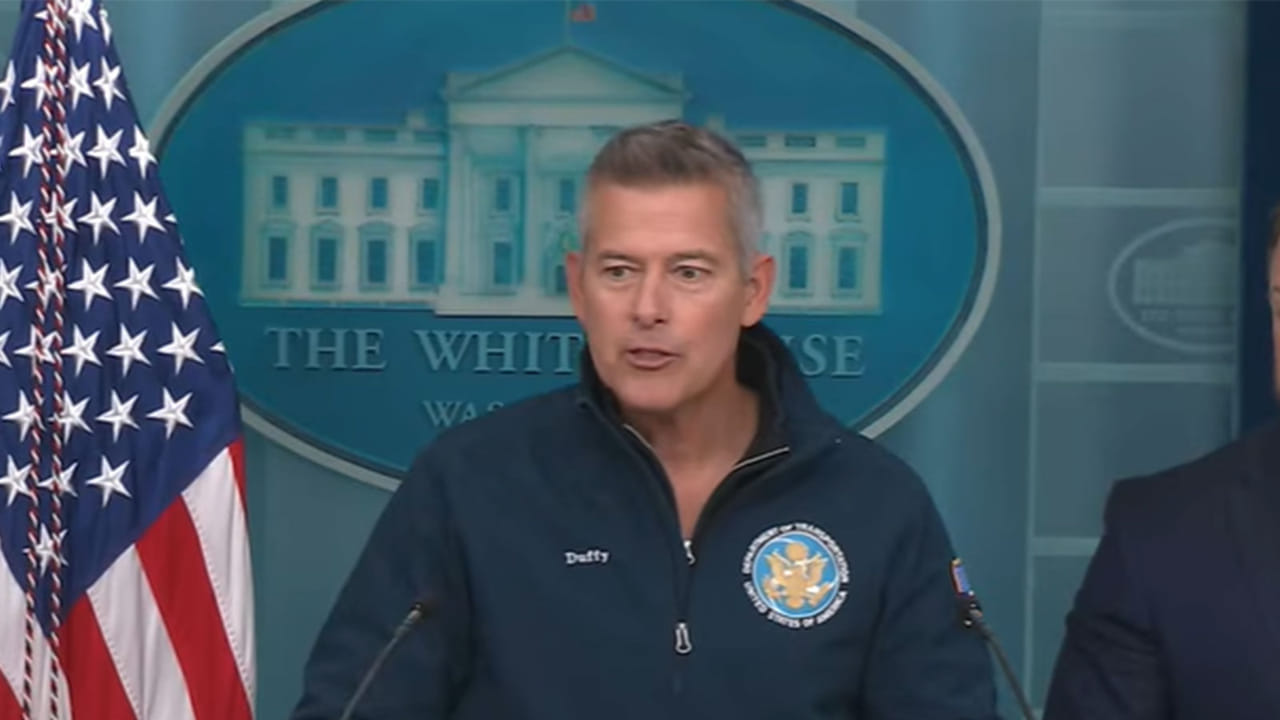
Transportation Secretary Sean Duffy has urged Congress to approve 50 billion dollars for the Modern Skies Act, aiming to modernize aging US air traffic control systems following a major telecommunications outage that grounded thousands of flights.
Urgent Funding for ATC Infrastructure
Washington DC [US], November 14 (ANI): US Transportation Secretary Sean Duffy has urged Congress to approve nearly USD 50 billion in funding to overhaul the country’s ageing air traffic control (ATC) infrastructure, warning that temporary repairs would not be sufficient to prevent further disruptions after a nationwide ground stop exposed vulnerabilities in the Federal Aviation Administration’s (FAA) telecommunications network. Duffy has called for the passage of the Modern Skies Act, which proposes an additional USD 20 billion for modernising air traffic control technology, replacing ageing airport infrastructure and developing world-class airports.
Legislative Proposal and Background
The proposal builds on the USD 12.5 billion already allocated by Congress under President Donald Trump’s Working Families Tax Cut Act. Duffy has separately said that another USD 7 billion to USD 10 billion would be required for software upgrades. In a post on Facebook, Duffy attributed the nationwide disruption to decades-old analogue equipment that could not cope with the demands of modern aviation. “Today’s nationwide ground stop happened because our air traffic control system is operating on DECADES-OLD, analog equipment that simply cannot compete with the demands of the 21st century,” he said. He added that the FAA was modernising the ageing infrastructure with the initial USD 12.5 billion allocation but stressed that the funding was insufficient to complete the overhaul.
Ground Stop and Technical Analysis
The funding appeal follows a nationwide ground stop imposed by the FAA after a telecommunications outage disrupted air traffic control operations across the United States, triggering thousands of flight delays and cancellations. Addressing reporters, Duffy said the disruption began at approximately 3:36 pm (local time), when radar and communication systems at air traffic control centres and Terminal Radar Approach Control (TRACON) facilities across the country experienced instability. Duffy attributed the disruption to the country’s legacy telecommunications infrastructure, which relies on time-division multiplexing (TDM), an analogue technology. He said ageing switches and routers became overloaded with data, resulting in inconsistent information being transmitted through the system.
Future Modernisation and Industry Support
Under the proposed Modern Skies Act, USD 10 billion would be allocated to complete upgrades to the digital architecture supporting air traffic control, including controller safety separation tools, telecommunications networks and advanced air traffic flow management technology. Another USD 10 billion would go towards replacing ageing control towers, airport facilities and runways, while the remaining USD 10 billion would establish a grant programme for airports serving between five million and 25 million passengers annually. The legislation would also provide the FAA with greater flexibility to deploy modern radars, radios, electronic flight strips and surface-awareness technology. The proposed legislation has received support from several aviation industry organisations, including Airlines for America, the Air Line Pilots Association, the National Air Traffic Controllers Association and the American Association of Airport Executives.