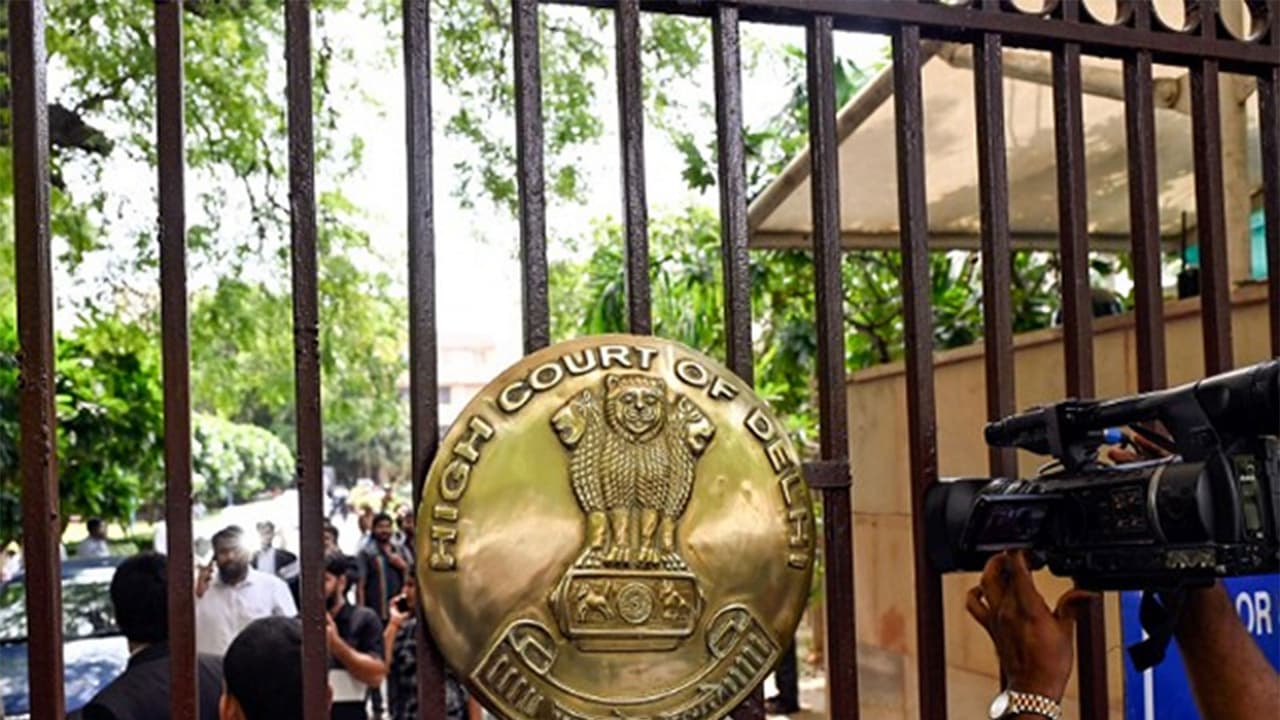
The Delhi High Court refused to mandate new regulations for airline staff misconduct, advising aggrieved passengers to use existing legal remedies. The court emphasized that formulating such rules remains within the domain of competent authorities.
High Court Rules on Airline Personnel Conduct
The Delhi High Court has held that passengers aggrieved by alleged misconduct or unlawful behaviour of airline personnel may pursue appropriate civil or criminal remedies available under law, while refusing to direct the Ministry of Civil Aviation and the Directorate General of Civil Aviation (DGCA) to frame a separate regulatory mechanism for such complaints. Justice Amit Mahajan dismissed a petition seeking directions to formulate rules and guidelines to address alleged misconduct, harassment and misbehaviour by airline personnel towards passengers.
The Court observed that the formulation of rules, regulations and regulatory guidelines falls within the domain of the competent authorities and is a matter of policy. It said that the High Court, while exercising jurisdiction under Article 226 of the Constitution, cannot issue a general direction compelling the government to formulate rules or prescribe specific disciplinary measures merely because a petitioner considers them appropriate.
Case Background and Legal Context
The petition was filed by Shalini Tiwari, who alleged that a customer-care executive of IndiGo Airlines had used vulgar, abusive and gendered language while speaking to her. She claimed that despite making several representations seeking accountability and disciplinary action against the concerned employee, the airline failed to take meaningful action. Tiwari contended that while the existing Civil Aviation Requirements (CARs) provide mechanisms and consequences for misconduct by passengers, they do not contain a specific mechanism to deal with alleged misconduct, harassment or misbehaviour by airline personnel towards passengers.
However, the Court said the absence of a corresponding mechanism in the CARs, by itself, did not justify a judicial direction requiring authorities to frame rules in the manner sought by the petitioner. The Court noted that mechanisms dealing with passenger misconduct are aimed at ensuring the safety and security of airports and flights. It added that alleged unruly behaviour by airline personnel can be dealt with through appropriate civil or criminal remedies.
Previous Directives and Resolution
The Court also noted that the petitioner had earlier approached the High Court, following which the DGCA was directed to treat her petition as a representation and decide it within 30 days. Pursuant to that direction, the DGCA, in a communication dated July 20, 2026, said that the petitioner’s grievance relating to the incident had already been addressed by the airline through necessary corrective and preventive action. The High Court said that no further direction for initiating action against the airline in relation to the same incident was warranted. It clarified that if the petitioner remained dissatisfied, she was at liberty to pursue appropriate civil or criminal remedies.
(Except for the headline, this story has not been edited by Asianetnews Editorial staff and is published from a syndicated feed.)