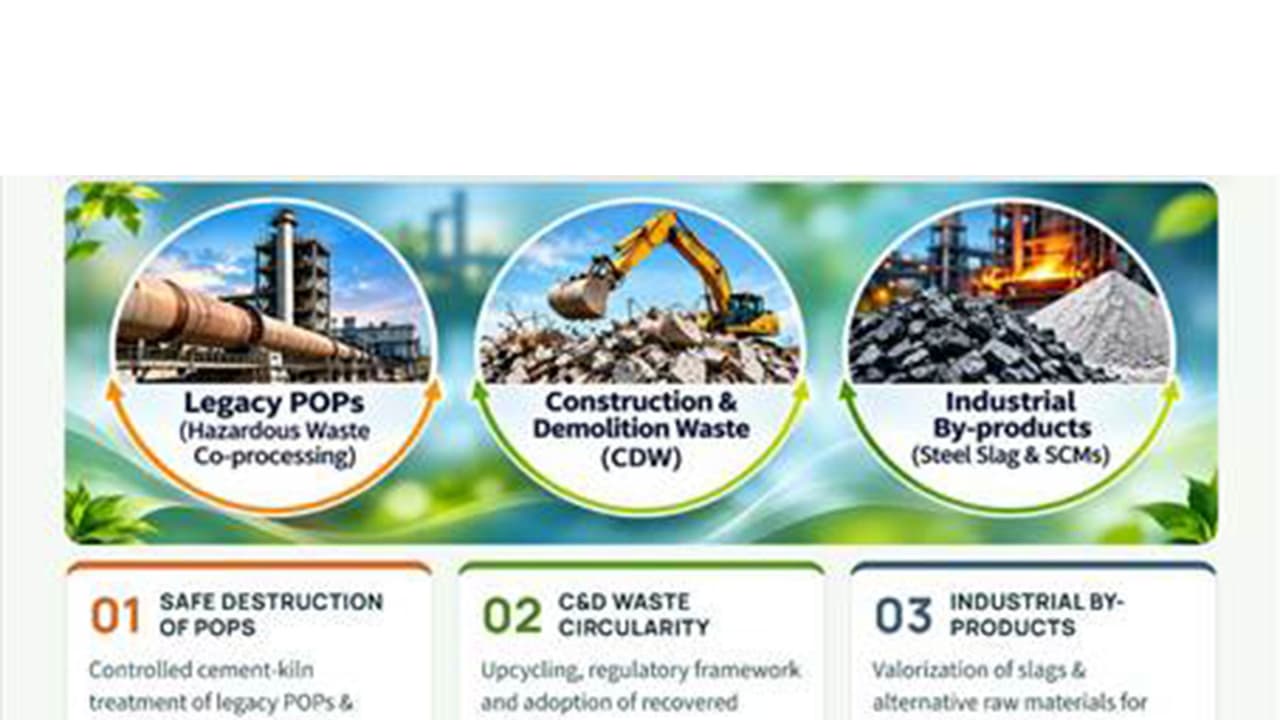
India and Norway are exploring collaborative research to transform industrial and construction waste into usable infrastructure materials, promoting sustainable construction and circular economy practices within the cement and building sectors.
Promoting Sustainable Construction Through Cooperation
India and Norway are exploring joint research and technology projects to convert industrial and construction waste into useful materials for roads, buildings and other infrastructure, as both countries look to promote sustainable construction and better waste management. The Council of Scientific and Industrial Research (CSIR), along with Norway’s SINTEF and the Research Council of Norway, organised the India-Norway Dialogue on ‘Waste to Resource Solutions in the Cement and Construction Sector’ on Tuesday at the India Habitat Centre in New Delhi.
The dialogue brought together representatives from CSIR institutes, Norwegian research organisations, regulatory authorities and the cement and construction industries to discuss ways to recover resources from industrial waste and develop practical solutions. The Ministry of Science and Technology, in its official statement on Wednesday, said the discussions focused on “strengthening India-Norway cooperation through joint technology-oriented proposals involving CSIR institutes, SINTEF and industry partners, with a focus on translating research outcomes into practical and scalable solutions.”
Research and Technology Initiatives
The discussions explored the possible use of construction and demolition waste, steel slag, fly ash, red mud and other industrial residues in construction-related applications. Research initiatives from CSIR-Central Road Research Institute (CSIR-CRRI) and CSIR-Advanced Materials and Processes Research Institute (CSIR-AMPRI) highlighted opportunities to use fly ash, copper slag, red mud, plastic waste and steel grit in road construction, geopolymer concrete, specialised aggregates and other value-added construction products. The Ministry said the discussions also covered challenges related to processing technologies, standardisation, economic viability and market acceptance of these waste-derived materials.
Hazardous Waste and Cement Kiln Co-Processing
Another important area of discussion was the safe treatment of hazardous waste through cement kiln co-processing. The technical session, led by experts from SINTEF and CSIR-NEERI, examined the potential of cement kilns to treat suitable hazardous waste, including Persistent Organic Pollutants (POPs), DDT and PCB-contaminated materials. According to the Ministry, international experience shared by SINTEF highlighted the potential of cement kilns to destroy hazardous organic contaminants under controlled high-temperature conditions while replacing conventional fossil fuels with waste-derived alternative fuels. The discussions also emphasised the need for appropriate technical protocols, controlled industrial trials, emission monitoring and regulatory compliance to ensure safe treatment.
Recycling and Circular Economy Practices
The dialogue also focused on recycling construction and demolition waste. International best practices discussed included recycled aggregate-based construction products, mobile recycling units and improved processing techniques to remove impurities from waste materials. Prof. R. Pradeep Kumar, Director of CSIR-CBRI, highlighted the need to move from a linear to a circular economy by transforming construction and industrial waste into valuable resources.
The Ministry said the dialogue identified several priority areas for future cooperation, including the development of two to three joint India-Norway research proposals, pilot-scale demonstration projects for hazardous waste treatment, technical guidelines for the disposal of DDT and PCB-contaminated waste, and the development of waste-derived construction materials. Strengthening industry-academia partnerships was also identified as an important area of collaboration.
The dialogue was held in the backdrop of the Green Strategic Partnership between India and Norway, established during Prime Minister Narendra Modi’s visit to Norway in May. The partnership places circular economy, clean technology and research at the centre of bilateral cooperation. The programme concluded with both sides emphasising the need to strengthen research and technological cooperation, promote circular construction practices and accelerate the transition towards sustainable and resource-efficient cement and construction sectors. (ANI)
(Except for the headline, this story has not been edited by Asianetnews Editorial staff and is published from a syndicated feed.)