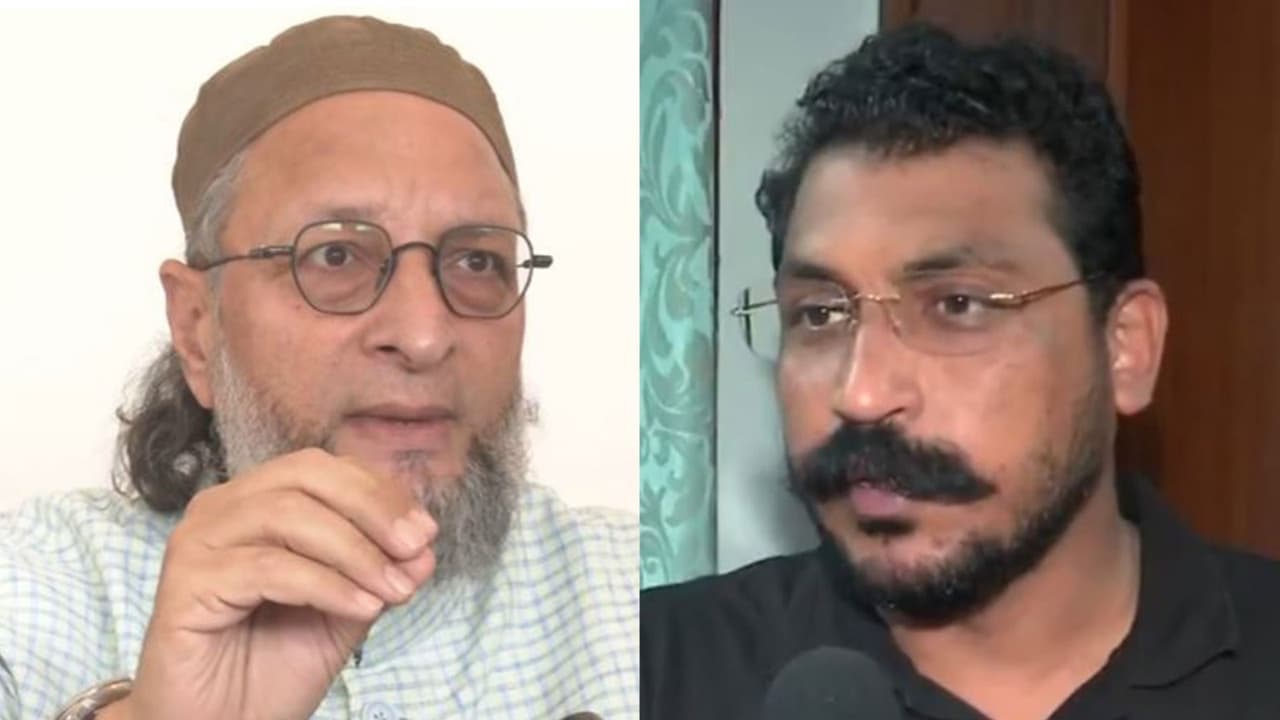
AIMIM chief Asaduddin Owaisi and ASP leader Chandrashekhar Azad are expected to announce a political alliance in Lucknow, aiming to unify Dalit and Muslim voters ahead of the 2027 Uttar Pradesh Assembly elections.
Owaisi and Azad Likely to Announce Alliance
Lucknow (Uttar Pradesh) [India], November 11 (ANI): All India Majlis-e-Ittehadul Muslimeen (AIMIM) president Asaduddin Owaisi and Azad Samaj Party (Kanshi Ram) chief Chandrashekhar Azad are likely to announce a political alliance in Lucknow on Thursday, ahead of the 2027 Uttar Pradesh Assembly elections. According to reports, the two leaders are expected to announce a joint press conference in the Uttar Pradesh capital. The proposed partnership is being viewed as an attempt to bring Dalit and Muslim communities onto a common political platform and build an alternative political formation in the state.
The proposed alliance assumes significance in view of Uttar Pradesh’s electoral demography. Muslims constitute approximately 19 per cent of the state’s population, while Scheduled Castes account for around 21 per cent. Together, these communities represent a substantial section of the electorate and could influence electoral outcomes in several constituencies.
AIMIM and ASP Political Strategies
Owaisi has been seeking to expand AIMIM’s political presence beyond Telangana, particularly in states with a significant Muslim population. While the party has faced challenges in converting its vote share into Assembly seats in Uttar Pradesh, it has continued to position itself as an independent political voice for Muslim representation.
Meanwhile, Azad Samaj Party-Kanshiram (ASP-K) President and Member of Parliament Chandrashekhar Azad launched a scathing critique of the ruling Bharatiya Janata Party (BJP) administration in Uttar Pradesh, focusing heavily on systemic governance failures, rising unemployment, and economic distress. Addressing key socio-economic and political challenges, Azad outlined his party’s core agenda aimed at uplifting marginalised communities, safeguarding the rights of farmers, and empowering the youth of the state.
Azad’s Critique of Governance
Emphasising the party’s electoral resolve, Azad stated, “We will work to empower the youth, farmers and weaker sections of Uttar Pradesh, protect their rights and bring deprived communities into the mainstream. We will work hard, win the public’s trust and fight strongly in the elections… I believe the BJP’s policies are not good, but the public will decide whom they support…”
Shifting focus to critical policy failures, Azad pointed to deep-rooted economic hardships and governance deficits that continue to impact ordinary citizens. Highlighting the ongoing repercussions of past economic measures and the severe scarcity of public sector employment, he added, “There are many issues we need to discuss. Issues like vote theft are before us. We are still suffering the consequences of demonetisation, but the bigger concern is the declining number of government jobs. Educated young people from Dalit and backward communities are struggling despite having degrees… The government will have to answer to the people for all these failures in the coming elections.”
Political Impact and Future Prospects
Chandrashekhar Azad has emerged as a prominent Dalit political leader. His victory from the Nagina Lok Sabha constituency in the 2024 general elections brought greater visibility to his party in Uttar Pradesh politics. His appeal among sections of Dalit voters could provide the proposed alliance with an additional electoral base.
The proposed understanding could also have implications for the existing political formations in the state, particularly the BJP-led NDA and the Samajwadi Party-led opposition camp. The Samajwadi Party has been building its political strategy around the PDA formulation, representing backward classes, Dalits and minorities. An independent Dalit-Muslim political initiative could potentially influence this electoral equation and create another political combination ahead of the 2027 polls.
However, the alliance’s electoral prospects would depend on several factors, including seat-sharing arrangements, candidate selection, local leadership and the ability of both parties to consolidate their respective support bases. The joint press conference in Lucknow is expected to provide clarity on the alliance’s objectives, electoral strategy and possible seat-sharing arrangements. With the 2027 Uttar Pradesh Assembly elections approaching, a formal announcement by Owaisi and Chandrashekhar Azad could mark a significant development in the state’s evolving political landscape. (ANI)
(Except for the headline, this story has not been edited by Asianetnews Editorial staff and is published from a syndicated feed.)