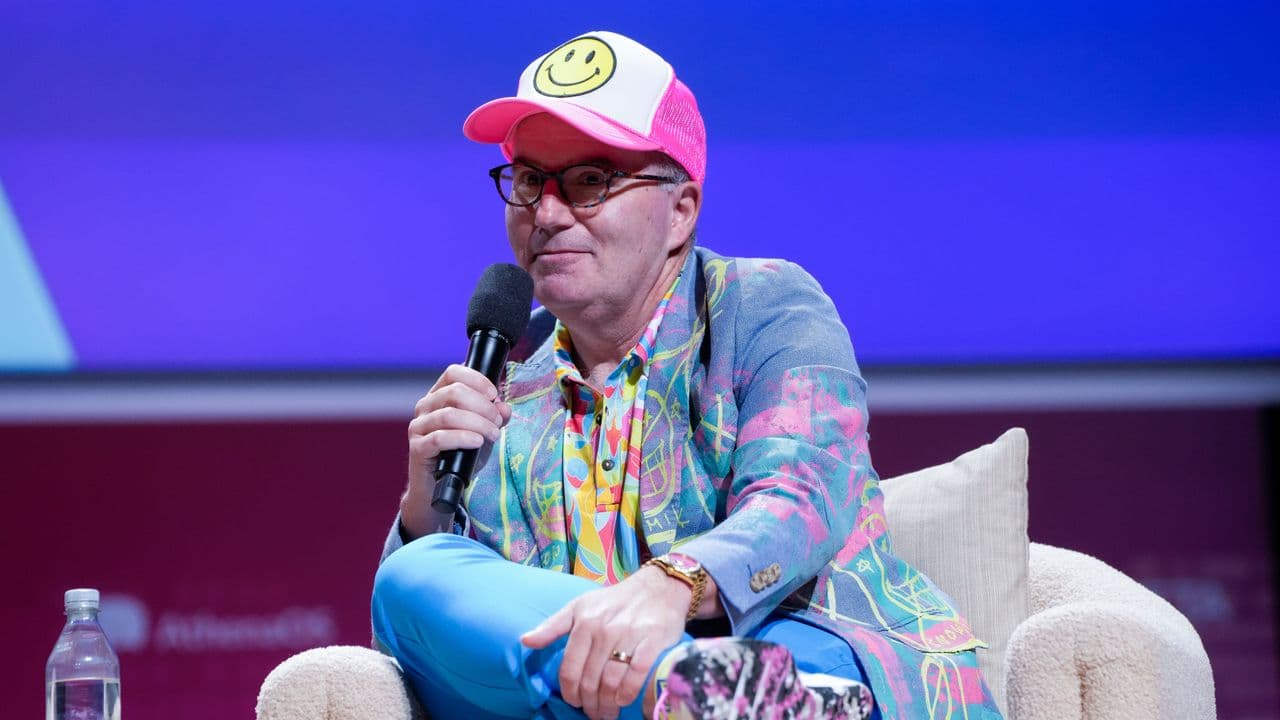
During an interview with Bloomberg on Saturday, Ives said he believes investors are overreacting to the political uncertainty surrounding AI infrastructure spending.
- Ives said the Democratic election victories and growing opposition to data center development delivered a major shock to technology investors.
- The tech bull added that the sell-off came as investors reassessed whether political resistance could derail the massive infrastructure investments underpinning the AI boom.
- Ives acknowledged that while the spending trajectory is changing, investors were taking that development too far.
Yorkville Ives partner Dan Ives is not ready to call time on the technology boom even as Wall Street’s AI trade just endured one of its most bruising weeks in years, with semiconductor stocks, hyperscalers and data center plays caught in a sweeping sell-off following the U.S. midterm elections.
During an interview with Bloomberg on Saturday, Ives said he believes investors are overreacting to the political uncertainty surrounding AI infrastructure spending, arguing that the broader technology bull market remains intact despite what he described as a particularly painful market shakeout.
Sell-Off Was A ‘White-Knuckle Roller-Coaster’ Moment, Says Ives
Ives said the Democratic election victories and growing opposition to data center development delivered a major shock to technology investors.
“I think it’s the blue tidal wave that was really the gut punch to tech investors because of the anti-AI data center push,” he said.
The tech bull added that the sell-off came as investors reassessed whether political resistance could derail the massive infrastructure investments underpinning the AI boom. Concerns also mounted that technology companies could bring forward their capital expenditure peak, potentially changing the growth outlook for chipmakers and data center operators.
Ives acknowledged that the spending trajectory is changing, suggesting Big Tech’s capital expenditure growth, previously expected to peak around 2028-2029, could now peak as early as 2027.
However, he argued that investors were taking that development too far.
“The stocks reflect some of that, but I think where this got over its skis is that this sell-off is almost treating AI like it’s done. Like, it’s not gonna happen,” he said.
Ives also warned that the political backlash could create a new public-relations challenge for technology companies. Promises of widespread white-collar job losses alongside higher electricity bills have made it harder for Big Tech to sell the benefits of data center expansion to ordinary Americans.
He believes companies will increasingly have to demonstrate tangible local benefits through jobs, tax revenues and infrastructure investments.
Why Ives Isn’t Giving Up On The AI Bull Market
Despite the near-term uncertainty, Ives believes the underlying AI investment opportunity remains enormous.
He pointed to the projected $3 trillion-$4 trillion in AI infrastructure spending, arguing that the investment cycle could become more prolonged rather than disappear altogether.
The distinction is important for semiconductor companies such as Nvidia Corp. (NVDA) and Advanced Micro Devices Inc. (AMD), which were among the hardest-hit stocks during the sell-off. Nvidia shares declined nearly 9% last week, while AMD stock plunged over 11% for the week despite a 11% surge on Friday.
Ives argued that fears of insufficient data center capacity were misplaced, with chip demand and orders remaining robust. He also suggested investors were beginning to separate potential winners from losers, particularly as neocloud companies face a tougher competitive environment.
The broader implications extend well beyond Silicon Valley, with AI infrastructure spending creating demand across energy, industrials and financial services.
“What’s the ripple effect from Caterpillar to Lockheed Martin to energy companies to financial service,” Ives said. “That’s the reality of where we are.”
Ultimately, he believes political resistance may slow certain projects, but won’t stop the technology’s advance.
“I continue to think that the multiyear tech bull market is still in place,” he said, describing the recent market turbulence as “just a white-knuckle roller-coaster scary moment.”
During the after-hours session on Friday, the SPDR S&P 500 ETF (SPY), which tracks the S&P 500 index, gained 0.17%; the Invesco QQQ Trust ETF (QQQ) rose 0.21%; and the SPDR Dow Jones Industrial Average ETF Trust (DIA) edged up by 0.06%. Retail sentiment on Stocktwits toward the S&P 500 ETF was in the ‘bearish’ territory at the time of writing.
The Global X Artificial Intelligence & Technology ETF (AIQ) rose 1.32% on Friday, while the iShares U.S. Technology ETF (IYW) gained 1.31%.
For updates and corrections, email newsroom[at]stocktwits[dot]com.<